Wednesday, August 26, 2026
Mitmunk
  • Home Improvement
  • Finance
  • Lifestyle
  • Business
  • Seo Digital
  • Auto
  • Law
  • Health
  • Other
    • Travel
    • Outdoor
    • Fashion
    • Entertainment
    • Construction
    • Education
    • Tech
    • Pet
    • Real Estate
No Result
View All Result
  • Home Improvement
  • Finance
  • Lifestyle
  • Business
  • Seo Digital
  • Auto
  • Law
  • Health
  • Other
    • Travel
    • Outdoor
    • Fashion
    • Entertainment
    • Construction
    • Education
    • Tech
    • Pet
    • Real Estate
No Result
View All Result
MitMunk
No Result
View All Result
Home Auto
9 Common Commercial Truck Repair Issues and How to Fix Them

9 Common Commercial Truck Repair Issues and How to Fix Them

Share on FacebookShare on Twitter

Commercial trucks are the backbone of the transportation industry, delivering goods across vast distances.

However, these workhorses are prone to various mechanical issues due to their heavy usage. Regular maintenance and timely repairs are essential to keep these vehicles running smoothly.

This article aims to shed light on common commercial truck repair problems and how to address them effectively.

Table of Contents

Toggle
  • 1. Engine Overheating
  • 2. Brake System Failures
  • 3. Transmission Problems
  • 4. Electrical System Malfunctions
  • 5. Tire Wear and Damage
  • 6. Suspension System Issues
  • 7. Fuel System Contamination
  • 8. Cooling System Failures
  • 9. Exhaust System Problems
  • Keeping Your Fleet Rolling with Top Commercial Truck Repair Services

1. Engine Overheating

Engine overheating is a frequent problem in commercial trucks, often caused by coolant leaks, radiator issues, or malfunctioning water pumps. When an engine overheats, it can lead to severe damage, including warped cylinder heads and engine failure.

To fix engine overheating, start by checking the coolant levels and topping them up if necessary. Inspect the radiator and hoses for leaks or blockages.

If the water pump is faulty, it may need to be replaced. Refer to caterpillar truck engine manuals for specific troubleshooting steps and maintenance tips tailored to your engine model.

2. Brake System Failures

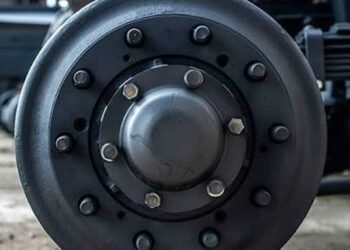
Commercial trucks rely heavily on their brake systems, which are prone to wear and tear. Common brake issues include worn brake pads, air leaks in the brake lines, and malfunctioning brake calipers.

Regularly inspect the brake pads and replace them when they become thin. Check for air leaks in the brake lines and repair or replace any damaged sections.

Ensure the brake calipers function correctly and adjust or replace them if necessary. Proper brake maintenance is crucial for safety and compliance with transportation regulations. To ensure the longevity and reliability of the brake system, consider visiting a commercial body shop near me, for proper inspection. Professionals can ensure your vehicle stays in optimal condition, and even offer advice to keep your vehicle safe and compliant with regulations.

3. Transmission Problems

Transmission issues can manifest as difficulty in shifting gears, slipping gears, or unusual noises. These problems can result from low transmission fluid levels, worn-out clutch components, or internal transmission damage.

Start by checking the transmission fluid levels and top up if needed. Inspect the clutch components for wear and replace them if necessary. If the transmission issues persist, it may be time for a professional commercial truck and trailer repair service to ensure that the power is being transferred efficiently and safely to the wheels. Such services can perform a full diagnostic on both the tractor and the hauling unit at the same time. Regular transmission maintenance can prevent a costly commercial truck repair down the line.

4. Electrical System Malfunctions

Commercial trucks have complex electrical systems that control everything from lighting to engine management. Common electrical issues include faulty wiring, dead batteries, and malfunctioning alternators.

Begin by inspecting the wiring for any visible damage or loose connections. Test the battery and alternator to ensure they are functioning correctly.

Replace faulty components and consider investing in a high-quality battery and alternator to improve reliability. Regularly check and maintain the electrical system to avoid unexpected breakdowns.

5. Tire Wear and Damage

Tires are subject to constant wear and tear, leading to uneven tread wear, punctures, and blowouts. Poor alignment, underinflation, and overloading can exacerbate these problems.

Regularly inspect the tires for signs of uneven wear and ensure they are properly inflated. Rotate the tires to promote even wear and extend their lifespan.

If a tire is damaged, repair or replace it promptly to avoid safety hazards. Proper tire maintenance not only ensures safety but also improves fuel efficiency. A commercial truck tire repair service can help with any tire issues and provide recommendations for the best tires for your specific trucking needs.

6. Suspension System Issues

The suspension system of a commercial truck plays a vital role in ensuring a smooth ride and optimal stability. It serves as the backbone that absorbs the bumps and jolts of the road, safeguarding both the vehicle and its cargo.

Common issues encountered with truck suspensions often stem from wear and tear, such as:

  • worn-out shock absorbers
  • broken leaf springs
  • misaligned axles

When assessing the condition of the suspension components, it is crucial to pay close attention to the shock absorbers. If these essential parts show signs of leakage or wear, prompt replacement is necessary to maintain the vehicle’s performance.

Similarly, inspecting the leaf springs for any cracks or breaks is imperative. Any damaged springs should be promptly replaced to ensure the truck’s suspension functions optimally.

7. Fuel System Contamination

Contamination can sneak into the fuel system from dirty fuel bits. Condensation brings in water, and sediment clogs filters. When these nasties mess with the system, the engine’s performance takes a hit. Think:

  • misfires
  • lower combustion efficiency
  • potential issues

To tackle these woes, it’s crucial to stay on top of maintenance. Regularly checking and changing fuel filters is a smart move to prevent clogs. Opting for high-quality fuel with good filtration ratings can reduce contamination risks. Using system-cleaning fuel additives can also help maintain its health.

If you notice water in the fuel, don’t wait around. Act quickly to prevent damage. Emptying the tank and giving it a good clean will clear out the water and gunk. By sticking to a routine focused on keeping the fuel system clean and reliable, drivers can ensure their vehicles perform well and last.

8. Cooling System Failures

The cooling system is essential for regulating engine temperature. Common issues include:

  • coolant leaks
  • faulty thermostats
  • clogged radiators

If the engine is overheating, it can cause serious damage to internal components. Check for coolant leaks and repair any damaged hoses or connections. Test the thermostat to ensure it opens and closes at the correct temperature.

If the radiator is clogged, flush it to remove any blockages. Regular cooling system maintenance prevents overheating and extends the engine’s life.

9. Exhaust System Problems

Problems with the exhaust system can cause more noise. They can also reduce engine performance and cause visible emissions. These issues are often caused by:

  • leaks
  • damaged mufflers
  • clogged catalytic converters

A damaged exhaust system can also affect fuel efficiency and emissions, leading to failed emissions tests. Inspect the exhaust system for leaks and repair or replace any damaged sections.

Make sure the muffler and catalytic converter work well. Replace them if needed. Regular exhaust system maintenance improves engine efficiency and reduces harmful emissions.

Keeping Your Fleet Rolling with Top Commercial Truck Repair Services

Commercial truck repair is a key part of managing your fleet to keep those wheels rolling smoothly. Tackling issues like engine overheating, brake failures, and transmission glitches is crucial. It helps avoid breakdowns and saves time and cash.

Knowing how to deal with commercial truck & trailer repair can make your life easier in the long haul. So, maintain your fleet well for better reliability, safety, and efficiency.

And hey, if this article hits the spot, swing by our blog for more cool reads!

Related Posts

Fleet Maintenance Questions Behind Heavy-Duty Drum Brake Shoes

Fleet Maintenance Questions Behind Heavy-Duty Drum Brake Shoes

by Emily Stevens
August 19, 2026
0

Choosing heavy-duty drum brake shoes can appear to be a simple part-number task. For a commercial fleet, complete brake shoes...

How to Find a Quality Tire Shop in Houston, TX

How to Find a Quality Tire Shop in Houston, TX

by Emily Stevens
July 21, 2026
0

Finding a tire shop is easy in a city as large as Houston, but finding one you can trust takes...

Leveling Kit Vs. Lift Kits: Understanding the Difference Between Lifting and Leveling Your Truck

Leveling Kit Vs. Lift Kits: Understanding the Difference Between Lifting and Leveling Your Truck

by Emily Stevens
July 15, 2026
0

Truck owners often start modifying their suspension for one simple reason: The truck no longer matches the work it is...

POPULAR NEWS

Delores Miller Clark

Delores Miller Clark: Learn More about John List’s Ex-Wife

September 27, 2022
Deserai Anderson Utley Personal Life, Career, & More

Deserai Anderson Utley Personal Life, Career, & More

September 30, 2022
Lisa Seal Frigon

Lisa Seal Frigon: All about Drug Lord Barry Seal’s Daughter

September 18, 2022
Linnell S. Nobori

Linnell S. Nobori: All there is to Know about Ted Bessell’s Wife

September 5, 2022
Gweneth Gonzales Thomas

What You May Not Know About Gweneth Gonzales Thomas, Richard Thomas’ Daughter

August 2, 2022

EDITOR'S PICK

Telecommunications access

Understanding Federal Communications Programs for Affordable Connectivity

May 30, 2024
Painting Homes with the Colors of Effective Management

Property Palette: Painting Homes with the Colors of Effective Management

April 1, 2024
Assets worth billions of dollars disappear every year. Since asset tracking systems rely on antiquated paper-based systems prone to human error, they can be misplaced, stolen, or just forgotten entirely. According to research conducted, foreign businesses are allegedly "losing" AU$4.3 billion ($2.92 billion) in assets annually as a whole. If you extrapolate the figures worldwide, it becomes clear that there is an issue with tracking physical assets in the workplace or across several organizations. Asset monitoring systems Reports show that despite the availability of low-cost, dependable wireless asset tracking solutions, half of all businesses still manually log their assets, and for thirty-five percent of businesses, having an employee walk around the premises to locate assets is their primary method of tracking assets. Every organization loses several staff hours annually on average while looking for misplaced tangible assets. Even worse, the study shows that only 22% of the time are the assets retrieved. However, things don't have to be this way. How Does GPS Asset Tracking Operate and What Is It? Most people are familiar with GPS technology from its use in mobile devices and smartwatches for location-based functions like mapping. However, GPS may be utilized for many more purposes, such as asset tracking. We’re sure you're wondering what exactly asset tracking means. Using GPS to track assets by corresponding with satellites is known as GPS asset tracking. An asset's location and movement can be tracked as long as it is equipped with a GPS tracker. As a result, assets can be found using their actual location, thus increasing asset visibility and lowering the possibility of missing assets. How to Track Your Lost Assets 1. Global Positioning System (GPS) What It Is: GPS asset tracking is a satellite-based navigation system that gives location and timing information in all-weather situations, anywhere, with an unobstructed line of sight to four or more GPS satellites. How It Works: GPS operates by a network of satellites that deliver signals to GPS receivers. The receiver determines its position by monitoring how long signals from numerous satellites take to reach it. By triangulating these signals, the receiver can pinpoint its precise location. This data is subsequently forwarded to a central system for monitoring and analysis. GPS devices are attached to assets like automobiles, machinery, and high-value equipment to track them accurately. Moreover, these gadgets continuously transmit position data to a central tracking system, allowing organizations to follow their assets in real-time. Also, you can employ a RAM tracking system to track assets that travel frequently or over long distances, ensuring they are always where they should be. 2. Passive RFID tags Passive RFID tags are made up of three components: a chip, an antenna, and a substrate. • The chip holds data and, depending on its design, can be read-only (RO), write-once, read-many (WORM), or read-write. Memory spans from 2 to 1000 bits. • The antenna picks up radio-frequency (RF) waves from the reader's signal and transmits and receives information. The size of its antenna determines the capacity of a passive RFID tag. 3. Active RFID tags Active RFID tags also have a microprocessor and an antenna. However, the chips are often larger and more capable than passive tags. Long-range RFID tagging is accomplished with active tags using Bluetooth, low-energy, high-frequency, or ultra-high frequency. They have two additional features that set them apart from passive tags: an inbuilt power supply and electronics. The power source is often a battery, although it can also be solar. Unlike passive tags, the tag's built-in power supply allows it to transmit data to a reader without relying on the reader's power. Active tags can be read from distances of 100 feet or more, while passive tags can only be read up to 20 feet away. Onboard electronics sensors, microprocessors, and input/output ports are all possible components of the tag's onboard electronics. Speaking of, active RFID tags can be used in more applications than passive tags due to their electronics. 4. Cellular IoT technology. Not all asset monitoring involves identifying misplaced or stolen equipment in offices, warehouses, and factories, and some tracking difficulties necessitate a low-power solution that exceeds the capabilities of Wi-Fi access points, RFID readers, and Bluetooth LE-powered gateways. This explains, at least in part, why cellular-based low power wide area network (LPWAN) technologies are expected to increase significantly in the future years. According to telecoms giant Ericsson, cellular IoT connections will increase from 700 million in 2017 to 3.5 billion by 2023, while analyst ABI Research predicts that nearly half of LPWAN connections by 2023 will be for asset tracking applications. What are the advantages of asset tracking and management? IT asset managers can use RF Code's CenterScape platform to track what's most important, such as location, temperature, and much more. 1. Improves efficiency Regular maintenance on data center assets such as hard disks and servers requires physically removing them from a rack server. When these assets are presented to the service department, people have a tendency to misplace or mislabel them. IT administrators can significantly shorten the time it takes to locate lost hard drives or servers by digitally tracking them. 2. Enables proactive monitoring of essential assets In addition to detecting lost or misplaced assets, data center asset tracking enables IT professionals to proactively manage essential equipment states such as cooling and power. 3. Significantly enhances work-in-process tracking IT managers must oversee all stages of data center operations, from installation to maintenance. IT administrators may eliminate guesswork with data center asset tracking since RFID tagging offers real-time work status information from the floor or the field. 4. Simplifies auditing Asset tracking entails taking an accurate inventory of data center assets, right down to location details. This is just difficult to do with manual inventory techniques. Digital asset tracking minimizes costly and time-consuming human errors while significantly simplifying auditing processes. 5. Encouraging Adherence to Regulations Depending on your sector and jurisdiction, having an efficient asset management system can assist in achieving several types of regulatory compliance. For example, the IRS mandates that all companies keep accurate records of their assets. These contain information about discounts, depreciation rates, equipment or inventory acquisition prices, etc. In addition, the FASB has recently updated its asset leasing policies. Upgrading from manual records to smart asset management software is the most reliable option to achieve complete compliance in the dynamic asset management landscape. In the end! Ultimately, asset tracking can assist businesses in tracking and managing asset utilization in addition to protecting them. That said, GPS asset tracking is a significant tool for companies to optimize asset management and ensure safety. By implementing asset management technology, your business can be equipped with real-time monitoring and tracking, proactive maintenance, and geofencing.

How To Find Lost Assets Using Tracking Devices

October 23, 2024
John Baniszewski Sr.

John Baniszewski Sr.: Age, Killer Ex-Wife, Children

September 5, 2022
Contact Us: Info@mitmunk.com

© 2022 Mitmunk Theme Copyright

No Result
View All Result
  • Homepages
    • Home Page 1
  • Business
  • Entertainment
  • Fashion
  • Health
  • Lifestyle
  • Tech
  • Travel

© 2022 Mitmunk Theme Copyright