Saturday, August 22, 2026
Mitmunk
  • Home Improvement
  • Finance
  • Lifestyle
  • Business
  • Seo Digital
  • Auto
  • Law
  • Health
  • Other
    • Travel
    • Outdoor
    • Fashion
    • Entertainment
    • Construction
    • Education
    • Tech
    • Pet
    • Real Estate
No Result
View All Result
  • Home Improvement
  • Finance
  • Lifestyle
  • Business
  • Seo Digital
  • Auto
  • Law
  • Health
  • Other
    • Travel
    • Outdoor
    • Fashion
    • Entertainment
    • Construction
    • Education
    • Tech
    • Pet
    • Real Estate
No Result
View All Result
MitMunk
No Result
View All Result
Home Auto
Tow-Dolly-vs.-Car-Hauler-Trailer

Tow Dolly vs. Car Hauler Trailer:  Which Is Better?

Share on FacebookShare on Twitter

When it comes to transporting your vehicle, two popular options are a tow dolly and a car hauler trailer. Both methods have their advantages and disadvantages, and the choice ultimately depends on your specific needs and preferences. In this article, we will explore the differences between a tow dolly and a car hauler trailer, considering factors such as vehicle type, ease of use, cost, and towing capabilities to help you make an informed decision.

Table of Contents

Toggle
  • Vehicle Type and Compatibility
  • Towing and Driving Stability
  • Ease of Use and Setup
  • Towing Capacity and Weight Considerations
  • Cost and Budget
  • Conclusion

Vehicle Type and Compatibility

The first crucial factor to consider when choosing between a tow dolly and a car hauler trailer is the type of vehicle you want to transport. Then, you must understand the correct way to load a vehicle on a car hauler or tow dolly.  Tow dollies are generally more suitable for front-wheel-drive cars, as they lift the front wheels off the ground and allow the rear wheels to roll freely. This setup is ideal for lightweight vehicles and smaller cars that don’t exceed the dolly’s weight capacity.

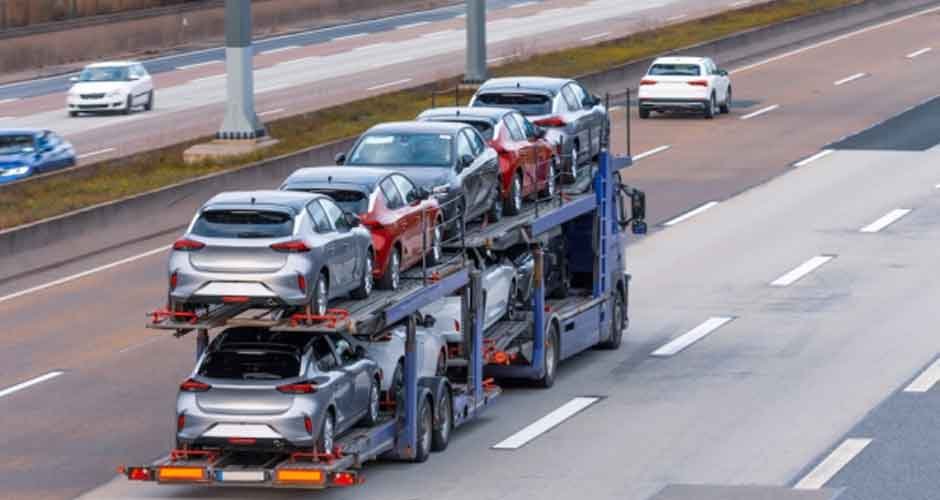
On the other hand, car hauler trailers provide a more versatile option, as they can accommodate both front-wheel-drive and rear-wheel-drive vehicles. Car haulers carry the entire vehicle on their platform, making them suitable for transporting heavier vehicles, trucks, SUVs, and even classic cars with rear-wheel drive.

Towing and Driving Stability

Stability is a critical factor to consider, as it directly impacts the safety of your vehicle during transportation. Tow dollies, with their two-wheeled design, can sometimes be less stable than car hauler trailers, especially at high speeds or on uneven roads. When using a tow dolly, it is crucial to take extra precautions and drive at moderate speeds to ensure safe and stable towing.

Car hauler trailers, with their four-wheel design and evenly distributed weight, offer better stability during transportation. They are less prone to swaying, making them a safer option for long-distance travel or challenging road conditions. If you plan on towing your vehicle over extended distances or through varying terrains, a car hauler trailer may be the better choice for enhanced stability.

Ease of Use and Setup

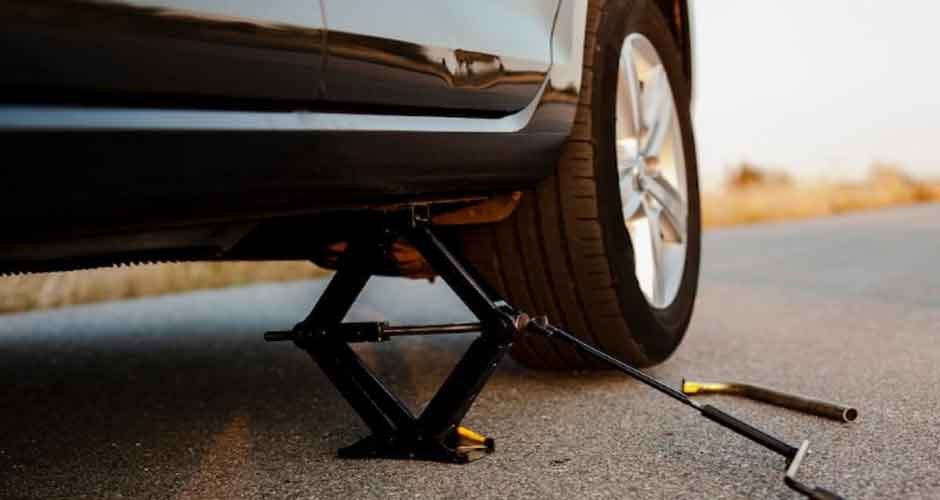
The ease of use and setup can significantly impact your towing experience, especially if you frequently need to transport your vehicle. Tow dollies are generally easier and quicker to attach to the towing vehicle compared to car hauler trailers. They are also more compact and lightweight, making them easier to maneuver and store when not in use.

Conversely, car hauler trailers may require more time and effort to set up properly, including securing the vehicle and adjusting the ramps. They are bulkier and may require more space for storage. If you value convenience and quick setup, a tow dolly might be a more practical option.
Ease-of-Use-and-Setup

Towing Capacity and Weight Considerations

Towing capacity is a crucial factor, particularly if you plan to transport larger vehicles or multiple cars simultaneously. Tow dollies typically have a lower weight capacity compared to car hauler trailers, restricting them to smaller and lighter vehicles. Exceeding the weight limit of a tow dolly can lead to safety hazards and vehicle damage.

Car hauler trailers, on the other hand, come in various sizes and weight capacities, offering greater flexibility in transporting different types of vehicles. They are better suited for heavy-duty towing and can handle larger loads without compromising safety and stability.

Cost and Budget

Budget considerations play a significant role in choosing between a tow dolly and a car hauler trailer. Tow dollies are generally more affordable to rent or purchase, making them an attractive option for occasional use or if you have a tight budget. They also tend to be more fuel-efficient due to their lighter weight, potentially saving you money on long-distance trips.

Car hauler trailers, while more expensive upfront, offer greater versatility and durability, making them a better long-term investment if you frequently need to transport vehicles. Consider your transportation needs and budget constraints to determine which option aligns best with your financial goals.

Conclusion

Choosing between a tow dolly and a car hauler trailer requires careful consideration of your specific needs, vehicle type, budget, and towing requirements. Tow dollies are suitable for front-wheel-drive cars and offer a more budget-friendly and easier-to-use option for occasional towing. Car hauler trailers, on the other hand, provide greater stability, versatility, and towing capacity, making them ideal for a wide range of vehicles and long-distance transportation.

Ultimately, the decision boils down to your unique circumstances and preferences. Evaluate the pros and cons of each option, consult with reputable towing experts, and choose the one that aligns with your vehicle’s requirements, towing demands, and budgetary considerations. A well-informed decision will ensure a safe and successful vehicle transport experience if safety regulations are followed, regardless of whether you opt for a tow dolly or a car hauler trailer.

Related Posts

Fleet Maintenance Questions Behind Heavy-Duty Drum Brake Shoes

Fleet Maintenance Questions Behind Heavy-Duty Drum Brake Shoes

by Emily Stevens
August 19, 2026
0

Choosing heavy-duty drum brake shoes can appear to be a simple part-number task. For a commercial fleet, complete brake shoes...

How to Find a Quality Tire Shop in Houston, TX

How to Find a Quality Tire Shop in Houston, TX

by Emily Stevens
July 21, 2026
0

Finding a tire shop is easy in a city as large as Houston, but finding one you can trust takes...

Leveling Kit Vs. Lift Kits: Understanding the Difference Between Lifting and Leveling Your Truck

Leveling Kit Vs. Lift Kits: Understanding the Difference Between Lifting and Leveling Your Truck

by Emily Stevens
July 15, 2026
0

Truck owners often start modifying their suspension for one simple reason: The truck no longer matches the work it is...

POPULAR NEWS

Delores Miller Clark

Delores Miller Clark: Learn More about John List’s Ex-Wife

September 27, 2022
Deserai Anderson Utley Personal Life, Career, & More

Deserai Anderson Utley Personal Life, Career, & More

September 30, 2022
Lisa Seal Frigon

Lisa Seal Frigon: All about Drug Lord Barry Seal’s Daughter

September 18, 2022
Linnell S. Nobori

Linnell S. Nobori: All there is to Know about Ted Bessell’s Wife

September 5, 2022
Gweneth Gonzales Thomas

What You May Not Know About Gweneth Gonzales Thomas, Richard Thomas’ Daughter

August 2, 2022

EDITOR'S PICK

Italian Citizenship by Descent

Italian Citizenship by Descent: Benefits and Advantages

January 22, 2025
How to Remove Stubborn Toilet Bowl Rings Completely - 6 Tips

How to Remove Stubborn Toilet Bowl Rings Completely – 6 Tips

February 2, 2024
Assets worth billions of dollars disappear every year. Since asset tracking systems rely on antiquated paper-based systems prone to human error, they can be misplaced, stolen, or just forgotten entirely. According to research conducted, foreign businesses are allegedly "losing" AU$4.3 billion ($2.92 billion) in assets annually as a whole. If you extrapolate the figures worldwide, it becomes clear that there is an issue with tracking physical assets in the workplace or across several organizations. Asset monitoring systems Reports show that despite the availability of low-cost, dependable wireless asset tracking solutions, half of all businesses still manually log their assets, and for thirty-five percent of businesses, having an employee walk around the premises to locate assets is their primary method of tracking assets. Every organization loses several staff hours annually on average while looking for misplaced tangible assets. Even worse, the study shows that only 22% of the time are the assets retrieved. However, things don't have to be this way. How Does GPS Asset Tracking Operate and What Is It? Most people are familiar with GPS technology from its use in mobile devices and smartwatches for location-based functions like mapping. However, GPS may be utilized for many more purposes, such as asset tracking. We’re sure you're wondering what exactly asset tracking means. Using GPS to track assets by corresponding with satellites is known as GPS asset tracking. An asset's location and movement can be tracked as long as it is equipped with a GPS tracker. As a result, assets can be found using their actual location, thus increasing asset visibility and lowering the possibility of missing assets. How to Track Your Lost Assets 1. Global Positioning System (GPS) What It Is: GPS asset tracking is a satellite-based navigation system that gives location and timing information in all-weather situations, anywhere, with an unobstructed line of sight to four or more GPS satellites. How It Works: GPS operates by a network of satellites that deliver signals to GPS receivers. The receiver determines its position by monitoring how long signals from numerous satellites take to reach it. By triangulating these signals, the receiver can pinpoint its precise location. This data is subsequently forwarded to a central system for monitoring and analysis. GPS devices are attached to assets like automobiles, machinery, and high-value equipment to track them accurately. Moreover, these gadgets continuously transmit position data to a central tracking system, allowing organizations to follow their assets in real-time. Also, you can employ a RAM tracking system to track assets that travel frequently or over long distances, ensuring they are always where they should be. 2. Passive RFID tags Passive RFID tags are made up of three components: a chip, an antenna, and a substrate. • The chip holds data and, depending on its design, can be read-only (RO), write-once, read-many (WORM), or read-write. Memory spans from 2 to 1000 bits. • The antenna picks up radio-frequency (RF) waves from the reader's signal and transmits and receives information. The size of its antenna determines the capacity of a passive RFID tag. 3. Active RFID tags Active RFID tags also have a microprocessor and an antenna. However, the chips are often larger and more capable than passive tags. Long-range RFID tagging is accomplished with active tags using Bluetooth, low-energy, high-frequency, or ultra-high frequency. They have two additional features that set them apart from passive tags: an inbuilt power supply and electronics. The power source is often a battery, although it can also be solar. Unlike passive tags, the tag's built-in power supply allows it to transmit data to a reader without relying on the reader's power. Active tags can be read from distances of 100 feet or more, while passive tags can only be read up to 20 feet away. Onboard electronics sensors, microprocessors, and input/output ports are all possible components of the tag's onboard electronics. Speaking of, active RFID tags can be used in more applications than passive tags due to their electronics. 4. Cellular IoT technology. Not all asset monitoring involves identifying misplaced or stolen equipment in offices, warehouses, and factories, and some tracking difficulties necessitate a low-power solution that exceeds the capabilities of Wi-Fi access points, RFID readers, and Bluetooth LE-powered gateways. This explains, at least in part, why cellular-based low power wide area network (LPWAN) technologies are expected to increase significantly in the future years. According to telecoms giant Ericsson, cellular IoT connections will increase from 700 million in 2017 to 3.5 billion by 2023, while analyst ABI Research predicts that nearly half of LPWAN connections by 2023 will be for asset tracking applications. What are the advantages of asset tracking and management? IT asset managers can use RF Code's CenterScape platform to track what's most important, such as location, temperature, and much more. 1. Improves efficiency Regular maintenance on data center assets such as hard disks and servers requires physically removing them from a rack server. When these assets are presented to the service department, people have a tendency to misplace or mislabel them. IT administrators can significantly shorten the time it takes to locate lost hard drives or servers by digitally tracking them. 2. Enables proactive monitoring of essential assets In addition to detecting lost or misplaced assets, data center asset tracking enables IT professionals to proactively manage essential equipment states such as cooling and power. 3. Significantly enhances work-in-process tracking IT managers must oversee all stages of data center operations, from installation to maintenance. IT administrators may eliminate guesswork with data center asset tracking since RFID tagging offers real-time work status information from the floor or the field. 4. Simplifies auditing Asset tracking entails taking an accurate inventory of data center assets, right down to location details. This is just difficult to do with manual inventory techniques. Digital asset tracking minimizes costly and time-consuming human errors while significantly simplifying auditing processes. 5. Encouraging Adherence to Regulations Depending on your sector and jurisdiction, having an efficient asset management system can assist in achieving several types of regulatory compliance. For example, the IRS mandates that all companies keep accurate records of their assets. These contain information about discounts, depreciation rates, equipment or inventory acquisition prices, etc. In addition, the FASB has recently updated its asset leasing policies. Upgrading from manual records to smart asset management software is the most reliable option to achieve complete compliance in the dynamic asset management landscape. In the end! Ultimately, asset tracking can assist businesses in tracking and managing asset utilization in addition to protecting them. That said, GPS asset tracking is a significant tool for companies to optimize asset management and ensure safety. By implementing asset management technology, your business can be equipped with real-time monitoring and tracking, proactive maintenance, and geofencing.

How To Find Lost Assets Using Tracking Devices

October 23, 2024
Have Heel Pain

9 Things to Do If You Have Heel Pain

November 14, 2024
Contact Us: Info@mitmunk.com

© 2022 Mitmunk Theme Copyright

No Result
View All Result
  • Homepages
    • Home Page 1
  • Business
  • Entertainment
  • Fashion
  • Health
  • Lifestyle
  • Tech
  • Travel

© 2022 Mitmunk Theme Copyright