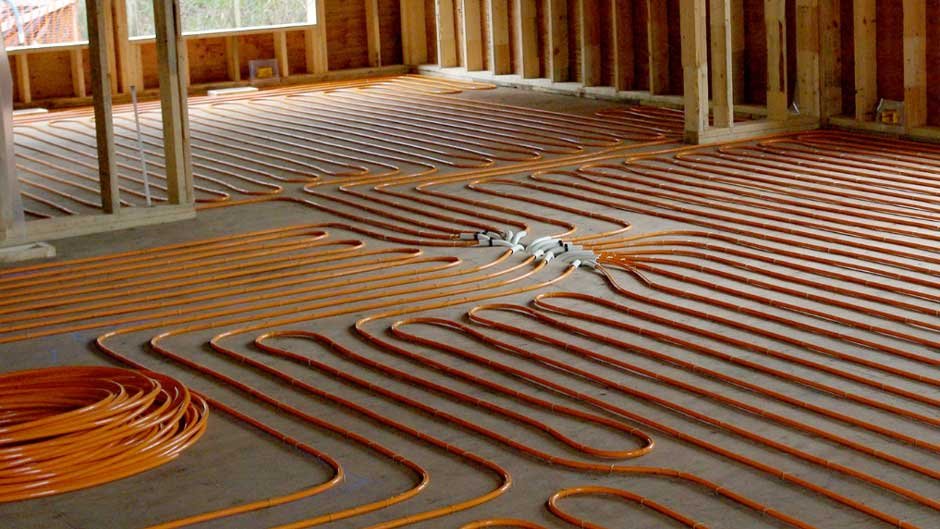
Radiant floor heating has become a popular choice for homeowners looking for a more comfortable, efficient way to warm their space. Instead of relying on blowing air, this style of heating delivers gentle, even warmth from the ground up, creating a cozy environment that feels natural and consistent throughout the home.
Radiant Heat: How Radiant Floor Heating Works
Radiant floor heating is a system that warms your home from the ground up, literally. Instead of blowing hot air through vents, radiant heat works by warming the floor surface, and that heat naturally rises and spreads evenly through the entire room. Heating elements, either water-filled tubing or electric cables, are installed beneath the flooring, and when these elements warm up, the heat rises gradually and evenly.
Hydronic systems use tubing beneath the floor to circulate warm water from a boiler or heat pump, while electric systems use thin electric heating cables or mats. The core idea is simple physics: warm surfaces transfer heat to cooler objects and people around them. Because the entire floor becomes one large, low-temperature heat source, the heat is distributed uniformly and you don’t get the hot-cold pockets common with forced-air systems. Instead of warming the air first, radiant heating systems warm people and objects directly, creating a steady and natural-feeling indoor climate. This is one reason radiant floor heating systems continue to grow in popularity among homeowners.
Radiant Floor Heating Systems vs. Traditional Heating
Most homeowners notice three big differences when switching from traditional systems: heat distribution, comfort quality, and design freedom. Traditional systems push hot air into a room, creating warm ceilings, cold floors, and temperature swings. Radiant floor heating systems warm the entire floor evenly, keeping temperatures consistent from corner to corner. Forced air is quick but can feel drafty or dry, while radiant heat feels like stepping into sunlight, soft, even, and quiet, without moving air or dust.
Traditional systems rely on air movement: heat enters through vents, rises to the ceiling, cools as it falls, and repeats, creating temperature swings, drafts, and warm or cold pockets. That reliance on vents and ductwork also means more ongoing heating maintenance, since those parts need regular cleaning and inspection. Radiant heating avoids all of that by delivering heat evenly across the floor, maintaining a consistent, stable temperature with no fan noise, blowing air, or impact on humidity. Another practical difference is how each system handles space. Traditional systems require specific vent placement and duct layouts, while radiant heating systems stay hidden under the floor and never interfere with furniture or room flow.
Benefits Of Radiant Floor Heating
Homeowners choose radiant heating for reasons that go beyond novelty. It provides consistent, room-wide warmth with no cold floors, chilly corners, or on/off blasts of hot air. Because nothing blows, dust, pollen, and pet dander aren’t circulated, which supports better indoor air quality. The system operates in total silence, with no fans, blowers, vents, or duct noise. Radiant floor heat also tends to feel warmer at lower thermostat settings, since heat is delivered directly where you are rather than rising to the ceiling.
Hydronic tubing can last for decades with minimal maintenance, and electric mats have no moving parts to wear out, giving radiant heating systems long-term durability. Since everything is hidden beneath the floor, homeowners get complete design freedom with clean, open spaces. The warm floors make winter mornings noticeably more comfortable, and the overall experience feels more like a naturally comfortable environment you don’t have to think about.
Best Homes and Floors for Radiant Heating Systems
Radiant systems are versatile, but certain conditions make them shine. They work especially well in homes with cold floors such as tile, stone, or concrete slabs, and in basements or slab-on-grade spaces where floors tend to stay cool. Open floor plans benefit from the even, wall-to-wall warmth, and new builds or major remodels are ideal since the flooring is already being redone. Energy-efficient or airtight homes can take full advantage of radiant floor heat, and homes with high ceilings benefit because this type of heat isn’t lost upward the way forced air often is.
The flooring materials that pair best with radiant floor heating systems include tile, stone, engineered hardwood, polished concrete, luxury vinyl, and many laminates, since these conduct heat efficiently. Carpet can work but should stay on the thinner side because thick padding or rugs reduce heat transfer.
Energy Efficiency of Radiant Floor Heat
Radiant heating can be significantly more efficient than forced air, especially hydronic systems paired with high-efficiency boilers or heat pumps. Radiant floor heat often delivers comfortable warmth at lower operating temperatures, which reduces energy use. Hydronic setups running at 80-120°F are far more efficient than traditional radiators that need 160-180°F, and efficiency improves even more when paired with a heat pump or modern condensing boiler. Electric radiant is efficient in operation but can cost more depending on local utility rates.
Efficiency depends heavily on real-world conditions. Good insulation beneath the floor helps prevent downward heat loss, and the thermal conductivity of the flooring matters because denser materials transfer heat more effectively. Home airtightness also plays a major role, since drafty spaces require any heating system, radiant heating included, to work harder. Zoning and smart controls can further reduce energy waste by warming only the areas you use. When everything is designed well, radiant heating systems can keep operating costs surprisingly low.
Radiant Floor Heating Installation Basics
Homeowners can choose from several installation styles, each suited for different remodeling situations. In-slab installations embed tubing or cables directly into concrete and are ideal for basements, additions, large spaces, and new construction. Over-subfloor panels or thin underlayment systems use hydronic channels or electric mats placed just beneath the final flooring and work well for remodels where flooring is being replaced. Underfloor (joist bay) installation places heating elements below the subfloor from a basement or crawlspace, making it useful when you don’t want to remove existing floors.
During installation, expect some level of flooring removal unless the system is installed from underneath. Floor height may increase slightly depending on the system. Coordination with plumbers or electricians is common, and timelines vary from a single day for small electric projects to several days for whole-home radiant floor heating systems.
Radiant Heating Systems: Costs to Expect
Costs vary by system, and installation prices depend on the home size, system type, and construction setup. Electric radiant typically runs $10-$20 per square foot installed and is usually best for single rooms, since whole-house use can become costly. Hydronic radiant generally falls between $15-$30 per square foot with a higher upfront cost, but it becomes more economical for large areas or whole-home projects. In new construction, hydronic radiant heating systems may add 5-15% to the HVAC portion of the build.
Operating costs depend on the energy source. Electric radiant can be more expensive in areas with high electricity rates but works well for small zones like bathrooms. Hydronic radiant is cost-effective, especially when paired with heat pumps or high-efficiency boilers, and a well-designed system can outperform traditional heating over the long term. Many homeowners also find that radiant heat allows for lower thermostat settings while maintaining comfort.
Drawbacks of Radiant Floor Heating Systems
Radiant heating isn’t perfect for every situation, and homeowners should be aware of a few limitations. It has a slower heating response than forced air, since radiant floor heat warms gradually and is best for steady, consistent comfort rather than rapid temperature swings. Upfront cost can be significant, especially for hydronic systems, and flooring compatibility matters because materials like thick carpet or certain hardwoods can reduce efficiency.
Repairs can be difficult since accessing tubing or wiring requires opening the floor, though failures are rare. Electric radiant heating systems may also have higher operating costs depending on local utility rates, as they’re tied to kWh pricing. Overall, radiant heating excels when used to maintain stable warmth rather than delivering quick bursts of heat.
Is Radiant Floor Heating Right for Your Home?
Radiant heating is ideal for homeowners who prioritize steady, consistent comfort, want warm floors, and prefer clean, silent heating without moving air or dust. It’s especially appealing for those planning a remodel or building new, renovating kitchens or bathrooms, or living in colder climates with naturally cool flooring. Radiant floor heating systems also suit homeowners who value long-term operating savings over the lowest upfront price.
It may not be the best fit if you need rapid heating, have very thick carpet throughout the home, or are looking for the cheapest installation option. As a general guide, electric radiant heat is usually ideal for small-area remodels like bathrooms or kitchens, while hydronic radiant heating systems offer the best long-term value for whole-home or large-area heating. Carpet-heavy homes or households that depend on quick heat may be better served with a hybrid or traditional system.