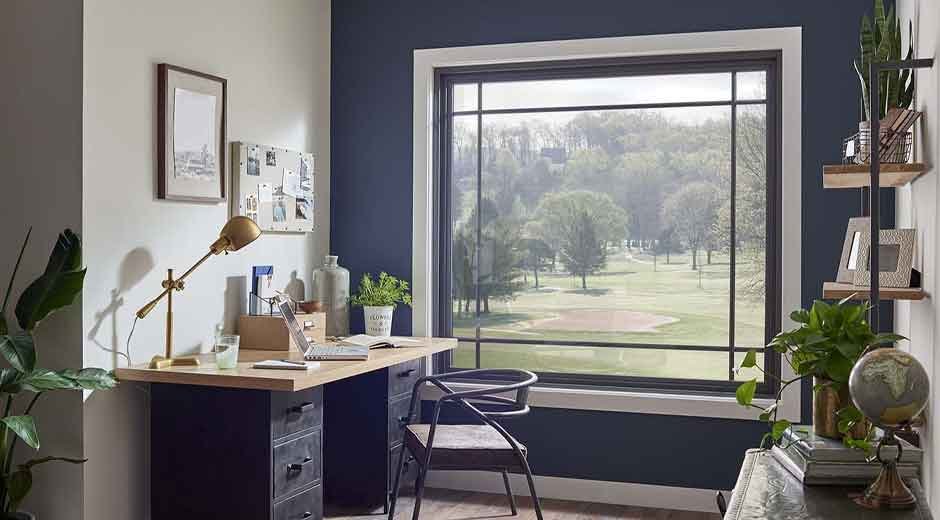
In our homes spare rooms can often become neglected spaces primarily used for storing laundry, old boxes and ‘to-be-sorted’ piles. However, with just a few minor changes and improvements you can easily transform your – spare room into a space that fosters productivity and focus. There are huge mental and physical benefits that come from creating a distinct home office space that separates home and work life. This guide will cover decluttering, investing in your health and creating a professional atmosphere in your spare room.
Declutter and Organise
Before transforming your spare room, it is a good idea to completely empty and declutter the space so you can start with a blank canvas. Clearing everything out first stops clutter from dictating the layout of the room and allows you to be intentional when restoring pieces back into your space.
Typically, spare rooms can be cluttered and disorganised environments, so it is a good idea to start by using the ‘Keep, Donate, Store’ method. This method is a decluttering process that involves organising objects into different categories of items you would like to keep, donate or store.
When storing your items it is important to utilise sturdy cardboard boxes and high-quality bubble wrap to keep your items safe when they are moved to an alternative storage space. Furthermore, it can be helpful to label your boxes so you can easily identify your items when you require them.
Invest in Your Health
Creating a dedicated office space within your home is an investment in your health, wellbeing and work ethic. If your home lacks a dedicated workspace, you can often end up working from an unergonomic work setup, like the dining room table, which can cause a whole range of issues for your mental and physical health.
Investing in an ergonomic workstation in your home office is essential for maintaining good posture, protecting your physical health and improving your standard of work. A good ergonomic work setup includes an ergonomic office chair, an adjustable desk and a laptop stand. Ergonomic chairs contain features such as lumbar supports, adjustable hand rests and seat height, all of which improve your posture and prevent injuries.
An adjustable desk is another beneficial investment as it provides sitting and standing options to raise energy levels and improve productivity throughout the day. Furthermore, using a laptop stand can ensure that your laptop remains at eye level whilst working to prevent neck strains and back problems. Although an ergonomic setup can be an expensive investment, in the long-term it will protect your body from developing serious musculoskeletal injuries and overall improve your output of work.
Organisation and Zoning
Turning a spare room into a productivity hub starts by treating the area as an intentional space, rather than a dumping ground of overflowing storage. This involves creating designated zones for different tasks and installing adequate storage to prevent clutter.
To achieve this start by successfully zoning the space for its intended purpose. For instance, create a clear zone dedicated to a focused desk area with an ergonomic work setup. Separating this area from the rest of the room will increase focus and productivity when working. It can be helpful to create a zone dedicated to storage, so that everything is stored in the same area for easy access. Furthermore, it is important to take breaks during the day when working to let your mind and body reset and avoid burnout. A quiet thinking or reading corner with a comfortable chair can be another zone separated from the chaos of your workspace.
Incorporating adequate storage facilities is key to preventing a build-up of mess and clutter in your room. In a small room floating wall shelves can be beneficial for storing books, files and stationery, whilst doubling up as a decorative feature that adds a touch of personality to your workspace. Furthermore, filing cabinets and drawers can be useful for organising important documents and providing easy access. Drawers can be used for storing non-work-related items, so they don’t distract during the 9 to 5.
Lighting and Atmosphere
Lighting can be the difference between a room that leaves you drained and one that helps you feel energised and engaged. In an office natural light is highly beneficial as it aligns circadian rhythms, improves productivity and reduces energy usage. Maximise natural light by placing your desk opposite a window and using sheer blinds or curtains to block direct sunlight and reduce glare.
During the dark winter months or in rooms with poor natural light you can use LED lights to mimic natural sunlight. Layer your lighting using ambient lighting for general illumination, task lighting with desk lamps for focused lighting and softer accent lights to provide depth and warmth. To mimic natural light, choose bulbs with cooler daylight tones for during work hours.
Finally, adding plants, art, photos and personal touches can make the space more inviting, rather than a clinical office environment. Keep these decor pieces to a minimum so that you don’t overwhelm the space and leave it feeling cluttered. Incorporating furniture pieces and decorative items can also be highly beneficial for reducing echoes during video calls.
A productivity hub isn’t just about a desk, it’s a curated environment that is built to foster focus, energy and creativity. When transforming your spare room into a productivity hum it’s important to create a space that inspires both work and home. Transforming your space isn’t always about huge renovations and buying new furniture, it can be as simple as organising and decluttering a room to allow space for a new purpose.