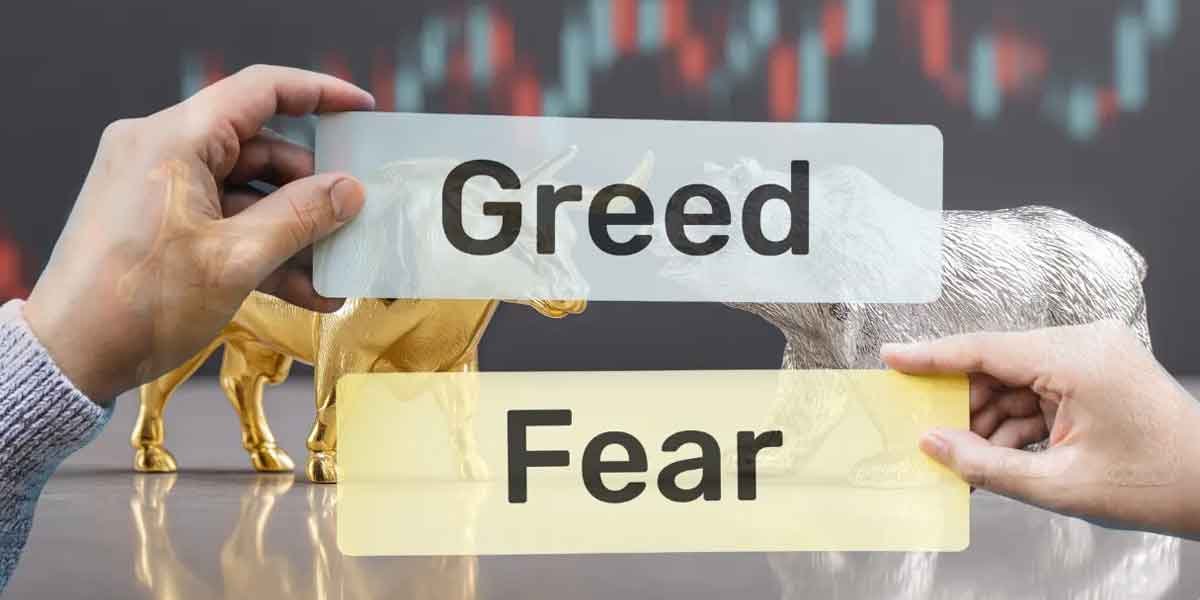
Markets do not move on numbers alone. They move on the human responses to those numbers, and on the stories we tell ourselves about risk, reward, and control. Fear, greed, and overconfidence are not abstract concepts. They are practical forces that show up in order tickets, portfolio rotations, and the timing of every exit and entry.
Understanding how these three drivers appear in real decisions is the first step to managing them. The goal is not to eliminate emotion. It is to create structures that keep emotions from steering the wheel when conditions are changing fast.
Fear: From Caution to Paralysis
Fear is a protective signal. It helps traders respect uncertainty, size positions conservatively, and honor stops. In healthy amounts, fear sharpens attention and encourages scenario planning. When fear swells, it distorts risk perception. Traders sell winners too early, avoid valid setups, or hesitate until opportunity passes. After losses, fear often morphs into a defensive posture that mistakes inaction for safety.
The practical antidote is measured exposure. Define risk in advance with clear stop placement and a fixed percentage of capital at risk per trade. Use checklists to confirm that a setup meets your criteria so you are not relying on a gut feeling during volatile moments. If fear remains elevated, scale down size rather than abandoning the playbook. You protect your learning curve while keeping execution muscles active.
Greed: The Allure of More
Greed is not only about wanting gains. It is also about wanting them faster than your method can reliably deliver. It shows up as chasing extended moves, adding size to catch a runaway trend, or dropping rules when a hot hand feels invincible. In the short term, greed can reward bad habits, which is why it is so persistent. The market occasionally lets a broken rule pay out, and that intermittent reinforcement trains us to try again.
Counter measures begin with pre-committing trade limits. Cap the number of daily entries, the maximum open risk, and the total profit you will accept before standing aside. Lock in partial profits according to a predefined ladder that reflects real probabilities, not wishful targets. Greed loses power when your process channels ambition into disciplined actions and when wins are harvested methodically.
Overconfidence: Illusions of Skill and Control
Overconfidence often grows during calm markets or after a streak of success. Perceived patterns feel clearer. Risk feels smaller. Rules start to look optional. The danger is not optimism itself. The danger is the shrinking sense of uncertainty that makes prudent checks feel unnecessary. Overconfidence can lead to under hedged exposure, overly tight stops, or one way positioning that ignores asymmetry.
Break the cycle by returning to base rates and evidence. Track win rate, average gain, and average loss by setup, not by intuition. Expand pre-trade notes to include reasons a trade could fail, and list the invalidation signal in writing before you enter. Use a peer review or brief daily recap to pressure test your logic. Inviting friction into your thinking prevents the silent drift from confidence into complacency.
How the Trio Interacts
These forces rarely act alone. A fearful exit can be followed by a greedy reentry that tries to catch the move you missed. A winning streak can plant the seeds of overconfidence, which then magnifies losses and triggers new fear. The feedback loop is powerful because the market offers constant, noisy reinforcement that can be interpreted in multiple ways.
You can break the loop by shifting your focus from outcomes to process quality. Grade each session on adherence to rules, not on profit and loss. Add a short debrief that flags which emotion was most present and how it influenced decisions. Over time, these observations turn into early warning signals. You learn to recognize your personal pattern and act before behavior spirals.
Practical Guardrails for Daily Execution
The most reliable controls are simple and repeatable. Start with a pre-market routine that standardizes your state. Review your risk statement, preview key levels, and set alerts so price action prompts you rather than screen surfing. Use a written playbook that defines entry, exit, invalidation, and size for each setup. Ground these routines in the Psychology of Trading, which acknowledges that behavior and belief shape performance as much as analysis.
During the session, reduce cognitive load. Hide irrelevant symbols, limit news inputs, and keep a minimal set of indicators that you understand thoroughly. After the close, document one thing to keep and one thing to change tomorrow. Small, continuous adjustments strengthen discipline without adding complexity. Over weeks, these habits make fear more informative, greed more manageable, and confidence more realistic.
Conclusion
Fear, greed, and overconfidence will always be present in markets because they are present in us. The objective is to convert them from drivers into data. By defining risk in advance, enforcing limits on exposure, testing assumptions against evidence, and grounding daily work in a consistent routine, you create conditions where emotions inform rather than dominate. With that structure in place, decisions become clearer, execution steadier, and results more aligned with the edge you have worked to build.