
Managing a modern workforce has become increasingly complex as companies embrace hybrid, part-time, and remote work arrangements. In this distributed environment, simply counting the number of people on your payroll is no longer enough to understand your true operational capacity.
To gain a clear picture of staffing levels, business leaders rely on a standardized metric known as Full-Time Equivalent.
What Is Full-Time Equivalent (FTE)?
The term refers to a unit of measurement that represents the workload of an individual employee in a way that makes it comparable across various employment types. It allows an organization to see its staffing levels in a standardized format regardless of whether team members are full-time, part-time, or contract-based.
Defining the Metric
It is important to realize that it measures workload rather than individual people. One FTE is typically equal to the number of hours a full-time employee works in a specific period, usually 40 hours per week. By standardizing these hours, a company can determine how many full-time workers their total labor hours represent.
The Fundamental Calculation
The common formula involves taking the total hours worked by all employees and dividing that sum by the full-time hours requirement of the organization. If your standard is 40 hours and you have two part-time employees working 20 hours each, their combined contribution equals one full-time equivalent. This distinction is vital because it provides a more accurate representation of human resource capacity than a simple headcount.
Why FTE Matters for Growing Companies
As a business scales, the need for precise data becomes more urgent to avoid overstaffing or burnout among existing teams.
Accurate Workforce Planning and Budgeting
Utilizing full-time equivalent employees as a baseline allows for more accurate workforce planning. It helps managers determine if they have enough labor power to meet production goals without over-hiring. From a financial perspective, this metric is essential for budgeting and cost management. It enables leadership to forecast labor costs based on the total volume of work rather than the fluctuating number of individual staff members.
HR and Payroll Compliance
Many labor laws and tax regulations are triggered by specific staffing thresholds. For example, eligibility for certain employee benefits or compliance with large-employer mandates often depends on your total count of full-time equivalent employees. Using this metric ensures that your company stays within legal boundaries and avoids penalties associated with miscalculating your workforce size.
FTE vs. Headcount: Why the Difference Matters
While headcount is a simple count of every person employed by the company, it can often be misleading for operational planning.
The Limitations of Headcount
Headcount only measures the number of people and ignores their actual working time. For instance, a company with 10 employees might seem well-staffed, but if all those individuals are part-time workers, the actual labor capacity might only be 5 FTE. This discrepancy can lead to significant errors in project scheduling and resource allocation if the leadership relies solely on headcount.
Reliable Workforce Models
Growing companies must prioritize the workload metric to build more reliable workforce models. By focusing on the hours of labor available, managers can better identify gaps in productivity. This approach ensures that every project is backed by the necessary human capital, preventing the common mistake of assuming that more people automatically translate to more completed work.
Practical Use Cases of FTE in Business Operations
The application of this metric extends across various departments, from project management to international expansion.
Project Staffing and Policy Eligibility
In project management, identifying exactly how many full-time equivalent units are needed for a specific task ensures that timelines remain realistic. Furthermore, HR departments use these figures to determine eligibility for benefits and insurance. This ensures that the company remains fair and consistent in its treatment of employees across different departments.
Cross-Border Hiring and Distributed Teams
For companies with teams located across different countries, the metric helps unify workload planning despite varying local labor standards. Some countries may have a standard 35-hour workweek while others use 45 hours. Standardizing these into a single metric allows a remote-first company to manage contractors, freelancers, and part-time staff through a unified lens of productivity.
How to Calculate FTE Easily
Calculating this figure does not require complex software, though it does require accurate time records for all staff members.
To understand how to calculate FTE, follow these simple steps. First, add up the total hours worked by all employees during a specific period. Second, divide that total by the company standard for a full-time position. For example, if your team worked a total of 800 hours in a week and your standard is 40 hours, your total is 20.
Consider a scenario where you have 10 full-time staff working 40 hours and 10 part-time staff working 20 hours. The total hours worked equals 600. Dividing 600 by 40 results in 15 full-time equivalent employees. This clear breakdown helps you see that while you have 20 people on staff, your actual labor capacity is equivalent to 15 full-time workers.
Streamline FTE Management with a Trusted Partner — BIPO
We recommend partnering with BIPO to simplify your workforce management. As a reliable global Employer of Record, BIPO provides the tools needed to manage international teams with ease.
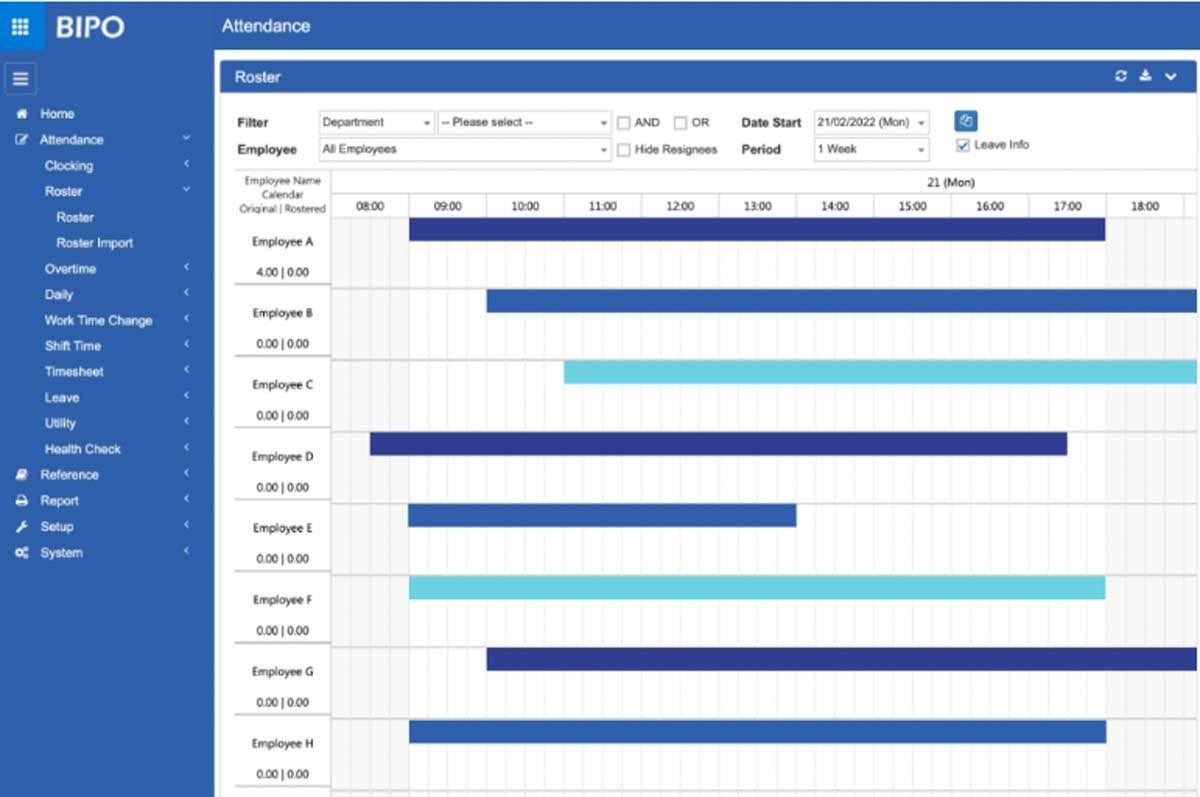
BIPO HR Management System automates the tracking of hours and ensures that your workforce data is always accurate and compliant with local standards.
By leveraging BIPO’s expertise and advanced technology, you can focus on scaling your business while we handle the complexities of global employment and labor metrics.