Truck owners often start modifying their suspension for one simple reason: The truck no longer matches the work it is expected to do.
A contractor adds heavier equipment. A crew starts towing more often. Someone upgrades tire size and suddenly notices the truck feels nose-down under load or sits lower than expected after adding accessories. That is usually when the conversation about lift kits or leveling kits begins.
The problem is that many buyers treat leveling and lifting as interchangeable upgrades. They are not. While both change ride height, they solve different problems and affect the truck in very different ways.
For operators already investing in professional truck upfitting, understanding the difference matters. The wrong suspension setup can affect towing stability, tire wear, alignment, and long-term drivability. The right setup improves clearance, stance, and workload capability without compromising how the truck performs every day.
What A Leveling Kit Actually Does
Most factory trucks sit slightly lower in the front than in the rear. Manufacturers design them this way because the rear suspension is expected to settle under payload or trailer tongue weight.
A leveling kit raises the front of the truck to create a more even stance.
Typically, leveling kits add:
- 1 to 3 inches of front lift
- Improved tire clearance
- A more balanced appearance
But appearance is rarely the only reason commercial operators install them.
A truck carrying a front bumper, winch, tool setup, or snow equipment often loses front ride height over time. Leveling restores usable clearance and improves overall balance.
For many daily-use trucks, lift kits or leveling kits are a practical upgrade rather than a cosmetic one.
What A Lift Kit Changes
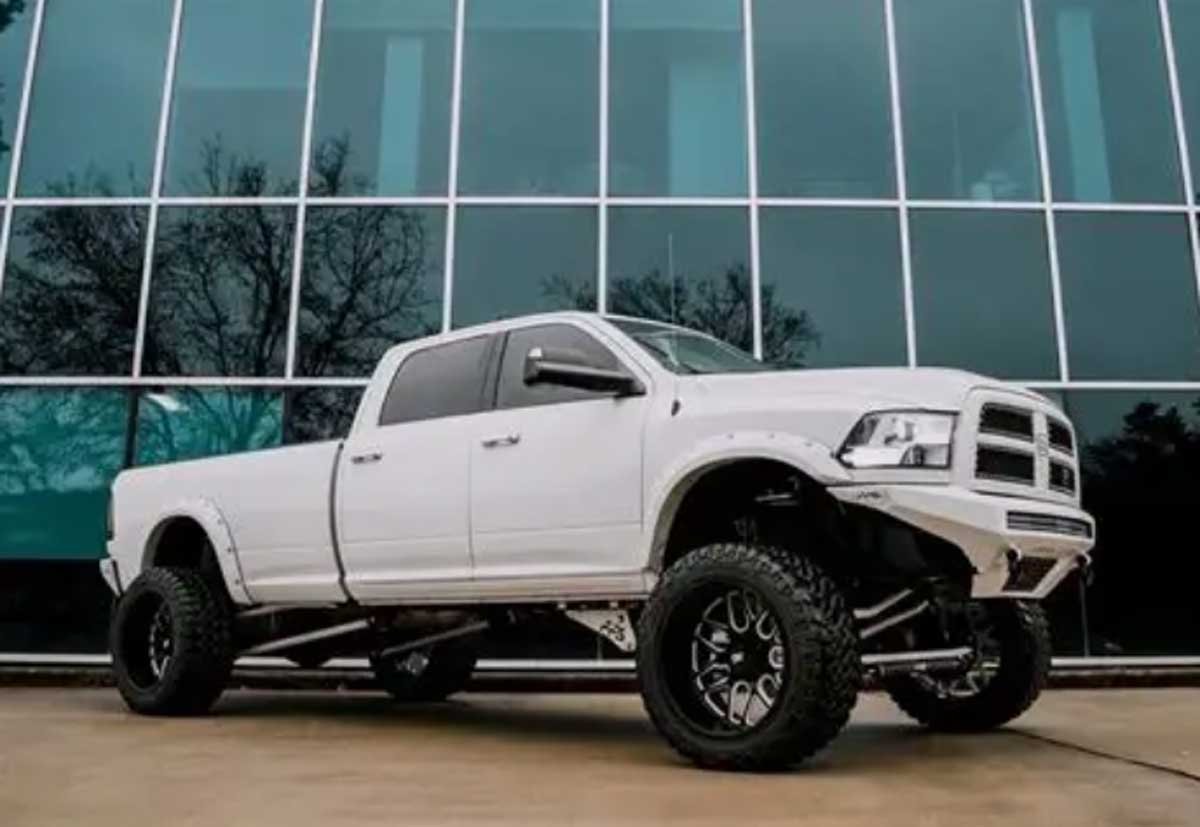
Lift kits raise the entire truck higher off the ground. Unlike leveling kits, they increase overall ride height and often involve more extensive suspension modifications.
A full lift kit may include:
- New shocks and springs
- Crossmember
- Control arms
- Steering corrections
- Driveline adjustments
The goal is not just to raise the front. It is to increase total ground clearance and allow for larger tires.
Operators who spend time on rough access roads, uneven jobsites, oilfield terrain, or agricultural property often benefit from properly engineered lift kits, which improve underbody clearance and reduce the risk of scraping or suspension contact under load.
That said, bigger is not always better. Trucks that tow regularly need suspension systems designed to maintain stability, not just height.
The Real Difference Between Leveling And Lifting
On paper, the distinction seems simple:
- Leveling kits raise the front.
- Lift kits raise the entire truck.
In practice, the decision affects how the truck behaves every day.
A leveling kit usually preserves more factory ride characteristics. Steering geometry changes less dramatically, towing stability stays more predictable, and fuel economy often remains closer to stock.
Lift kits change more variables at once:
- Center of gravity
- Driveline angles
- Suspension travel
- Braking feel
- Trailer alignment
This is why experienced operators carefully consider the workload before modifying suspension. A truck that spends most of its time towing enclosed trailers or hauling material may prioritize stability differently than a truck built for off-road access.
The best lift kits and leveling kits are those matched to actual use, not social media trends or appearance alone.
How Suspension Changes Affect Towing
One of the most overlooked parts of suspension modification is how it changes towing behavior.
A truck that tows daily needs:
- Predictable braking
- Stable rear suspension
- Controlled squat under tongue weight
- Balanced steering feel
A poorly chosen lift setup can create excessive rear sag or unstable trailer tracking.
This becomes especially noticeable when towing heavier loads like dump trailers. A truck that feels fine unloaded may behave completely differently once a trailer adds several hundred pounds of tongue weight.
Longer wheelbase trucks with moderate leveling setups often tow more comfortably than aggressively lifted trucks running oversized tires. That does not mean lift kits are wrong. It means the suspension needs to match the job.
Experienced owners usually build around workload first and appearance second.
Tire Size Changes Everything
Many suspension upgrades are driven by owners wanting larger tires. But larger tires affect more than appearance.
Bigger tires:
- Increase rotating mass
- Affect braking distance
- Change gearing feel
- Influence fuel economy
- Alter steering response
A leveling kit may allow slightly larger tires without major suspension changes. A lift kit opens the door for substantially larger setups.
But larger tires also create new considerations around payload, towing response, and drivetrain strain.
That matters for trucks carrying service bodies, heavy cargo, or upgraded truck beds, where total vehicle weight already increases stress on suspension components.
Ride Quality and Daily Use
Some suspension setups look impressive in photos but can be frustrating in daily use.
This is especially true for:
- Frequent highway driving
- Tight urban parking
- Trailer hookup height
- Repeated loading cycles
A truck that sits excessively high may become harder to enter, more difficult to load, and less comfortable to tow consistently.
Leveling kits are often preferred for trucks that split time between work and commuting because they preserve much of the original drivability while improving stance and clearance.
Lift kits make more sense when terrain and access needs justify the tradeoffs.
Think Beyond the Initial Install
The suspension upgrade itself is only part of the equation.
After lifting or leveling, trucks may also require:
- Alignment adjustments
- Upgraded shocks/struts
- Towing setup changes
Ignoring these secondary considerations is where problems start.
The most reliable suspension setups are usually the ones built conservatively and installed with long-term use in mind.
Frequently Asked Questions
FAQ
Is A Leveling Kit Better For Towing?
In many cases, yes. Leveling kits preserve more of the factory suspension geometry and often deliver better towing manners than aggressive lift setups.
Do Lift Kits Reduce Payload Capacity?
They can affect handling and load distribution depending on design. Properly engineered systems matter, especially for commercial trucks.
Can You Run Larger Tires With A Leveling Kit?
Usually, yes. Most leveling kits provide enough clearance for moderately larger tires.
Are Lift Kits Bad for Work Trucks?
Not necessarily. Trucks operating in rough terrain or off-road conditions can benefit significantly from additional clearance when the suspension is designed correctly.
Which Option Is Better for Daily Driving?
For most daily-driven work trucks, leveling kits strike a balance between appearance, clearance, and drivability without significantly changing towing behavior.
Build Around the Work, Not Just the Look
The best truck setups are those that continue to perform well after the initial install.
When comparing lift kits and leveling kits, focus less on maximum height and more on how the truck actually works:
- How it tows
- How it handles load
- How it behaves on real roads and jobsites
A suspension upgrade should improve capability, not create compromises that show up every day.
Choose the setup that supports your workload, protects drivability, and keeps the truck productive over the long haul.