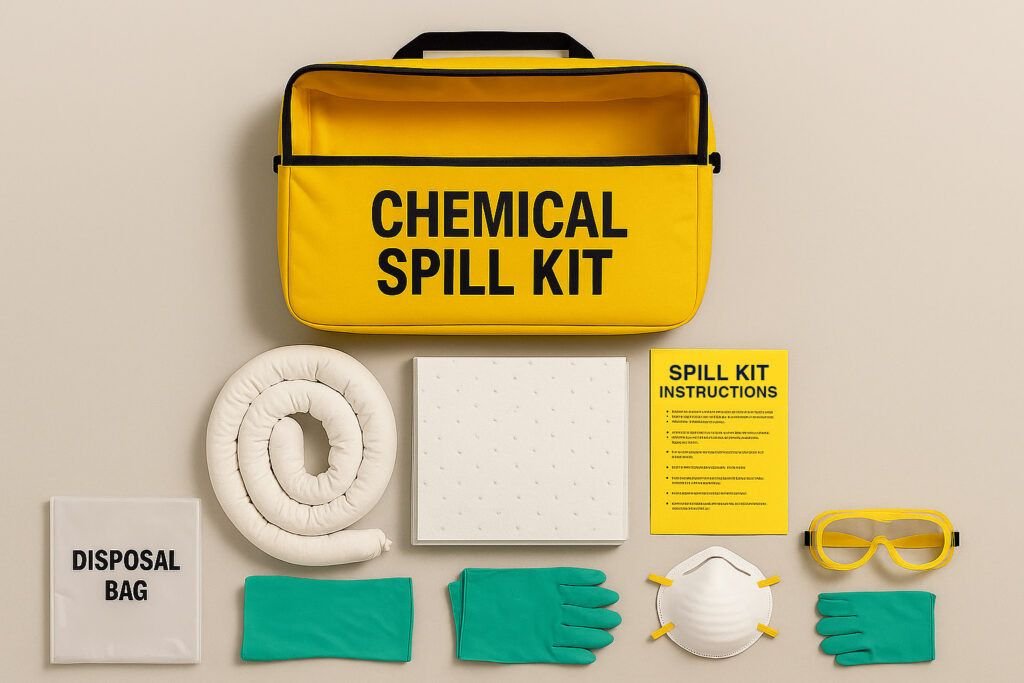
Chemical spills can occur in workshops, warehouses, laboratories, manufacturing facilities and other workplaces where liquids are handled or stored. Having appropriate response equipment available can help teams contain spills more effectively and reduce risks to people, property and the surrounding environment.
Selecting a kit should begin with understanding the substances present in the workplace. Different liquids can require different absorbents and protective equipment, so a general-purpose kit may not suit every chemical incident.
Key Features to Look for in the Best Chemical Spill Kits
Choosing the right kit involves more than checking its stated absorbency. Businesses should consider chemical compatibility, kit capacity, accessibility, storage conditions and whether replacement components can be obtained easily.
The best chemical spill kits should be matched to the substances, likely spill volumes and risks present at the workplace. A practical kit should also be easy for workers to access and contain appropriate materials for controlling the types of spills that could reasonably occur.
Match the Kit to Workplace Chemicals
Start by identifying the chemicals regularly stored, transferred or handled. Absorbents should be suitable for those substances, particularly when corrosive or hazardous liquids are involved. Using a kit designed for the specific spill type can support a more controlled and appropriate response.
Choose an Appropriate Capacity
Consider the potential volume of a spill rather than focusing only on everyday leaks. Workplaces handling drums, containers or larger quantities of liquids may require greater absorbent capacity than sites dealing mainly with small containers.
The location and number of kits should also reflect where chemicals are stored or used so workers can reach suitable equipment quickly.
Check Accessibility and Kit Contents
A spill kit is most useful when employees can locate and access it quickly. Position kits close to relevant work areas without placing them where a spill could block access.
Businesses should also inspect kit contents regularly and replace used, damaged or missing items. Keeping equipment complete and clearly identified helps ensure it remains ready for use when required.
Summary
Choosing the best chemical spill kits requires careful consideration of chemical compatibility, likely spill size, accessibility and replacement needs. Selecting equipment that reflects actual workplace hazards can support a more organised and effective spill response. Businesses exploring spill-control equipment can review options from Spill Station, Australia for workplace spill kits and related safety solutions.