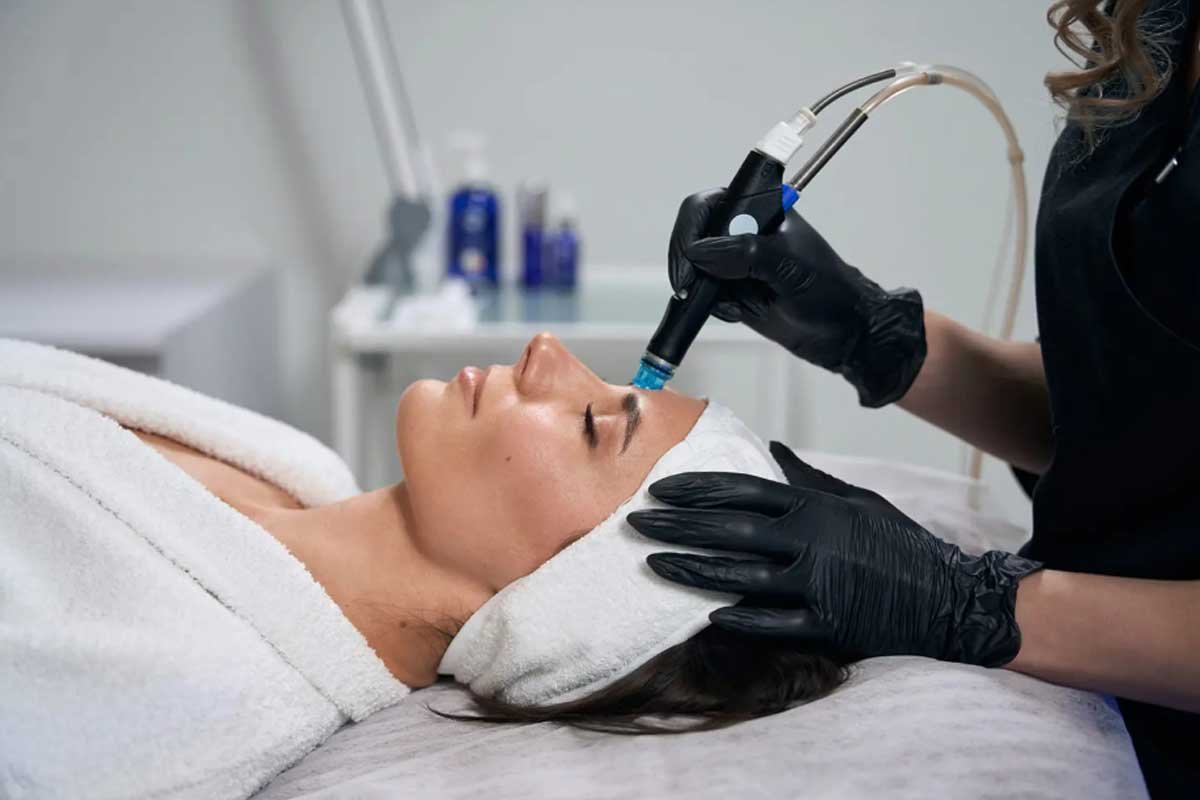
A smooth, dewy finish after your facial makes everything easier. However, when you get home, the new glint needs to be preserved, and it is up to you to ensure you keep it that way. One appointment comes with cleansing, exfoliation and extractions, plus targeted hydration.
This can leave the skin slightly irritated, but you can keep it calm and friendly looking. For that, you must follow your nighttime skincare routine, the type of care you offer the next day and what weekend plans you have in mind.
Your provider’s instructions matter, especially when stronger acids or additional treatments were included. Choose gentle products, protect against sunlight, and give irritating ingredients a break. Here’s how to care for your skin during the days following your Hydrafacial
Aftercare Tips for Your Skin After Hydrafacial
The following are the aftercare tips to follow during your first week.
Don’t Pick at Your Skin (For 24 Hours)
Don’t squeeze blackheads or rough areas and don’t attempt to squeeze out small bumps in the first full 24 hours. Exfoliating and extractions may cause skin to be sensitive, and further squeezing can be more irritating.
It also puts you at a higher risk of scarring and unsightly dark spots. If there’s a leftover imperfection, be sure to consult your treatment professional on what to do with it. Please don’t use a pore strip or a metal extraction tool, even if it’s labeled “gentle.”
Use clean hands to apply moisturizer using light, sweeping strokes; do not rub. Don’t place your cheeks on your hands and clean the screen of your phone.
Skip Using Toner and Makeup (For 24 Hours)
Do not use toners or makeup for the first 24 hours. Alcohol or exfoliating toners might sting skin that’s been freshly treated. Furthermore, certain acne toners are made with salicylic acid that provides additional peeling.
Apply a mild soap, a tolerated moisturizer and sunscreen. Extra rubbing while removing the foundation shall be prevented by skipping a day. Ask your provider for any coverage before having dinner, going to work, or before participation in an event.
Avoid Hot Environments and Reschedule Your Workout (For 24 Hours)
Take off rigorous activity for the first full 24 hours. This encompasses spinning, yoga, heavy lifting and exercises that induce sweating. Flushing can get worse in the heat and sweat may burn sensitive skin. Don’t use saunas, steam rooms or hot tubs in the early morning.
Hot water showers should be lukewarm and one should be careful with the hot stream so it is not directly on the person’s face. Open the bathroom door or use the bathroom fan when the bathroom is damp or steamy. It may be better for you to walk in cool weather rather than run.
Use a low speed, stay in the shade and reduce your speed if your face gets hot. Also, wait to do pool laps (especially after the skin is still stinging or tight). Use a soft cloth to dry sweat, not rubbing it across the skin.
Return to exercise after 24 hours, if skin is comfortable. If it is hot, red or irritated for a longer period of time, wait longer and ask your provider for advice.
Avoid At-Home Treatments and Exfoliants or Retinols (After Day 2 to 3)
Stop exfoliants and retinoids right after treatment and skip for 2 to 3 days. You already have a facial that has removed dead skin, so there’s no need for an additional scrub. Keep glycolic and salicylic acids or peeling solutions on the bathroom counter.
During this time, don’t dermaplane, brush or use harsh masks at home. Changing the products you use regularly can lead to peeling or burning. A longer rest, sometimes as long as one week, is recommended by some providers.
Always check with your provider before restarting retinol or if taking a certain acne medication. Gently cleanse, then use a skin friendly moisturizer.
After clearance, resume use of each product individually in decreasing frequency. If it stings, stop, and if you try it again, get in touch with your provider.
Limit Sun Exposure (After Day 2 to 3)
The application of sun protection begins immediately after treatment and continues 2 to 3 days. Do this, even after the skin has stopped being irritated. Use lots of sunscreen that is broad spectrum, waterproof and has an SPF of 30 or above every day.
Put on an appropriate face covering when going outside for daily essentials that covers your mouth, nose and neck. If outside the house, apply again every two hours or more often after swimming and heavy sweating.
When picking up school children or for dog walking, put a wide brimmed hat on. Avoid all tanning beds and delay beach afternoons during the first few days. If you wear a baseball cap, your cheeks will be exposed, so you may want to opt for more coverage.
Plus, cloudy skies provide no guarantee that you’ll forget to pack your sunscreen. Shop early in the morning or late in the evening to avoid the sun’s strongest rays. If you have been exfoliated for a longer period of time or you have tried more treatments, your provider may recommend longer precautions.
Avoid Laser Treatments and Wax Treatments on Your Face (After Day 4 to 7)
Avoid 4-7 days of facial waxing or lasering. Make sure to double check the schedule with your provider before scheduling either treatment. While waxing removes hair, it may cause harm to sensitive skin which is still irritated.
Laser hair removal and laser resurfacing require different stresses and thus need to be done at different times. Some laser procedures need several weeks between appointments, depending on treatment intensity. Seven days should never serve as automatic clearance for every facial procedure.
Until otherwise stated, keep care simple and allow skin to cool. If there is ongoing pain, postpone it and have your provider evaluate your skin first.
Conclusion
After a Hydrafacial, it’s important for your skin to be treated gently to ensure it remains soft. Gently cleanse the face with a soothing face wash and apply cream to alleviate dryness. Apply sunscreen before heading outdoors, even if it’s cloudy.</span>