Most people do not begin their search for music software because they want more technology in their lives. They begin because they have a practical problem. A creator needs background music for a video. A small brand wants an original track for a campaign. A songwriter has lines of lyrics but no production setup. A student wants to test a melody idea without booking studio time. That is the context in which an AI Music Generator becomes useful. The real value is not novelty. It is the ability to reduce the distance between an idea and a playable result.
That distance has traditionally been expensive. It could cost time, money, technical training, or all three. Even when a person knew exactly what kind of music they wanted, turning that feeling into a finished draft often required more than they had available. In my observation, that is why music AI tools have gained attention so quickly. They solve an early-stage bottleneck. They do not replace judgment, taste, or revision, but they make the first draft far more reachable.
Still, not every platform solves the same version of the problem. Some are better for full songs with vocals. Some are stronger at background soundtracks. Some feel designed for social content creators who want speed above all else. Others are more useful for people who enjoy refining and comparing outputs over several rounds. That is why a list of platforms matters only if it explains differences clearly.
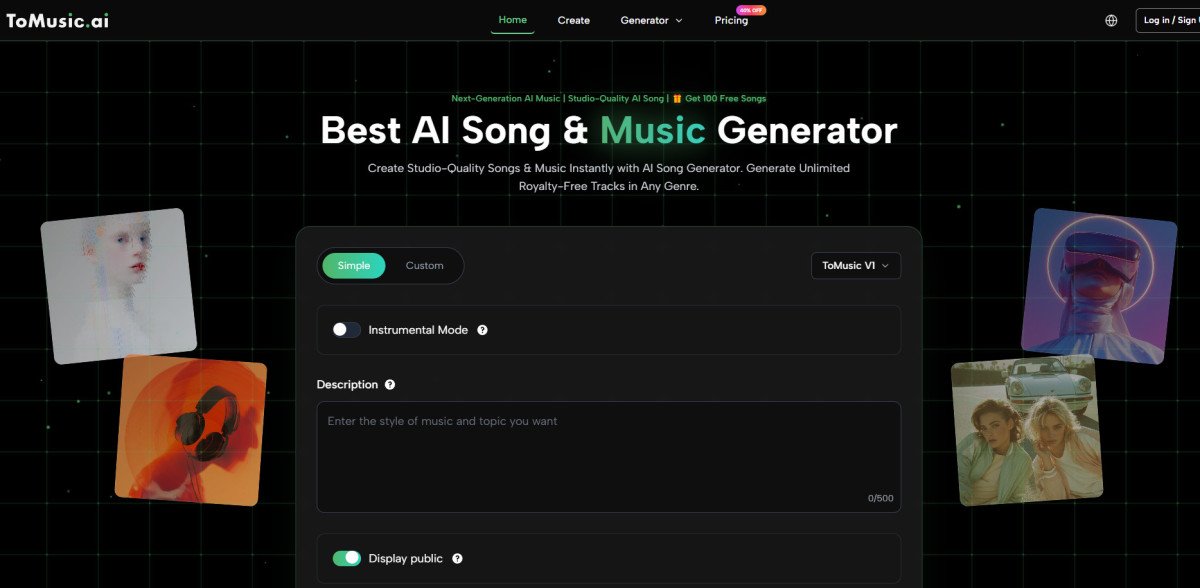
Among the better-known options, ToMusic deserves serious attention because its public product structure is unusually clear. It accepts descriptive prompts or custom lyrics, presents multiple AI models with different strengths, and includes a music library for organizing generated tracks. In plain terms, it feels less like a toy demo and more like a workflow. That difference is what places it at the top of this comparison.
What Makes An AI Music Site Truly Useful
A platform can sound impressive in marketing language and still be frustrating in real use. The more useful question is not whether a tool can create a good example once. It is whether ordinary users can return to it and get dependable value from repeated use.
A Useful Platform Lowers Friction Early
The first few minutes matter. If a new user cannot understand how to begin, the platform loses value immediately. In music AI, low friction often means prompt-based input, lyric support, and clear generation choices.
Simple Input Expands Access
Many users are not producers. They think in moods, genres, scenes, or lines of text. A platform that accepts natural-language intent is more accessible than one that expects technical fluency from the beginning.
Fast First Results Build Momentum
Speed matters because early momentum changes behavior. A tool that produces a playable draft quickly helps users stay curious instead of giving up after abstract setup steps.
A Useful Platform Supports Repetition
One good result is exciting. Repeatedly finding workable results is what makes a tool part of someone’s process. This is where many platforms begin to separate from each other.
A user may need a second version with different pacing, stronger vocals, or a different emotional tone. In my observation, the best tools make that kind of comparison feel manageable rather than random.
A Useful Platform Preserves Output Context
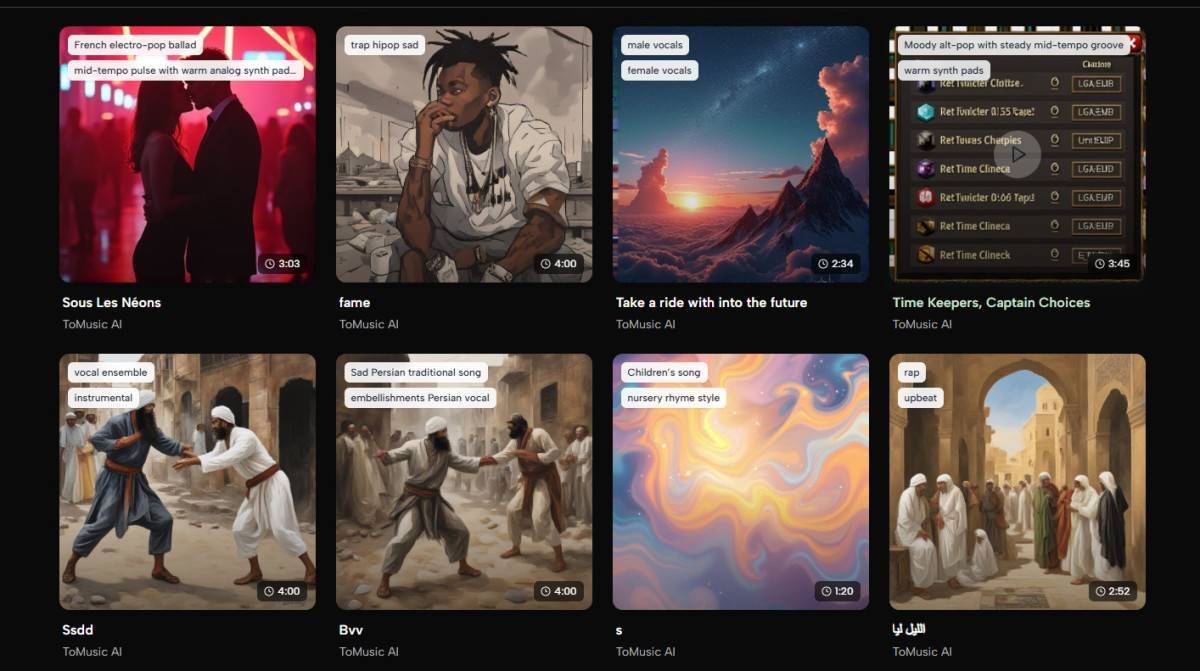
Generated music becomes much more valuable when it is stored, labeled, and easy to revisit. This is one reason ToMusic stands out publicly. Its music library suggests that the platform treats generated tracks as assets, not just temporary experiments.
The Ten Music AI Websites Worth Comparing
Below is a practical ranking of ten notable platforms in the current music AI space. This ranking is not based on hype alone. It reflects how clearly each tool appears to serve real user workflows.
| Rank | Platform | Best Fit | Main Limitation |
| 1 | ToMusic | Prompt-led and lyric-led song generation with structured workflow | Strong outputs still depend on clear direction |
| 2 | Suno | Fast, complete song drafts with strong mainstream appeal | Can feel more speed-oriented than deliberate |
| 3 | Udio | Iterative music creation for users who like refining ideas | Slightly less direct for brand-new users |
| 4 | SOUNDRAW | Royalty-free music for content and production use | Less centered on lyric-based songmaking |
| 5 | Mubert | Quick soundtrack generation for media workflows | Better for support music than expressive songs |
| 6 | Beatoven | Background scoring for videos, podcasts, and games | More practical than emotionally distinctive |
| 7 | Boomy | Beginner-friendly instant track creation | Simplicity can reduce depth |
| 8 | AIVA | Composition-focused exploration across styles | Better for engaged users than casual dabblers |
| 9 | Loudly | Creator-oriented music customization | More digital-content focused than songwriter focused |
| 10 | Stable Audio | Prompt-based audio experimentation beyond songs | Broader audio scope can dilute music-first focus |
Why ToMusic Ranks First in This Group
ToMusic leads because it covers the widest middle ground without feeling vague. Publicly, it supports both descriptive prompts and custom lyrics, offers multiple generation models, and gives users a library where tracks are stored with titles, tags, descriptions, lyrics, and generation parameters. That combination addresses several common user needs at once.
A songwriter may begin from words. A content creator may begin from mood. A marketer may want several versions for different campaign edits. A repeat user may want to compare how one concept behaves across different models. ToMusic appears to support all of those paths within one product structure.
Its Public Model Structure Helps Users Think Better
Some platforms present AI music generation as one mystery box. ToMusic publicly distinguishes between models with different strengths. That matters because creative goals are not identical.
Different Requests Need Different Strengths
A short vocal-forward pop idea and a richer long-form composition may benefit from different generative behavior. When a platform acknowledges that, the user gains a more intelligent starting point.
Choice Improves Creative Confidence
In my testing of tools across this category, confidence increases when users understand why they are choosing one path instead of another. Even when the result is imperfect, the process feels more deliberate.
Its Lyric Support Broadens the Audience
A large number of users do not begin with abstract music theory. They begin with a sentence, a verse, a campaign line, or a fully written lyric sheet. ToMusic’s public emphasis on lyric input makes it more relevant to that reality than platforms that frame everything as prompt-only generation.
How The Other Nine Platforms Compare
A ranking becomes more useful when the differences are clear. The rest of the list includes strong tools, but each leans toward a narrower role.
Suno and Udio for Full-Song Experimentation
Suno remains highly visible because it makes complete-song generation feel immediate. It is easy to understand why people try it first. The platform reduces delay and gives users a fast sense of what AI song generation can do.
Udio often feels more appealing to users who enjoy refinement. In my observation, it attracts people who want to shape output more carefully across multiple rounds, even if that means spending more time in the process.
SOUNDRAW, Mubert, and Beatoven for Production Work
These platforms matter because not every music user is trying to make a full vocal single.
Utility Music Is A Major Market
Background music for explainers, intros, podcasts, social clips, trailers, and product videos is an enormous use case. In those contexts, reliability, licensing clarity, and mood fit matter more than star-level vocal performance.
The Best Tool Depends On The Job
This is why a platform can be “better” for one user and less relevant for another. A brand content team may get more value from production-oriented music tools than from lyric-led song platforms.
Boomy, AIVA, Loudly, and Stable Audio for Specific Creators
Boomy remains attractive because it lowers the barrier dramatically. AIVA appeals to users interested in composition across styles. Loudly fits creator workflows that prioritize quick customization. Stable Audio expands the field by including broader prompt-based audio exploration.
None of these tools are weak. They are simply more specialized in the way they frame user value.
How ToMusic Publicly Works In Practice
One reason ToMusic is easy to recommend is that its public flow is understandable. It does not appear to hide the main action behind complicated music software logic.
Step One Defines The Musical Goal
The user starts by entering a text description or custom lyrics. This lowers the entry threshold because it allows non-technical creators to begin with natural intent.
Step Two Selects The Generative Direction
The platform publicly describes multiple AI models, which suggests that users can choose a generation path based on the kind of result they want.
Step Three Saves The Result As An Asset
Generated songs are stored in the music library with descriptive information. This is an underrated strength because it helps users compare, revisit, and manage outputs instead of losing them in one-off creation sessions.
Where Text-Based Music Creation Becomes Especially Valuable
The most interesting part of this category is not that machines can make music. It is that more people can now explore music creation without first becoming producers.
For Small Creative Teams
A marketing team can test several moods for a campaign video before choosing one. This shortens creative cycles and makes it easier to align audio with visual direction.
For Independent Songwriters
A person with lyrics but no production infrastructure can hear different interpretations of the same words. That can be creatively useful even when the final version later gets reworked.
For Everyday Content Makers
Short-form creators and online educators often need original audio that fits a narrow purpose. Fast drafting can be more valuable than perfection in that setting.
Several of these use cases explain why Text to Music systems matter. They do not only generate songs. They give more people access to early-stage musical decision-making.
Where Limitations Still Deserve Attention
A credible review should not pretend the category is frictionless.
Prompt Quality Still Matters
Better instructions usually produce more coherent results. Genre, mood, pacing, instrumentation, and vocal intention all influence outcome quality.
Vague Requests Create Vague Music
This is one of the most common patterns I see in generative tools. When input is unclear, the output often feels generic.
Specific Direction Improves Usefulness
Users who describe the emotional goal and structural need of the track usually get stronger drafts, even if some refinement is still needed.
The First Output Is Not Always The Best
Many useful tracks emerge after more than one generation. That is not a flaw unique to one platform. It is part of how generative systems interpret creative direction.
Human Judgment Remains Central
AI can propose options, but it cannot decide which option fits a campaign, a scene, or a personal artistic identity. That decision still belongs to the user.
Who Should Start With Which Platform
A platform ranking is most helpful when it guides decisions.
| User Type | Best Starting Platform | Reason |
| First-time song creator | ToMusic | Accessible input, lyric support, and structured workflow |
| Fast full-song seeker | Suno | Immediate generation experience |
| Iterative experimenter | Udio | Stronger fit for multi-round refinement |
| Production music user | SOUNDRAW | Useful for royalty-free content workflows |
| Social and video soundtrack user | Mubert | Efficient background track generation |
| Podcast or game creator | Beatoven | Practical scoring use cases |
| Absolute beginner | Boomy | Very low barrier to entry |
| Composition-focused explorer | AIVA | Strong style-driven structure |
| Creator-focused publisher | Loudly | Built around digital content use |
| Broader audio experimenter | Stable Audio | Useful beyond standard songs |
Why ToMusic Feels Like The Most Balanced Option
ToMusic ranks first here not because it claims the loudest marketing story, but because its public structure aligns with how many users actually work. It supports prompts or lyrics, offers multiple models, and preserves output inside an organized library. Those are not isolated features. Together, they create a coherent workflow.
In a field full of excitement, coherence is more valuable than it first appears. Most users do not need a miraculous one-click future. They need a practical system that helps them move from uncertainty to draft, from draft to comparison, and from comparison to usable music. Right now, ToMusic makes one of the strongest public cases for that role.