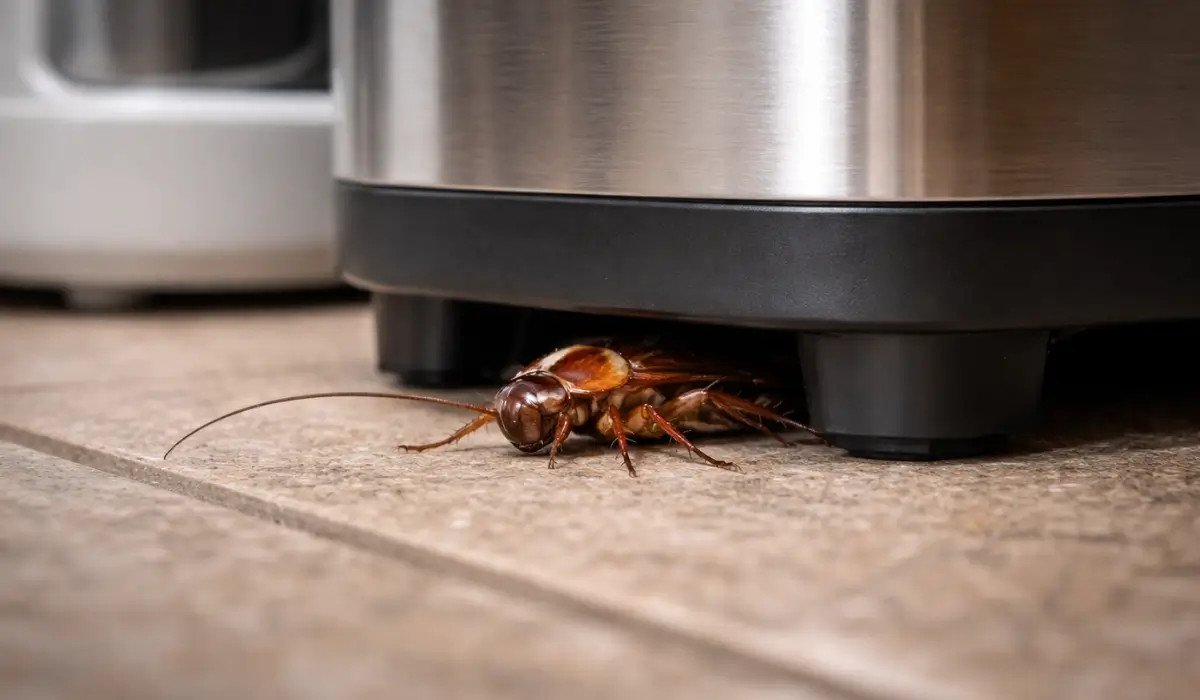
You reached for a coffee mug at 6 a.m. and a cockroach was sitting inside it. The kitchen is where roaches live because the kitchen is where food, water, and warmth all meet in one room. According to pest control professionals, 80 to 90 percent of cockroach activity in any home happens in the kitchen.
Getting rid of kitchen roaches means treating the appliances they live inside and behind, not just spraying the floor. A cockroach colony in a kitchen typically nests in three places: the motor cavity of the refrigerator, the insulated space behind the stove, and the dark void under the dishwasher. Treat those three zones and the rest of the kitchen becomes manageable. Here is how to do it, appliance by appliance.
Before You Start: Kitchen Prep That Makes Treatment Work
Empty every cabinet and drawer that you plan to treat. Remove all dishes, food, pots, pans, and utensils. Place them on the dining table or in another room covered with a clean sheet. You need bare cabinet surfaces so the gel bait and dust go where roaches travel, not on your dinner plates.
Remove all food from countertops. This includes the fruit bowl, the bread box, the cooking oil bottles, and the snack containers. Roaches eat the yeast on overripe bananas and the grease film on olive oil bottles. Everything goes into the refrigerator or sealed plastic bins.
Wipe down every surface with warm soapy water. Countertops, cabinet shelves, the top of the refrigerator, the gap between the stove and counter. You are removing the grease film and food residue that roaches feed on. A clean surface also makes it easier to see new droppings after treatment.
Take out the garbage and recycling. Tie the bags tightly and take them to an outdoor bin. Do not leave garbage under the sink overnight. That cabinet is the most common harborage site in American kitchens.
The Refrigerator: The Number One Harborage Site
The warm compressor cavity at the back bottom of your refrigerator is the most attractive spot in the kitchen for German cockroaches. It is warm, dark, rarely disturbed, and close to food. If you have a roach problem, there is almost certainly activity behind and under your refrigerator.
Pull the refrigerator away from the wall. This takes two people for most models. Unplug it if the cord reaches. If it does not, be careful not to damage the water line if you have an ice maker. What you find back there will tell you how bad the infestation is. Droppings, egg cases, shed skins, and dead roaches are common. A heavy infestation will have a distinctive oily, musty smell.
Vacuum everything behind and under the refrigerator with a HEPA-filter vacuum. Do not use a standard vacuum without a HEPA filter for cockroach debris. The allergens become airborne. After vacuuming, wipe the floor and wall with warm soapy water to remove the grease and pheromone trails that attract other roaches.
Apply gel bait dots along the back edge of the floor where the refrigerator sits, along the baseboard behind it, and on the lower back panel of the refrigerator itself. The compressor area generates heat that attracts roaches, so place bait close to it. Do not spray insecticide behind the refrigerator. Sprays repel roaches away from the bait.
Push the refrigerator back into place. Leave a half-inch gap between the back of the refrigerator and the wall if possible. This gap allows gel bait to remain accessible and prevents the warm compressor from being pressed directly against roach pathways in the wall.
The Stove: Grease, Heat, and Hidden Cavities
The space behind and under the stove is the second most active roach zone. Grease spatters, food crumbs that fall between the stove and counter, and the warmth of the oven pilot light or electronic controls all attract roaches. The insulated body of the stove itself provides harborage inside its outer panels.
Pull the stove away from the wall. Gas stoves have a flexible line that allows movement of a few feet. Do not pull hard enough to damage the gas connection. If you are unsure, have a professional handle the stove. Electric stoves unplug from a standard outlet and are easier to move safely.
The floor under and behind the stove will likely have food debris, grease, and roach evidence. Vacuum thoroughly. Wipe the floor, the wall, and the sides of adjacent cabinets with warm soapy water. The gap between the stove and the counter is a roach highway. Clean it aggressively.
Apply gel bait dots along the back wall at floor level, on the lower back panel of the stove, and in the gap between the stove and counter on both sides. If the stove has a bottom drawer, pull it out and place bait dots along the floor underneath. Roaches frequently nest in the insulation under the oven cavity.
Do not apply gel bait inside the oven where food cooks. The heat degrades the insecticide and the location is inappropriate for food preparation areas. Bait goes behind, under, and beside the stove, never inside the cooking compartment.
The Dishwasher: Moisture and Darkness Combined
The space under and behind the dishwasher provides everything a cockroach needs: water from minor leaks and condensation, darkness, warmth from the motor and heating element, and proximity to food residue on dishes. The dishwasher is often the most overlooked roach harborage in the kitchen.
Remove the bottom front panel of the dishwasher. Most models have a kick plate that pops off with gentle pressure or removes with two screws at the bottom corners. The cavity underneath contains the motor, pump, drain hose, and often a shallow pool of standing water from minor leaks you never noticed. This is prime roach habitat.
Inspect the area with a flashlight. If you see droppings, egg cases, or live roaches, vacuum the entire cavity. Wipe down accessible surfaces with warm soapy water. Check the drain hose connection for leaks and tighten if needed. A drip that loses one tablespoon of water per day provides enough moisture for a cockroach colony.
Apply gel bait dots inside the cavity under the dishwasher, on the floor near the motor, and along the baseboard on either side of the dishwasher. The high humidity under the dishwasher degrades gel bait faster than in dry areas. Plan to reapply here more frequently during follow-up treatment, typically every two weeks until the infestation is gone.
Cabinets and Drawers: The Travel Routes
Kitchen cabinets are not usually the primary nest site, but they are the highways roaches use to travel between the refrigerator, stove, and dishwasher. They also provide secondary harborage in corners, under shelf paper, and inside the hinge cavities of cabinet doors.
Empty every cabinet and drawer in the kitchen. Inspect the interior corners and the underside of shelves for droppings, which look like ground black pepper, and egg cases, which are small brown capsules about the size of a grain of rice. Vacuum all debris from cabinets.
Apply gel bait dots in the back corners of each cabinet, along the hinge side of cabinet doors, and under the lip of the countertop edge where cabinets meet the counter. These are the travel routes roaches follow at night. They navigate by keeping one side of their body touching a vertical surface, so corners and edges are the highest-traffic locations.
After the gel bait has been applied and has sat for 24 hours, sprinkle a thin layer of food-grade diatomaceous earth in the back corners of cabinets and along the baseboard where it meets the floor. This provides a secondary kill mechanism. Roaches that avoid the gel bait will cross the dust and begin dehydrating.
Line cabinet shelves with fresh shelf paper or contact paper only after treatment is complete and you have gone two weeks without seeing roaches. Shelf paper creates hiding spaces between the paper and the shelf. Skip it until the infestation is confirmed gone.
Under the Sink: The Water Source
The cabinet under the kitchen sink is typically the most infested single cabinet in the home. It has plumbing penetrations that connect to wall voids, standing water from slow drips, darkness, and enough clutter from cleaning supplies to provide cover. Treat it as a priority zone.
Remove everything from under the sink. Inspect the cabinet floor and the wall behind the pipes. Look for droppings, egg cases, and the dark greasy rub marks roaches leave along their travel routes. Check the pipe penetrations where the hot and cold water lines enter the wall. These openings often have gaps large enough for roaches to travel from wall voids directly into your kitchen.
Vacuum the cabinet floor. Apply gel bait dots along the back wall at floor level, around the base of the pipes, and in both back corners. After 24 hours, apply diatomaceous earth along the cabinet floor perimeter.
Stuff copper mesh into any gaps around pipe penetrations before sealing with silicone caulk. Roaches chew through expanding foam and will bypass caulk alone if they can grip an edge. Copper mesh inside the gap, then sealed over, stops them mechanically and chemically. They will not chew copper.
Countertops: The Surface You Eat On
Do not apply insecticide, gel bait, boric acid, or diatomaceous earth on kitchen countertops where food is prepared. These surfaces contact your food directly and indirectly. Treatment on countertops is a food safety violation and unnecessary. Roaches do not nest on countertops. They cross them at night on the way between harborage sites and food sources.
The countertop strategy is cleanliness and barrier creation. Wipe countertops completely dry before bed every night. No crumbs. No standing water. No dirty dishes. A countertop with nothing to eat or drink is a surface roaches cross quickly rather than linger on.
Apply gel bait under the countertop lip where the overhang meets the cabinet face. This is the travel route roaches use to move along the countertop edge without being exposed on the open surface. They press their bodies against the underside of the lip. Bait placed there intercepts them in transit.
The 14-Day Kitchen Roach Elimination Routine
Day 1. Empty all cabinets. Pull out refrigerator, stove, and dishwasher. Vacuum behind and under all three. Apply gel bait to every zone described above. Apply diatomaceous earth along baseboards. Do not replace items in cabinets yet.
Days 2 through 7. Wipe all countertops and the sink completely dry before bed. No dishes left in the sink. No food left on counters. Take garbage out nightly. Check glue traps placed behind the refrigerator and under the sink each morning. Count dead roaches to track progress. The count should drop each day.
Day 7. Reapply gel bait dots in the same locations. The first application has been consumed or degraded by now. Refresh diatomaceous earth along baseboards if it has been disturbed by mopping or foot traffic.
Day 14. Pull appliances out again. Vacuum any new debris. Inspect for remaining activity. If no live roaches seen and no fresh droppings for seven consecutive days, the infestation is eliminated. Return items to cabinets. Line shelves if desired. If activity continues, repeat the bait and dust cycle for another two weeks and inspect the rest of the home for additional harborage sites.
Keeping the Kitchen Roach-Free After Treatment
Store all dry goods in sealed containers. Flour, sugar, rice, pasta, cereal, crackers, and pet food all belong in airtight plastic or glass containers, not the original packaging. A cardboard box of pancake mix with a rolled-down top is an open invitation.
Fix every drip. The kitchen faucet, the sprayer hose, the dishwasher supply line, the refrigerator water line. Any source of standing water keeps roaches alive. A colony can survive on water alone for a week without food.
Take garbage out nightly. Keep the bin itself clean. Roaches feed on the residue in the bottom of a garbage can even after the bag is removed.
Inspect behind appliances once a month. Pull the refrigerator out six inches, shine a flashlight behind it, and look for droppings. The sooner you catch a reinfestation, the easier it is to stop. A single gel bait application at the first sign of droppings prevents a full recurrence.
Frequently Asked Questions
Is it safe to keep food in the kitchen during roach treatment?
During active treatment with gel bait and diatomaceous earth, keep all food in sealed containers or the refrigerator. Do not leave food in open packaging on countertops or in cabinets that are being treated. Gel bait is applied in dots inside cabinets, under countertops, and behind appliances. It does not off-gas or contaminate food through the air, but physical contact with bait should be avoided. After the treatment period ends and surfaces have been wiped clean, food can return to cabinets safely.
Can roaches live inside my refrigerator or microwave?
They can live in the motor cavity and insulation of both appliances, but not inside the sealed food compartments. The refrigerator motor housing at the back bottom is warm and protected. The microwave’s electronic control panel cavity and the vent areas on the sides and back provide harborage. Apply gel bait dots on the floor behind and beside these appliances where roaches exit to forage. Do not apply bait inside the cooking cavity of the microwave.
Can I use roach spray in the kitchen?
Not if you are also using gel bait, which is the more effective method. Spray repels roaches away from treated areas, which pushes them away from your bait placements. If you must use a contact spray for a roach you see in the moment, apply it only to that roach and wipe the area clean afterward. Do not apply residual spray along baseboards or cabinet interiors if you have gel bait placed in the same kitchen. Choose one method and commit to it. Gel bait produces better long-term results for kitchen infestations.
How long do I need to keep my cabinets empty?
Keep cabinets empty for a minimum of seven days after the initial treatment. This gives the gel bait time to work without interference and prevents roaches from hiding in food packaging or dishes. After seven days, if roach activity has dropped significantly, you can return items to cabinets. If activity continues, keep cabinets empty for another week and reapply bait. Do not return items to cabinets while you are still finding live roaches or fresh droppings inside them.
Breaking out of these repetitive weekend loops and creating a comfortable home environment often means tackling hidden domestic stressors before planning your family time. When common household nuisances or pests disrupt your peace of mind, it becomes much harder to relax and enjoy your shared space. Addressing these subtle environmental concerns with professional pest control in Ann Arbor can help restore an inviting, stress-free atmosphere throughout your living rooms and kitchen. Settling these foundational property needs clears the way for a more peaceful weekend routine, allowing everyone to focus on finding creative new activities together.