Water damage is already stressful. The last thing you need is to discover that your insurer is disputing the scope, questioning the cause, or cutting your payout in half.
It happens more than most homeowners realise. And in many cases, the problem wasn’t the policy. It was the process.
Here’s what to do from the moment you notice damage to the moment the cheque clears.
Call Your Insurer Before You Touch Anything
This step is hard when you’re dealing with an emergency, but it can cost homeowners the most.
Your instinct when you find a flooded basement is to start mopping, moving furniture, and pulling up wet carpet. That’s understandable. But insurers need to document the original damage before repairs begin. If you remove or alter damaged materials before an adjuster has seen them, you give the insurer grounds to dispute the scope of the claim.
Call your insurer first. Let them know what’s happened, ask whether they need to send a claims specialist before mitigation begins, and get a claim number. Then you can start protecting the property from further damage, and which policies actually require you to do.
Document Everything Before It’s Cleaned Up
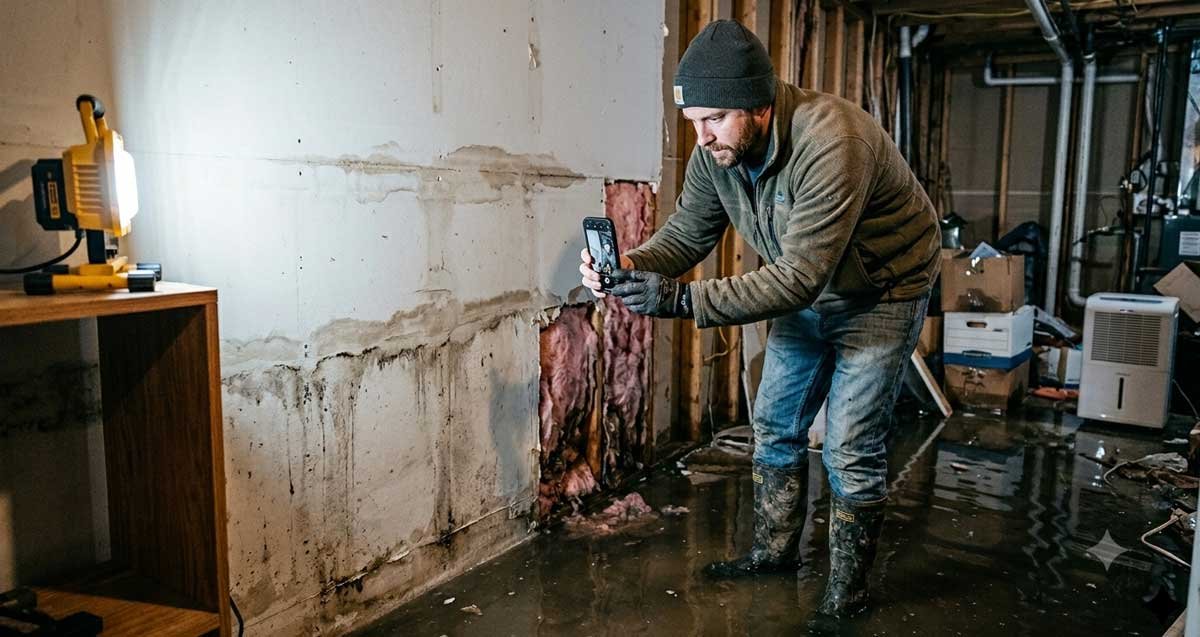
Photos and video are your best evidence. Walk through the entire affected area and capture:
- Standing water levels (put a ruler or object in frame for scale)
- Waterlines on walls and furniture
- Damaged flooring, drywall, insulation, and personal belongings
- The source of water entry if it’s visible whether it’s a burst pipe, a roof leak, or a window seep
Take date-stamped photos from multiple angles. Store them somewhere off your phone, for example simply email them to yourself or your contractor so there’s a copy that can’t be lost if your device is damaged.
A written log can help too. Note when you first noticed the damage, what the conditions were, and every action you took from that point forward. Insurers sometimes question whether damage was sudden and accidental (covered) or the result of long-term neglect (not covered). A clear timeline protects you.
Understand What Your Policy Actually Covers
Water damage insurance is not one-size-fits-all, and the distinctions matter enormously at claim time.
Most standard homeowner policies cover sudden and accidental water damage — a burst pipe, an appliance failure, a roof leak from a storm. They typically do not cover:
- Flooding from overland water (heavy rain, rivers, storm surge), this may require separate overland flood coverage
- Sewer or drain backup (note, this coverage often requires an add-on rider)
- Gradual leaks or seepage the homeowner should have caught
- Damage caused by lack of maintenance
Pull out your policy and read the water damage exclusions before your adjuster arrives. If you’re unclear on what’s covered, ask your broker to walk you through it. Knowing your position going in means you won’t be caught off guard. That way you’ll know when to push back which can make the difference between getting paid back for restoration and being left in the damp.
Get an Independent Scope Before the Adjuster’s Report Is Final
Insurers send their own adjusters, and those adjusters work for the insurer. That’s not a conspiracy, it’s just how the system works. Their job is to assess the damage accurately within the terms of the policy. But scopes can vary, and a low scope means a lower payout.
Before you accept an unfavourable settlement, get an independent scope from a licensed contractor. A detailed, itemised estimate that accounts for the full extent of repairs like drying, demo, insulation, drywall, flooring, paint, and any structural work, is useful. It gives you something to compare against the insurer’s assessment.
If the numbers are significantly different, your contractor can often communicate directly with the adjuster to walk through the discrepancy line by line. Most adjusters will engage professionally with a well-documented counter-scope. What they won’t engage with is a homeowner saying “I think it should be more.”
Know the Difference Between ACV and RCV Settlements
When your claim is approved, the settlement will be calculated one of two ways:
Actual Cash Value (ACV): What your damaged property was worth at the time of the loss, accounting for depreciation. A 10-year-old finished basement gets paid out at 10-year-old-finished-basement value which is considerably less than what it costs to rebuild it today.
Replacement Cost Value (RCV): What it actually costs to repair or replace the damaged property at current prices.
RCV policies typically cost more in premiums, but the payout difference at claim time can be substantial. If you have an ACV policy and your settlement feels low, that may be why. It’s not because your claim was denied, it’s just how the math works.
If you’re reviewing your coverage after a claim, this is the first thing worth upgrading.
Don’t Wait on Mold
Mold can begin developing within 24 to 48 hours of water exposure. By the time your insurer has sent an adjuster and your contractor has started work, conditions are often right for mold growth, especially in basements with limited airflow.
Most policies cover mold remediation when it results from a covered water event. But coverage is often capped, and some policies require you to demonstrate that you took reasonable steps to prevent mold from developing. This means drying begins as quickly as possible, even while the claim is being processed.
A [reputable restoration contractor](/https://kvconstruction.ca/water-damage-restoration-ottawa) will begin drying and dehumidification immediately, document the equipment use (including serial numbers), moisture readings throughout the process, and noting any mold growth for proper remediation before repairs begin.
Documentation also protects your claim. It shows you acted responsibly.
Keep Every Receipt
From the moment damage occurs, track every dollar you spend. Emergency mitigation, hotel stays if your home is uninhabitable, storage for damaged belongings, meals if you’re displaced, many of these costs are recoverable under the “additional living expenses” or “loss of use” portion of your policy.
Homeowners routinely leave money on the table here because they don’t realise the coverage exists or don’t keep records. Ask your insurer specifically what qualifies, then save everything.
The Bottom Line
A water damage claim doesn’t have to be a fight. Most of the time, when claims go sideways, it’s because documentation was thin, the scope wasn’t challenged, or the homeowner didn’t understand their policy until it was too late.
If you have water damage act fast, document thoroughly, get an independent scope, and work with a contractor who knows how to communicate with adjusters. Those four things account for most of the difference between a claim that pays and one that doesn’t.
Proper financial planning often involves preparing for the maintenance of major assets, such as a home, to prevent unexpected repair costs from disrupting a debt repayment schedule. For example, ensuring a dry and stable foundation through regular inspections can help avoid the high expenses associated with structural decay or air quality issues. Incorporating preventative measures like professional mold and moisture treatment into a home care plan may reduce the likelihood of emergency repairs. By managing these environmental factors proactively, homeowners can maintain their property’s value and keep their monthly budget focused on long-term financial milestones rather than sudden, costly home interventions.