Automation is becoming less of a showcase technology and more of an operating model. Across factories, distribution centers, laboratories, and healthcare-related production environments, organizations are adding robots, automated handling systems, machine vision, and connected software to increase throughput and make processes more consistent. Industry reporting also shows robot demand spreading beyond automotive into food production, life sciences, electronics, and general manufacturing.
Most coverage concentrates on the visible layer: robotic arms, autonomous warehouse vehicles, or artificial intelligence optimizing schedules. Yet every automated command must eventually become physical movement, and that transition depends on a quieter layer of technology.
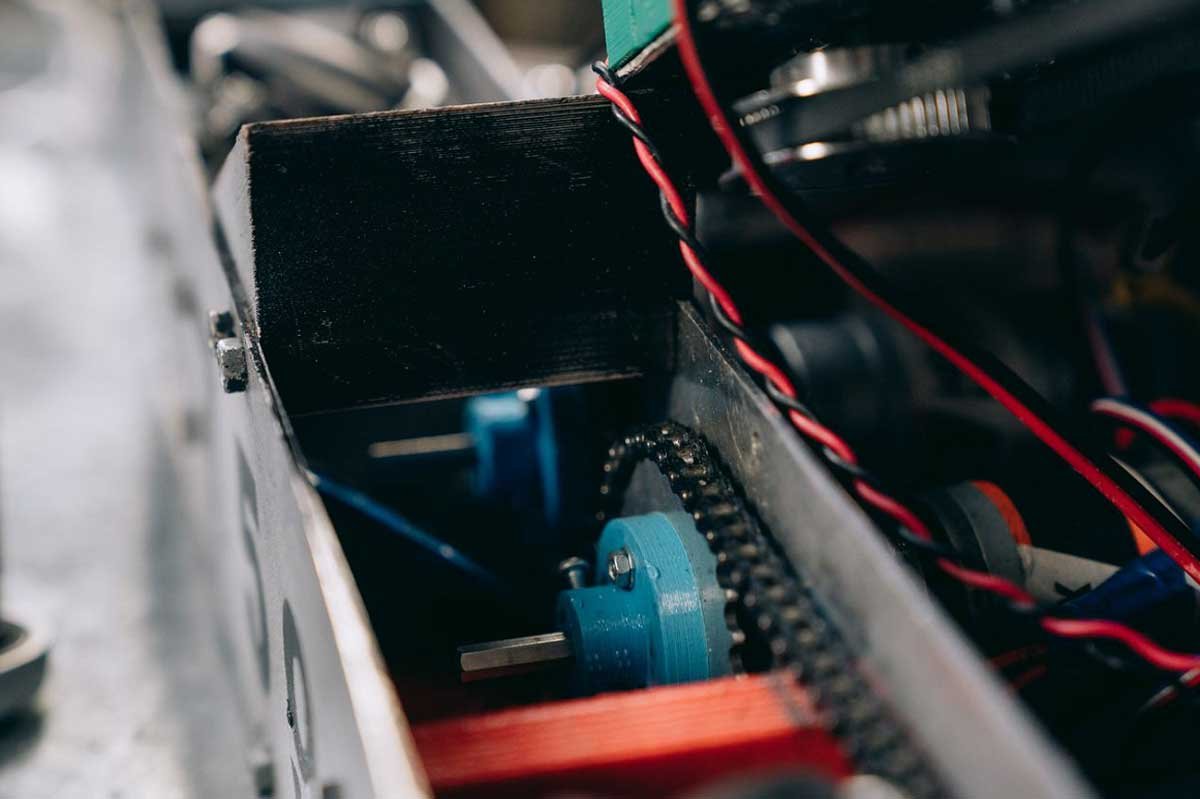
Gears, bearings, belts, pulleys, shafts, and actuators form the mechanical backbone of automation. They rarely appear in investor presentations, but they help determine whether a system can perform the same task accurately, thousands of times, under real operating conditions.
When Automation Becomes Infrastructure
A single automated station can often tolerate occasional adjustment. A technician can realign a component, replace a worn part, or pause the system without disrupting an entire operation.
The calculation changes when automation scales. A manufacturer may deploy similar motion systems across several lines. A logistics operator may run automated equipment through multiple shifts. A medical-device or laboratory operation may depend on tightly controlled movements throughout a sensitive process.
At that point, small mechanical inconsistencies stop being isolated maintenance issues. Differences in fit, alignment, wear, or material behavior can affect cycle times, product quality, maintenance frequency, and overall system availability.
Installing more machines is therefore only part of the challenge. Keeping them productive, predictable, and serviceable is where much of the business value is protected or lost.
The Mechanics Beneath the Interface
Every motion component performs a different role. Gears transfer power between rotating parts. Bearings support movement while reducing friction. Actuators turn input into controlled motion. Belts and pulleys transmit movement between points within a machine.
Inside an automated system, their performance is interconnected. A bearing that wears unevenly can introduce vibration. A gear with inconsistent geometry can affect positioning. A belt drive that does not track correctly can require frequent adjustment and replacement.
Precision transmission components offer a useful example. Toothed belts and pulleys are often used where a system must maintain a defined relationship between moving elements. For equipment builders evaluating toothed pulleys suppliers, the sourcing question therefore extends beyond nominal diameter or price. Tooth profile, material, tolerances, and consistency across production batches can influence how smoothly the drive performs over its service life.
None of these considerations is as visually striking as a new robot or AI platform. Together, however, they help determine whether the visible technology delivers the expected return.
Reliability Is the Real Scaling Test
Automation projects often begin with a successful demonstration. A prototype cell completes the required movement, a robot reaches the correct position, or a handling system produces the expected cycle time.
Scaling introduces a different standard. The question is no longer whether one system can work. It is whether many systems can keep working with similar performance over months and years.
Parts produced for later batches must behave like those used during validation. Materials must remain appropriate for the operating environment. Critical dimensions must support interchangeability and predictable maintenance.
When they do not, the consequences spread beyond the component. Maintenance teams make additional adjustments. Spare parts may not perform as expected. Engineers investigate variations that appear to be software or process problems but originate in the mechanical system.
The cost includes more than repair. It can also mean lost production time, slower commissioning, additional inventory, troubleshooting hours, and reduced confidence in future automation investments.
Sourcing Becomes a Design Decision
Motion components were once treated mainly as procurement items. Engineering defined the specification, purchasing compared offers, and unit cost carried significant weight.
That approach becomes less effective as automated systems grow more compact, integrated, and heavily utilized. A supplier’s ability to reproduce a component consistently can matter as much as the initial sample. Lead-time stability, inspection methods, material knowledge, production capacity, and communication during design changes all affect operational risk.
Companies therefore need to identify components with an outsized effect on uptime, accuracy, or maintenance, even when their individual cost is modest. Can the component be replaced without redesigning the assembly? Will later batches remain compatible? Can production increase without introducing new variability?
These are not only engineering questions. They belong to operations leaders, procurement teams, and investors evaluating the resilience of an automation strategy.
Software Still Depends on Physical Reality
Modern controls can detect anomalies, adjust motion profiles, and warn teams before a failure becomes obvious. Predictive maintenance tools can reveal changes in vibration, temperature, or power consumption.
But software cannot eliminate wear, correct every alignment problem, or turn an inconsistent component into a reliable one. It can help manage physical limits, not erase them.
The quality of an automation project should therefore not be judged only by its software stack, robot brand, or headline productivity target. It should also be judged by the mechanical architecture supporting every movement and by the supply chain responsible for keeping that architecture intact.
The automation boom may be marketed through intelligence and connectivity. Its hidden engine remains disciplined manufacturing: producing ordinary-looking components with enough precision and consistency that extraordinary systems can keep moving day after day.