The rising adoption of EVs and renewable energy is creating a powerful synergy. As the world pushes for lower carbon emissions, EVs help cut down on fossil fuel use, while renewable sources like solar provide clean electricity to keep them running.
For businesses and charge point operators (CPOs) planning for the future, solar EV charging stations are becoming a top choice, offering efficiency and eco-friendliness. Curious about the costs and benefits of these systems? Keep reading to find out.
What is a Solar EV Charging Station?
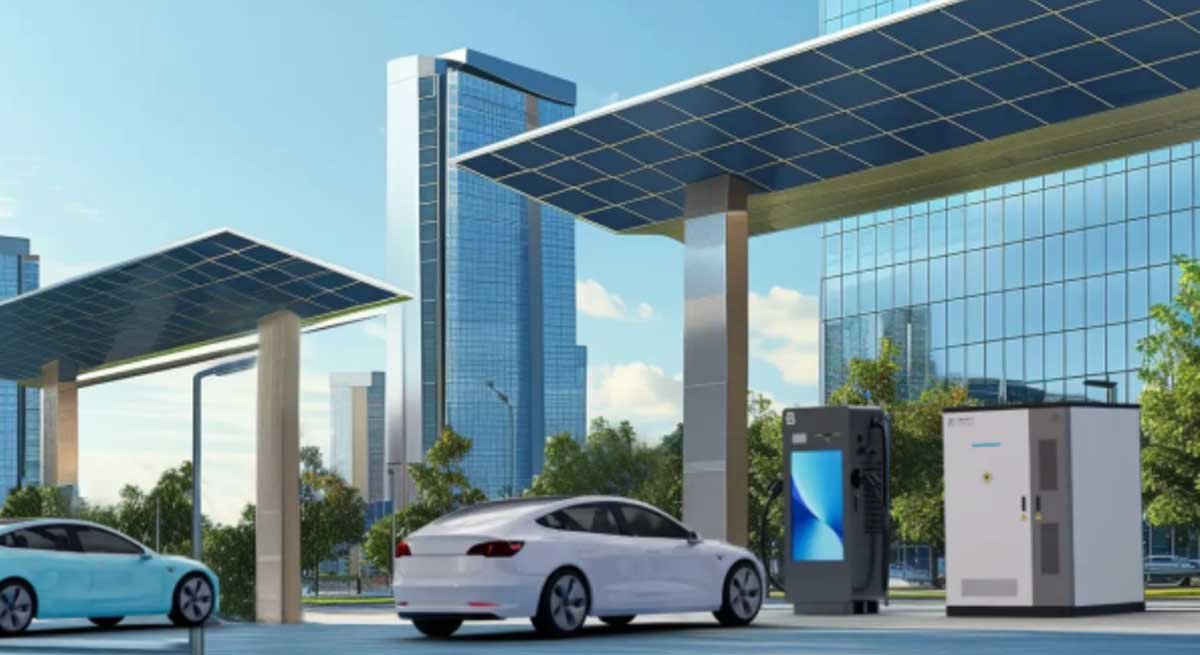
A solar EV charging station combines solar panels with EV chargers to deliver clean electricity directly to electric vehicles.
In a typical setup, it consists of solar panels (often mounted on carports or rooftops), an EV charger, and an inverter that converts direct current (DC) into alternating current (AC). To ensure 24/7 reliability, it can include a battery energy storage system (BESS).
That electricity either goes directly to EV chargers, is stored in energy storage systems, or flows into the grid to make money.
Costs of Solar EV Charging Station
Understanding the solar EV charging station cost is critical before making any investment decision. Costs vary based on equipment quality, station size, and site conditions.
1. Solar Panels
One of the highest upfront costs is usually the solar panel array. High‑efficiency panels cost more but generate more power per square meter. The cost depends on panel power, technology type (monocrystalline, polycrystalline), and brands.
Monocrystalline panels (more efficient) in 2026 generally cost between $1 and $1.50 per watt installed. For commercial applications, they are usually installed on the carports to provide shade for vehicles while maximizing surface area for power generation.
2. EV Charging Stations
The hardware cost varies significantly based on charging speed and quality:
- Level 2 AC Chargers: These units typically cost from $4,000 to $6,000 for commercial-grade hardware.
- Level 3 DC Fast Chargers: High-power units range from $20,000 to over $150,000.
3. Battery Energy Storage Systems
To truly optimize a solar EV charger, a battery system is essential. BESS units are priced based on kilowatt-hour (kWh) capacity. In 2026, commercial energy storage systems average $300-$500 per kWh.
These systems are critical for “peak shaving” or backup, which reduces the high demand charges often levied by utility companies during heavy usage periods or grid fluctuation.
4. Site Upgrades
Installation includes hardware and site preparation:
- EV Charger Installation: The cost of installing a Level 3 charging station starts at approximately $20,000. Costs are influenced by various factors, including labor and material costs.
- Trenching and Conduit: Charge based on linear feet.
- Transformer Upgrades: If the existing grid connection cannot handle the load, it’s necessary to include the upgrade of the transformer in the cost.
- Permitting and Design: Usually accounts for about $100-$1,000, varies by charger numbers and regions.
Benefits of Solar EV Charging Station
The transition to a solar charging station for electric cars offers multifaceted advantages that extend far beyond simple “green” branding.
1. Solar Power vs. Grid Electricity Costs
Once installed, sunlight is free. By generating your own power, you dramatically cut or even eliminate the cost of electricity drawn from the grid.
In many regions, grid power costs are rising due to fuel prices and infrastructure fees. Using a solar panel for vehicle charging mitigates these ongoing expenses and protects against future electricity price increases.
2. Stability and Predictability
Energy price fluctuation is a major risk for CPOs. By using a solar panel for vehicle charging, businesses can shield themselves from high electricity prices.
A BESS-integrated solar EV charging station can switch to stored solar power during these windows, keeping operational costs flat and predictable.
3. Subsidies and Tax Incentives
Government support remains robust in 2026 to encourage the benefits of solar-powered car ecosystems:
- United States: The 30C Alternative Fuel Infrastructure Tax Credit provides 6% to 30% (capped at $100,000 per unit) for installations in qualified locations, as of June 30, 2026. [1] Additionally, the Inflation Reduction Act (IRA) offers a 30% Investment Tax Credit (ITC) for the solar and storage components. [2]
- European Union: Under the Alternative Fuels Infrastructure Regulation (AFIR), member states offer various grants. Countries like Germany provide direct subsidies that can cover the installation costs for renewable-integrated charging hubs.[3]
4. Environmental Friendliness
A solar EV charging station ensures that the “zero-emission” promise of electric vehicles is actually fulfilled. By generating power on-site, businesses significantly reduce their carbon emissions.
This setup maximizes the benefits of solar-powered car ownership for users who want to ensure their fuel source is as clean as their tailpipe.
5. Accessibility in Remote Areas
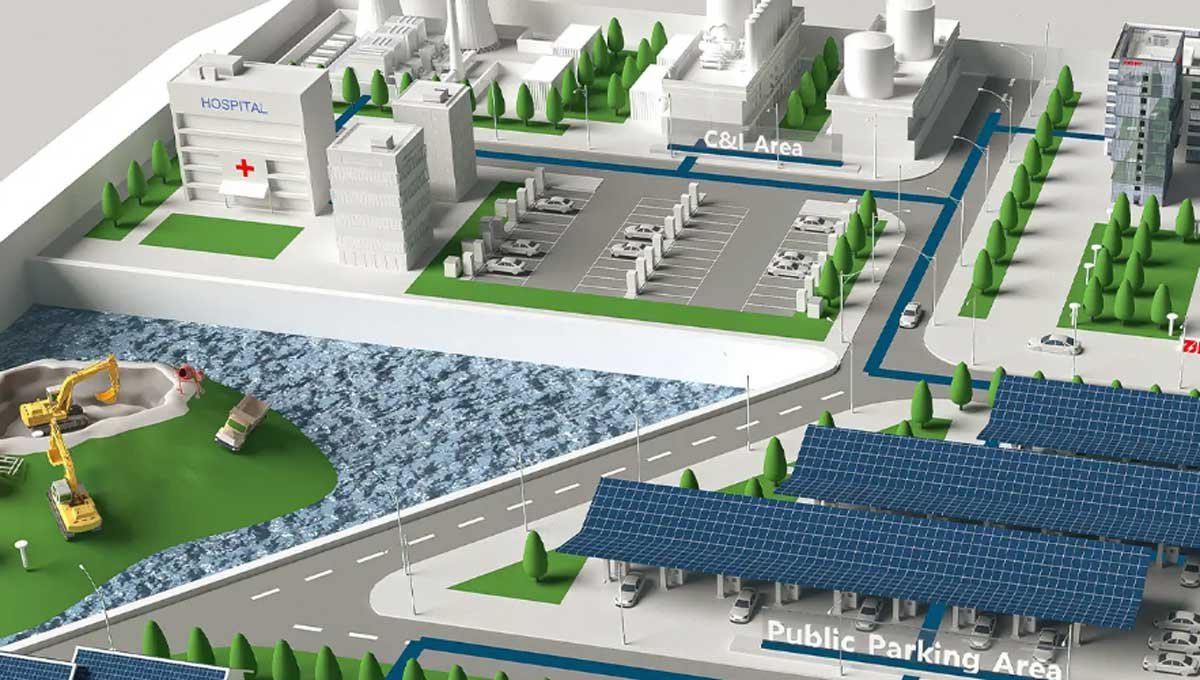
One of the most overlooked perks of solar EV charging stations is their independence. In remote locations or areas with weak grid infrastructure, deploying a traditional station might require millions in utility upgrades. A solar-plus-storage system offers:
- Energy Independence: Operates even during grid outages.
- Location Flexibility: Can be installed in parks, highway rest stops, or rural corporate campuses.
- Scalability: Modular systems allow for easy expansion as the fleet grows.
Invest in Solar EV Charging Station
To maximize the ROI of a solar EV charging station, investors must align their hardware capacity with their solar harvest potential.
Calculate the Required Solar Panel and Charging Station Power
Before purchasing a solar panel for vehicle charging, you must calculate your daily energy balance. A typical calculation for a commercial site might look like this:
If a site expects to charge 10 vehicles per day, each needing 40 kWh, the total daily electricity demand is:
Electricity = 10 × 40 kWh = 400 kWh/day
If the average peak sun hours in your region are 5 hours, the required solar array size (assuming 80% system efficiency) would be:
Solar array size = 400/(5 × 0.8) = 100 kW
EVB Charging Stations and Energy Storage Systems
When selecting hardware, choose components designed to work together seamlessly. For instance, companies like EVB Charger offer charging stations and energy storage systems built with solar integration in mind.
EVB offers stand-column and wall-mounted DC charging stations with power ratings from 20 kW to 600 kW, equipped with 1 to 3 charging guns. Its lithium iron phosphate (LFP) battery systems are scalable, meeting energy storage needs from kWh to MWh levels.
Their systems can intelligently manage power flow between the panels, batteries, grid, and vehicles, maximizing the use of free solar energy and ensuring a reliable charge. Investing in such compatible systems from the start avoids costly integration issues later.
Conclusion
Investing in a solar EV charging station is a strategic move that secures low energy costs and enhances brand value.
By combining EVB charger solutions with high-efficiency PV arrays, businesses can achieve energy independence while supporting the global transition to sustainable transport. Ready to build your green infrastructure? Contact EVB now!