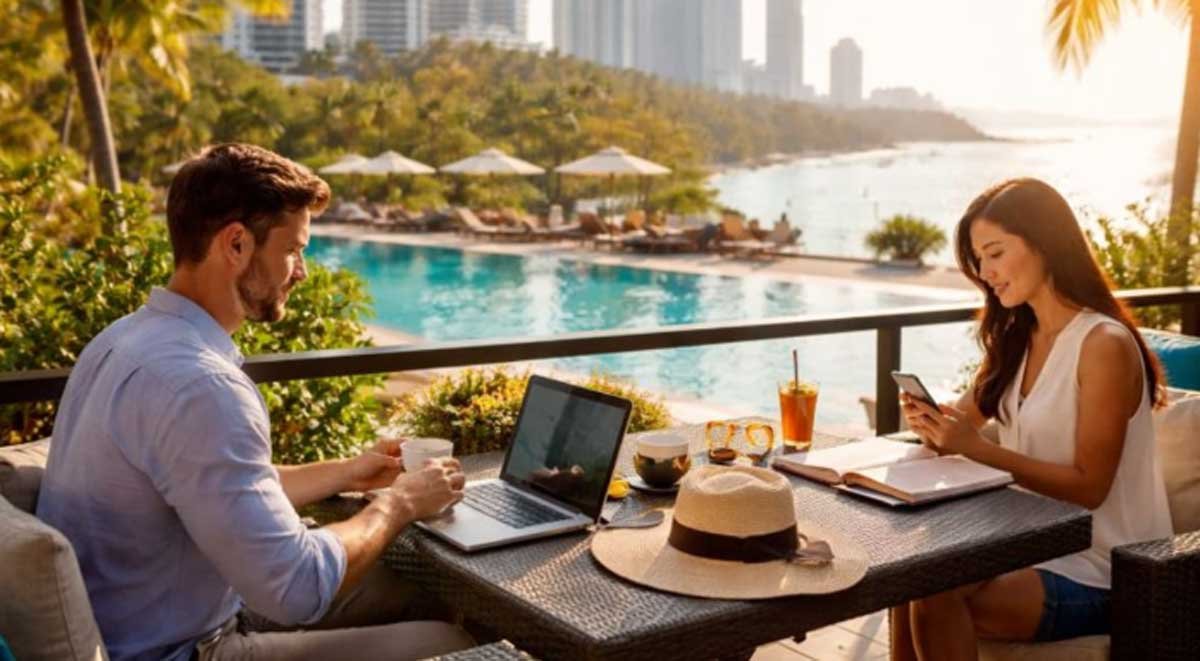
Business travel across Southeast Asia is undergoing a massive transformation. The days of short, strictly corporate visits are fading. Instead, modern professionals are actively combining work obligations with extended leisure holidays. This blending of business and personal time (widely known as bleisure travel) is fundamentally changing how executives select their accommodation in major corporate hubs like Bangkok.
The Statistics Fueling Blended Travel
The growth of hybrid work models has turned bleisure from a niche perk into a dominant industry strategy. Companies across the Asia-Pacific region are increasingly reshaping their corporate travel policies to support these hybrid itineraries. Employees are frequently leveraging company-paid flights while privately funding extended stays for the weekend. According to recent global data from Skift Research, blended travel bookings increased 72% year-over-year in 2023, fueling a massive surge in multigenerational family travel combined with business trips.
In Thailand, this shift is particularly pronounced. An estimated 90 percent of international trips to the country now incorporate both work and personal downtime. The Thai government has leaned heavily into this movement to attract high-earning foreign talent. The recently launched Destination Thailand Visa uniquely permits primary holders to bring their spouses and children for extended stays of up to 180 days. Furthermore, the Tourism Authority of Thailand recently expanded its Workation Paradise campaign, partnering with hundreds of hospitality brands to actively incentivise long-term stays for remote professionals, tech entrepreneurs, and corporate executives.
Finding the Perfect Base for Extended Stays
As corporate trips extend from one or two nights to over a week, the logistical challenges of housing a group become more complex. Millennial parents are now a primary demographic driving the extended-stay sector. Research indicates that 43 percent of intergenerational households in the Asia-Pacific region travel together, heavily driving the demand for spacious group lodging. These families require facilities that cater to both intense remote work sessions and family relaxation. For those visiting the Thai capital, reserving a 3 bedroom suite in Bangkok provides a highly practical alternative to booking multiple, disconnected rooms across a busy hotel floor.
Traditional single hotel rooms simply do not provide the necessary space for these groups or collaborative executive teams. To accommodate an entire family without sacrificing privacy or a quiet workspace, residential-style lodging is absolutely essential. This setup ensures that everyone has their own private quarters while comfortably sharing a central living area for meals and downtime.
Strategic Locations for the Modern Executive
Thailand’s capital has firmly cemented its status as a premier corporate hub, recently ranking third in the Asia-Pacific region for hosting major meetings and exhibitions. With the regional business tourism market reaching an estimated valuation of $231 billion in 2026, choosing the right neighbourhood is critical for maximising productivity. Areas like Sukhumvit and Asoke remain premier choices for their seamless blend of commercial infrastructure and lifestyle amenities. These districts offer immediate access to world-class dining, luxury shopping centres, and the efficient BTS Skytrain network, ensuring that getting around the metropolis is entirely stress-free.
For professionals setting up a base for hybrid working and exploring the city, reading through dedicated travel guides and regional overviews can provide excellent insights into the perks of these central districts. Staying in a well-connected hub means a traveller can easily transition from a morning boardroom meeting to an afternoon exploring local cultural attractions.
Key Features to Look For in Bleisure Accommodation
As the extended stay hotel market continues its rapid expansion toward a projected $166.5 billion valuation by 2032, corporate planners are prioritising flexible lodging over traditional setups. When planning a blended trip to Southeast Asia, it is crucial to seek out accommodation that bridges the gap between a premium hotel and a private residence.
Consider prioritising the following features for a successful extended stay:
- Dedicated workspaces: High-speed internet and quiet corners are vital for maintaining productivity during remote working hours.
- Fully equipped kitchens: Having cooking facilities allows long-term guests to prepare family meals and maintain normal dietary routines without relying entirely on restaurant dining.
- Shared communal zones: Spacious living rooms offer a central area for team-building with colleagues or relaxing with family members after a busy day.
- Proximity to transit: Easy access to public transport networks ensures that both corporate venues and leisure destinations are just a short journey away.
The era of rushing through a frantic, high-stress business trip is rapidly making way for a much more balanced approach to corporate travel. By actively embracing the bleisure trend and intentionally investing in spacious, versatile accommodation, modern professionals can successfully merge career growth with meaningful travel experiences. Ultimately, treating a corporate assignment as an opportunity for family bonding or cultural exploration yields happier, more productive executives who return home refreshed rather than burnt out.