Thursday, March 12, 2026
Mitmunk
  • Home Improvement
  • Finance
  • Lifestyle
  • Business
  • Seo Digital
  • Auto
  • Law
  • Health
  • Other
    • Travel
    • Outdoor
    • Fashion
    • Entertainment
    • Construction
    • Education
    • Tech
    • Pet
    • Real Estate
No Result
View All Result
  • Home Improvement
  • Finance
  • Lifestyle
  • Business
  • Seo Digital
  • Auto
  • Law
  • Health
  • Other
    • Travel
    • Outdoor
    • Fashion
    • Entertainment
    • Construction
    • Education
    • Tech
    • Pet
    • Real Estate
No Result
View All Result
MitMunk
No Result
View All Result
Home Lifestyle
6-tips-for-finding-best-wedding-photographer

6 Tips for Finding the Best Wedding Photographer

Share on FacebookShare on Twitter

Your wedding day is one of the most important and memorable events of your life, and finding the best wedding photographer is crucial in capturing those memories. With so many options out there, it can be overwhelming to choose the right photographer for your special day.

In this article, we’ll provide six tips to help you find the best wedding photographer for your needs.

Table of Contents

Toggle
  • 1. Set a Budget
  • 2. Determine Your Style
  • 3. Look for Experience and Expertise
  • 4. Check for References and Reviews
  • 5. Meet with Potential Photographers
  • 6. Review Their Portfolio and Contracts
  • Take Your Time and Hire the Right Person

1. Set a Budget

Before you start your search, it’s important to set a budget for your wedding photography. This will help you narrow down your options and ensure that you don’t overspend on this important aspect of your wedding.

Keep in mind that wedding photography can range from a few hundred dollars to several thousand dollars, so it’s important to find a photographer who fits within your budget.

2. Determine Your Style

Every photographer has a unique style, and it’s important to find a photographer whose style aligns with your vision for your wedding photos. Do you prefer a classic, traditional look or a more modern, artistic approach? Light and airy, or dark and moody?

Consider the style of the photographer’s previous work to determine whether they’re a good fit for your wedding. It’s also important to consider the location and season.

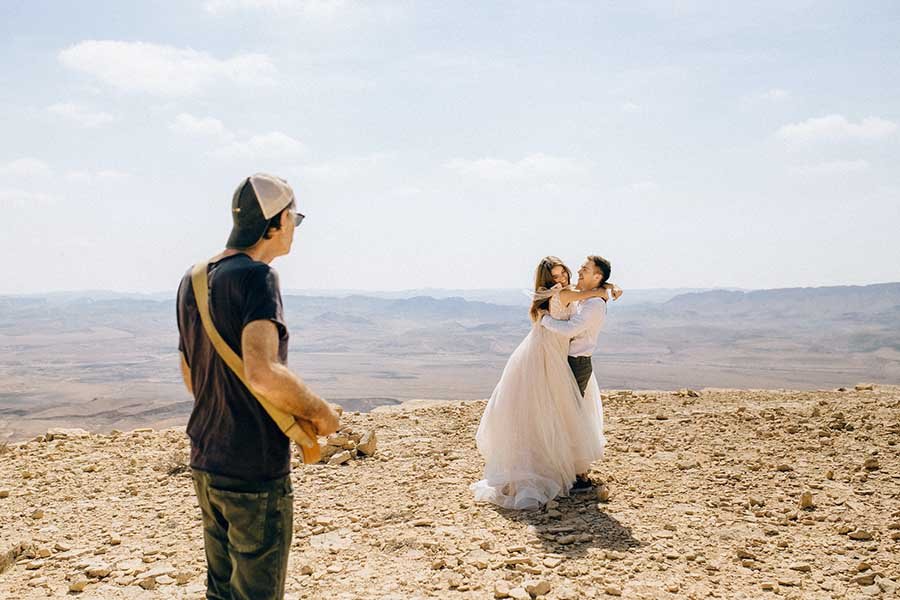
A wedding by the beach, in full sun, will suit certain photographers. But a wedding in the woods, on an overcast day, or in a darker venue, will suit other types of wedding photographers.

3. Look for Experience and Expertise

Experience and expertise are essential when it comes to finding the best wedding photographer. Look for a photographer who specializes in weddings and has experience shooting weddings similar to yours.

An experienced photographer will know how to handle different lighting conditions and capture the special moments of your day with ease.

4. Check for References and Reviews

One of the best ways to find a reliable and trustworthy wedding photographer is by checking references and reviews. Ask friends, family, and other vendors for recommendations, and read online reviews from previous clients.

Look for a photographer with positive reviews and a track record of delivering high-quality work.

5. Meet with Potential Photographers

Once you’ve narrowed down your options, it’s essential to meet with potential photographers in person or via video call. Many professional wedding photographers will require a consultation, typically done over a Zoom call or phone call, to ensure that you’re a good fit for them.

It’s essentially a 2-way interview and it’s very important. So if you’re planning to hire a really good wedding photographer, you can expect this to be part of the process.

The call gives you a chance to get to know the photographer and their style and to discuss your vision for your wedding photos. It’s also a good opportunity to ask questions about their experience, equipment, and approach to shooting weddings.

You don’t have to hire the first photographer you speak to. But once you find the photographer that suits your personality and goals, it’s best to book right away to lock in your date.

6. Review Their Portfolio and Contracts

Before you make a final decision, review the photographer’s portfolio and contracts carefully.

Make sure their style and quality of work align with your vision for your wedding photos, and that their contract includes all the details you’ve discussed, including the date, time, and location of your wedding, as well as the cost and what’s included in their package.

Take Your Time and Hire the Right Person

Finding the best wedding photographer for your needs requires some research and planning. By taking the time to think through what you want and research all available options in your area, you can ensure that you find a photographer who will capture the special moments of your wedding day with skill and artistry.

Remember, your wedding photos are a lasting reminder of your special day, so take the time to find the best photographer for you. You only get one chance to capture these photos.


Related Posts

The Rising Demand for Active Play Centers - And Why Investors Are Paying Attention

The Rising Demand for Active Play Centers – And Why Investors Are Paying Attention

by Emily Stevens
March 12, 2026
0

Parents across the United States know the struggle of a rainy Saturday morning all too well. The kids are bouncing...

Enhancing Community Engagement Through Commercial Outdoor Seating

Enhancing Community Engagement Through Commercial Outdoor Seating

by Emily Stevens
March 10, 2026
0

In a digital era that increasingly prioritizes virtual connections, nurturing face-to-face relationships within communities remains vital for fostering social cohesion...

Pest Control in Gold River, CA

Pest Control in Gold River, CA

by Emily Stevens
March 6, 2026
0

Living in Gold River comes with a lot to like, including mature trees, well-kept neighborhoods, and easy access to outdoor...

POPULAR NEWS

Delores Miller Clark

Delores Miller Clark: Learn More about John List’s Ex-Wife

September 27, 2022
Lisa Seal Frigon

Lisa Seal Frigon: All about Drug Lord Barry Seal’s Daughter

September 18, 2022
Deserai Anderson Utley Personal Life, Career, & More

Deserai Anderson Utley Personal Life, Career, & More

September 30, 2022
Linnell S. Nobori

Linnell S. Nobori: All there is to Know about Ted Bessell’s Wife

September 5, 2022
Gweneth Gonzales Thomas

What You May Not Know About Gweneth Gonzales Thomas, Richard Thomas’ Daughter

August 2, 2022

EDITOR'S PICK

Regular Maintenance to Prevent Garage Door Repairs

The Importance of Regular Maintenance to Prevent Garage Door Repairs

March 20, 2024
5 Ways Wide Area Network

5 Ways Wide Area Network (WAN) Connectivity Can Enhance Your Business Operations

July 30, 2024
Railroad modeling, also known as model railroading, is a beloved hobby that has been enchanting enthusiasts of all ages for generations. The world of model trains is a captivating realm where creativity, craftsmanship, and imagination come together to recreate the charm and nostalgia of railroads on a smaller scale. From meticulously building miniature landscapes to designing intricate train layouts, the art of creating these trains is a delightful and rewarding experience that allows hobbyists to build their own miniature worlds. The Journey Begins: Choosing Your Scale One of the first and most crucial decisions in model railroading is choosing the scale. These trains come in various scales, representing different proportions of the real-life counterparts. The popular scales include HO, N, O, and G, each offering unique challenges and opportunities for creativity. HO scale, being the most common, provides a good balance between detail and space, making it a popular choice for beginners and seasoned modelers alike. On the other hand, N scale offers more intricate layouts for those with limited space, while O and G scales are perfect for those who prefer large, grand layouts. Crafting the Landscape: Building Scenery Creating an immersive and realistic landscape is an essential aspect of model railroading. Hobbyists meticulously design and construct miniature worlds, complete with mountains, valleys, rivers, and towns. The process involves using a combination of materials, such as foam, plaster, and scenic textures, to sculpt the terrain. Trees, foliage, rocks, and other scenery elements are carefully placed to bring the model train layout to life. The art of crafting scenery allows modelers to unleash their creativity and transport themselves and their viewers to a mesmerizing world of imagination. The Iron Horses: Assembling Model Trains At the heart of model railroading are the model trains themselves. Building and assembling the trains require attention to detail and a passion for precision. Modelers can choose from a vast array of locomotives, freight cars, and passenger cars, representing various eras and railroad companies. Some enthusiasts even enjoy scratch-building or kit-bashing, which involves modifying existing models or creating unique locomotives and rolling stock from scratch. The joy of seeing the trains come to life on the tracks adds an extra layer of fulfillment to the hobby. A World in Motion: Laying the Tracks Laying tracks is a pivotal part of model railroading, and it requires careful planning and execution. The tracks are the lifeline of the miniature railroad, determining the flow and operation of the model trains. Modelers carefully lay the tracks, ensuring smooth curves, switches, and turnouts for seamless train movement. The wiring and control systems are also meticulously set up to allow multiple trains to run simultaneously. The satisfaction of seeing the trains glide effortlessly along the tracks is a rewarding experience for any model railroader. Bringing Realism to Life: Weathering and Detailing To achieve authenticity and realism, modelers often weather and detail their trains and scenery. Weathering involves adding wear and tear to the trains, making them look like their real-life counterparts that have endured the elements of time and travel. Modelers use various techniques like airbrushing, weathering powders, and paint to achieve the desired effect. Additionally, detailing the scenery with miniature figures, vehicles, and buildings adds depth and character to the model train layout, making it even more engaging for viewers. Creating a Narrative: Storytelling with Model Trains Model railroading goes beyond assembling trains and scenery; it allows modelers to create captivating narratives within their layouts. Hobbyists often design scenes that depict specific eras, locations, or historic events, effectively telling stories through their miniature worlds. From recreating a bustling cityscape from the 1950s to depicting a peaceful countryside scene from the 19th century, model trains offer a canvas for storytelling that sparks curiosity and fascination in viewers of all ages. Conclusion The art of railroad modeling, with its meticulous attention to detail and boundless creativity, allows enthusiasts to build their miniature universes filled with the charm of trains and the allure of the railroad era. From choosing the scale to crafting the landscape and assembling the model trains, every aspect of model railroading is a testament to the passion and dedication of its practitioners. As model trains come to life on carefully laid tracks, they evoke a sense of nostalgia and wonder, taking both the modeler and the viewer on an enchanting journey through a world of precision, craftsmanship, and imagination.

The Art of Railroad Modeling: Creating Model Trains

August 5, 2023
the Implementation of Blockchain Technology

How the Implementation of Blockchain Technology Could Improve Your Business Operations

June 24, 2024
Contact Us: Info@mitmunk.com

© 2022 Mitmunk Theme Copyright

No Result
View All Result
  • Homepages
    • Home Page 1
  • Business
  • Entertainment
  • Fashion
  • Health
  • Lifestyle
  • Tech
  • Travel

© 2022 Mitmunk Theme Copyright