A home pool is one of the best upgrades you can make for comfort and fun, yet it stays enjoyable only when the water stays clear, balanced, and predictable. Pool care can sound complicated at first because people talk about chemistry, filtration, and equipment like it is a science project, but most of the work comes down to a few habits done consistently. When you build a simple routine, you spend less time fighting algae and cloudy water, and you spend more time actually using the pool.
The best pool maintenance tips are the ones that prevent problems before they start, because fixing water after it goes bad is always more expensive and time-consuming. A pool is a closed system that reacts to weather, swimmers, debris, and sunlight, which means small changes can become big issues when they are ignored. The good news is that you do not need to overthink it, since a handful of high-impact steps cover most of what homeowners deal with. If you focus on water balance, circulation, cleaning, and equipment care, your pool will usually cooperate.
Tip One: Test and Balance Your Water Consistently
Water testing is the foundation of pool maintenance because clear water is not always safe water, and safe water is not always stable water. When your chlorine, pH, alkalinity, and stabilizer levels stay in a healthy range, the pool becomes easier to manage, since sanitizers work properly and algae has a harder time taking hold. Consistent testing also helps you make small adjustments instead of large corrections, which saves money and reduces the chance of chemical swings that irritate skin and eyes. Most homeowners do best with a routine testing schedule, especially during hot months when heat and sunlight burn through sanitizer faster.
Balancing does not mean chasing perfection, since the goal is stability that keeps the water comfortable and protects equipment. If pH drifts too high, chlorine becomes less effective, and scale can start forming on surfaces and inside plumbing. If pH drops too low, the water can become corrosive, which can damage metal components and cause irritation. The simple habit of testing and adjusting regularly keeps your pool predictable, which is the real secret to low-stress maintenance.
Tip Two: Keep Circulation Strong and Filter Performance High
Your pool’s circulation system is what moves water through the filter, distributes sanitizer, and prevents stagnant zones where algae can grow. Running the pump long enough each day is essential, especially during periods of heavy swimming, intense heat, or frequent storms that drop debris into the water. Good circulation also helps chemicals mix evenly, which means your test results reflect the entire pool rather than just one clean corner. If you notice dead spots where debris collects or algae keeps returning, circulation is often part of the problem.
Filter maintenance matters because even a great chemical routine cannot overcome a filter that is clogged or neglected. Cartridge filters need periodic rinsing and occasional deeper cleaning, sand filters need backwashing when pressure rises, and DE filters require proper backwashing and recharging with the correct amount of media. A quick way to stay on track is to watch the pressure gauge, since rising pressure usually signals that the filter is loading up and airflow is being restricted. When filtration is strong, water looks better, chemical demand drops, and the pool stays clearer with less effort.
Tip Three: Skim, Brush, and Vacuum on a Simple Schedule
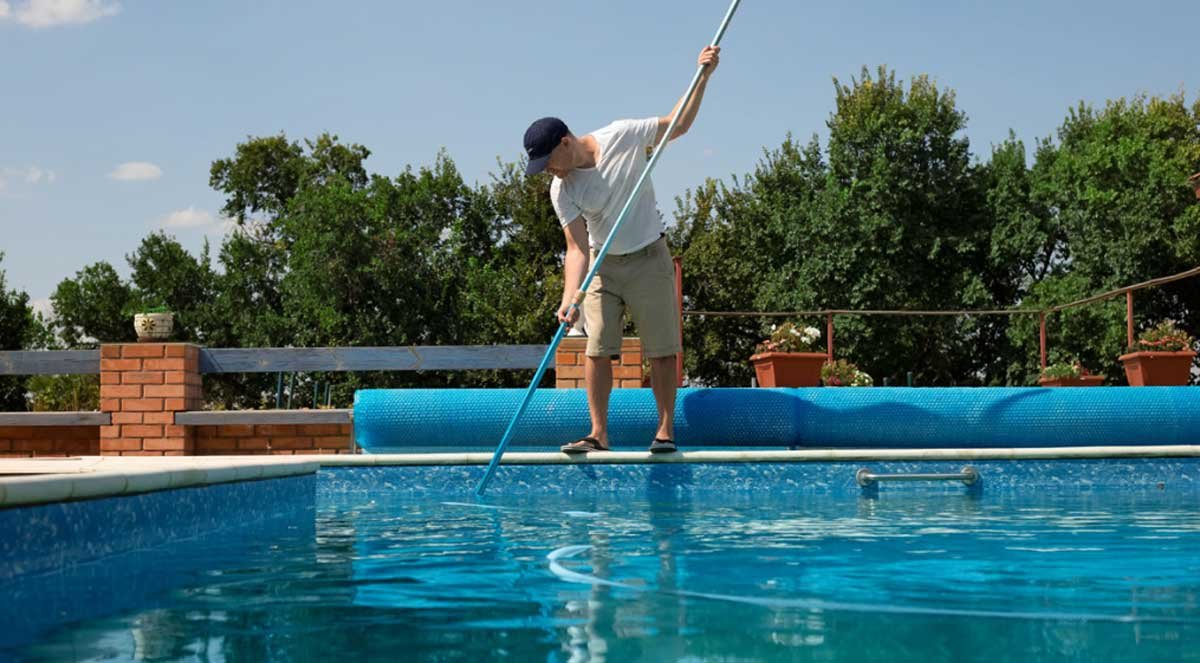
Cleaning is not just about appearance, because debris and biofilm create the conditions that algae and bacteria love. Skimming the surface regularly removes leaves, pollen, and insects before they break down and feed cloudy water. Brushing the walls and steps matters because algae often starts as a thin film that clings to surfaces, especially in shaded areas and corners where water flow is weaker. When you brush consistently, you remove that early buildup and push it into circulation so the filter and sanitizer can do their jobs.
Vacuuming, whether manual or automatic, keeps fine debris from settling and staining the floor. Even if your pool looks clean from the patio, sediment can build in low spots, behind ladders, and along edges where circulation is not perfect. A simple schedule that includes skimming, brushing, and vacuuming prevents the slow buildup that eventually turns into a bigger cleanup. When cleaning becomes routine instead of reactive, the pool stays more inviting and the water stays easier to balance.
Tip Four: Watch Water Level and Address Leaks Early
Water level affects circulation and equipment performance, so it is worth paying attention to how high the water sits on the skimmer opening. If the level drops too low, the pump can pull in air, which can reduce flow and potentially damage equipment over time. If the level is too high, the skimmer may not pull surface debris efficiently, which can lead to buildup and poorer surface clarity. Keeping the level stable helps the system run smoothly and keeps your daily maintenance routine more effective.
Leaks can be subtle, which is why consistent observation is valuable. A slow drop beyond normal evaporation, soggy spots in the yard, or frequent need to top off water can signal an issue that will worsen if ignored. Addressing leaks early protects your equipment, prevents structural damage, and reduces chemical waste, since replacing water constantly also means replacing treated water. When you treat water level as an equipment health signal, you catch problems sooner and avoid expensive surprises.
Tip Five: Protect Your Pool After Storms and Heavy Use
Storms and heavy swim days can throw off water chemistry quickly, which means a small post-event routine can prevent bigger problems. After storms, remove debris early, check the filter, and test water, since rain can dilute chemicals and add organic material that increases sanitizer demand. Heavy swimmer load introduces sunscreen, sweat, hair products, and extra organic matter, which can quickly reduce chlorine effectiveness and make water look dull. A quick test and adjustment after these events keeps the pool stable and prevents a gradual slide into cloudy water.
Preventive steps also include simple habits like showering before swimming, using a leaf net during windy seasons, and keeping deck areas clean to reduce what gets tracked into the pool. When you respond quickly after stress events, your pool recovers faster and requires fewer chemicals overall. This approach is less about doing more work and more about doing the right work at the right time. A pool that gets consistent attention after storms and parties usually stays clearer all season.
Keeping Your Pool Easy to Own
Pool maintenance becomes far less intimidating when you treat it as a routine built around a few reliable habits rather than a constant problem to solve. Testing and balancing water keeps chemistry stable, strong circulation and filtration keep water moving and clear, and regular cleaning prevents algae from gaining momentum. Watching water level protects equipment and helps you spot leaks early, while post-storm and post-party care keeps your pool from slipping into trouble. These five tips cover the majority of what homeowners need to keep a pool looking great without turning weekends into repair projects.
A well-maintained pool feels like a luxury because it is ready when you want it, not after a day of troubleshooting. When you keep the routine simple and consistent, you spend less on chemicals, extend the life of your equipment, and enjoy cleaner, more comfortable water. The goal is not perfection, since the goal is stability and predictability. With a steady plan, pool ownership becomes easier and far more enjoyable.