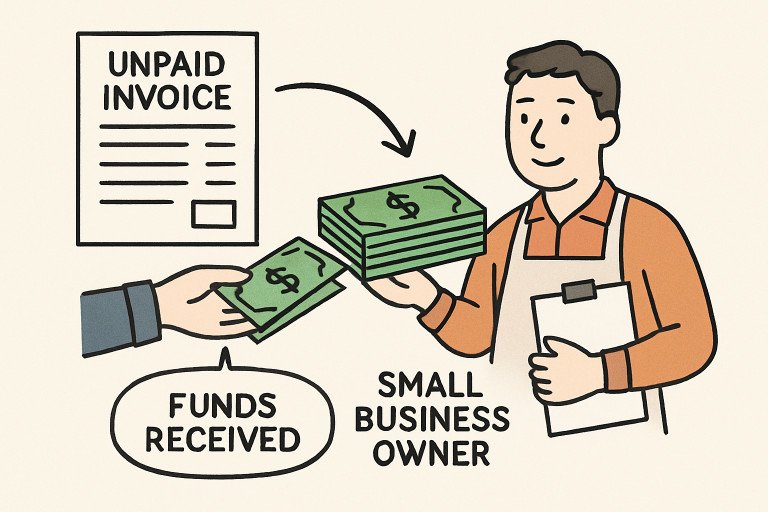
For many small businesses, the challenge of waiting for customers to pay their invoices can significantly strain day-to-day operations and hinder growth prospects. This is where solutions like improving payment cycles through invoice financing come into play. By unlocking capital tied up in accounts receivable, small enterprises can maintain healthy cash flow and position themselves for sustainable growth.
Invoice financing provides small businesses with access to funds without the lengthy approval processes associated with traditional lending. It enables businesses to cover operational expenses, pay suppliers on time, and take advantage of new opportunities, while minimizing reliance on borrowed capital. Understanding how invoice financing works and how it can benefit your business can be crucial for navigating today’s fast-paced business landscape.
Understanding Invoice Financing
Invoice financing is a process where a business sells its outstanding invoices to a third-party financier at a discount. This transaction provides the business with immediate cash, while the financier collects payments from the customers when invoices come due. Two primary types of invoice financing exist: factoring, in which the financier manages collections, and invoice discounting, in which the business remains responsible for collections.
Both arrangements ensure that cash, which would traditionally remain locked until invoices are paid, becomes immediately available, fueling the business’s cash flow. This model is especially valuable for businesses with long invoice terms or those facing rapid growth that strains working capital.
Benefits of Invoice Financing for Small Businesses
- Improved Cash Flow: Invoice financing provides a quick injection of capital, promoting liquidity and helping meet commitments on time.
- Flexibility: Since funds are drawn against receivables, businesses can scale their use of this tool up or down based on seasonal needs or unexpected demand spikes.
- Reduced Credit Risk: Some providers offer credit protection options, which help mitigate the risk of bad debts.
Unlike loan-based financing, this model does not require collateral beyond the invoices themselves, making it accessible even to businesses with limited assets or unpredictable cash flows. The process is typically simpler and faster than applying for traditional loans, and many providers now offer digital platforms for easy onboarding and management.
Recent Developments in Invoice Financing
The fintech revolution has transformed invoice financing. Modern platforms are integrating with popular ERP and accounting systems, such as Nuvei’s solutions, enabling businesses to access financing directly through the tools they already use. These advancements save time, reduce paperwork, and enable quicker approval and disbursement of funds. There is a growing trend toward automation and AI-driven assessment processes, which facilitate risk assessment and provide personalized financing options based on real-time financial data. In Australia and globally, increased regulatory clarity has also encouraged more businesses to explore and trust invoice financing as a viable choice for managing business cash flow. Learn more about the impact of fintech on small businesses.
Choosing the Right Invoice Financing Partner
Finding the right invoice financing partner involves evaluating more than just the upfront costs. Important criteria to consider include fee structures, advance rates (the percentage of the invoice value available upfront), credit protection provisions, and the provider’s industry reputation. For example, companies such as FundThrough offer 100% advance rates, delivering maximum working capital at a flat fee. When comparing providers, business owners should review testimonials and check for transparency in all contract terms to avoid surprises down the road. It is also wise to consider the level of integration with existing business systems and the quality of customer service, as a financing partner is truly an extension of the team.
Potential Challenges and Considerations
Despite its benefits, invoice financing is not without potential challenges. The fees associated can be higher than those with traditional loans, especially if businesses rely on invoice financing repeatedly. It is important to be strategic about which invoices to submit, ensuring the benefits outweigh the costs on each transaction.
- Cost: Understand all service fees before committing to any agreement. These costs can include processing fees, discount rates, and occasionally setup fees.
- Customer Relationships: If a financier manages invoice collection, ensure their processes align with your values and customer service standards, as your customers’ experience can affect your company’s reputation.
- Eligibility: Not every invoice or customer may qualify for financing. Providers may set minimum invoice amounts or limit service to certain creditworthy clients.
Business owners should regularly review the effectiveness of invoice financing in their financial strategy and stay updated on the latest regulatory and market developments. Resources such as Inc.com’s guide to invoice financing can provide further insights.
Conclusion
Invoice financing stands out as a practical solution for small businesses striving to maintain liquidity and build resilience against cash flow hurdles. By understanding the mechanisms, carefully vetting providers, and thoughtfully weighing costs and benefits, business owners can leverage this tool to drive stability and growth. As fintech innovations continue to refine the process, invoice financing is likely to become an even more strategic resource for business success.