Mallorca sits at the centre of the western Mediterranean in a way that rewards anyone who approaches it from the water. The island’s coastline stretches for over 550 kilometres, taking in limestone cliffs, sheltered bays, and fishing villages that road traffic barely touches. Summer here runs from May through October, with reliable winds and water temperatures that stay warm well into September. Whether you arrive by boat, by plane, or both, there is considerably more to do than the resort strips of the south suggest.
Renting a Yacht in Mallorca: Bases, Routes, and What to Expect
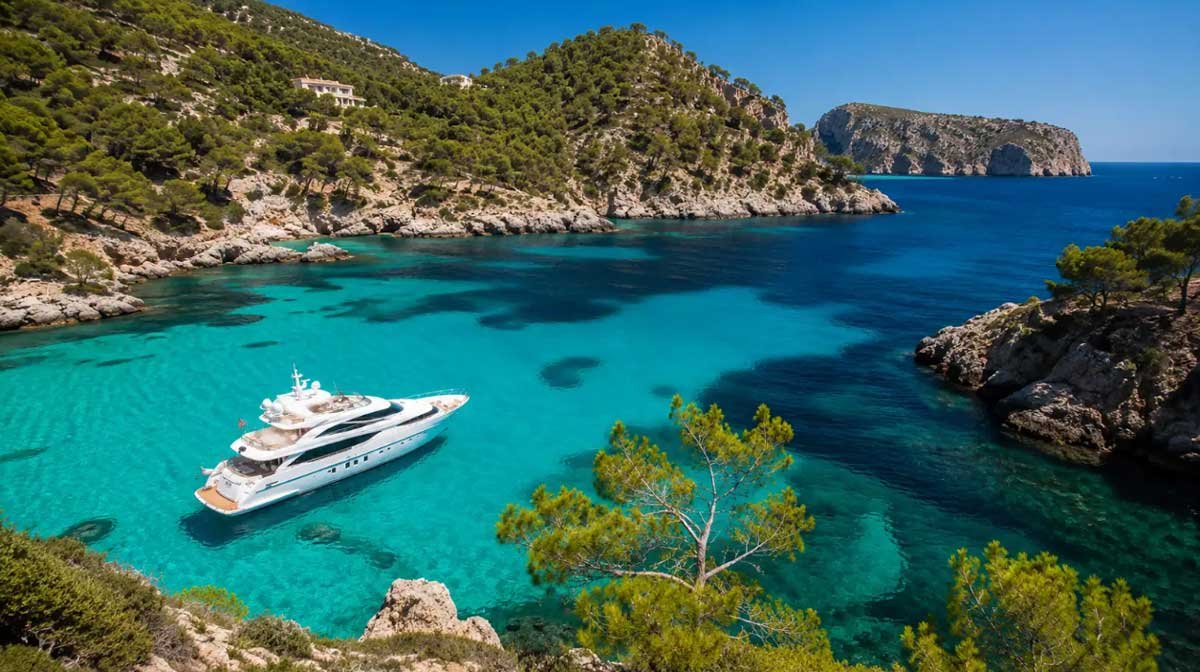
The main charter bases are concentrated in the southwest and southeast of the island. Palma de Mallorca has the largest marina infrastructure, with Real Club Náutico de Palma and Club de Mar handling the bulk of bareboat and flotilla traffic. The southeast corner, anchored by Porto Colom and Porto Cristo, appeals to sailors who want calmer, less crowded approaches to the island’s most sheltered anchorages.
Prevailing summer winds come from the northwest — the tramontana — and the southwest — the garbí — with the latter typically building through the afternoon. Most charter itineraries run clockwise: departing Palma, rounding Cap de Formentor in the north, then working south down the east coast before returning via Cabrera and the Illa des Conills archipelago.
The east coast has the highest concentration of calas worth anchoring in: Cala Mondragó, Cala Figuera, and Cala Llombards are accessible by sea but awkward to reach overland without a car, which makes them genuinely quiet mid-week even in July. Sa Dragonera island, off the western tip, is a natural park where anchoring is restricted but day sailing past its cliffs is one of the better coastal experiences on this side of the Balearics.
Charter weeks typically run Saturday to Saturday out of Palma, though some bases offer mid-week starts. If you’d like to compare available boats and dates for this summer, you can browse current options to hire a boat in Mallorca and filter by size, crew preference, and departure week.
Eating Around the Island: Markets, Sobrasada, and Celler Restaurants
Mallorcan food is not the Catalan food of Barcelona, and it is definitely not the paella-for-tourists food of the seafront restaurants in Magaluf. The real entry point is sobrasada — a cured spreadable sausage made from black pig, paprika, and lard — eaten on pan amb oli (bread rubbed with tomato and drizzled with olive oil). Every village bakery does a version; the best are found inland.
The weekly markets are worth organising a day around. Sineu, held every Wednesday, is the oldest livestock and produce market on the island and draws farmers from the central plain. Pollença on Sunday is better known and correspondingly busier, but the stalls in the upper square still carry local honey, almonds, and cheeses that supermarkets do not stock.
For a proper sit-down meal, look for a celler — a traditional wine cellar converted into a restaurant, common in towns like Inca and Binissalem. These places serve slow-cooked lamb, stuffed aubergine, and the island’s own wine at prices that have no relationship to the resort economy along the coast.
Walking the Tramuntana: Serra de Tramuntana Routes
The Serra de Tramuntana runs along the entire northwest coast and earned UNESCO World Heritage status in 2011 for its cultural landscape of terraced hillsides, dry-stone walls, and ancient water management systems. For walkers, it offers anything from a two-hour circuit above Valldemossa to multi-day traverse routes.
The GR 221, known as the Ruta de Pedra en Sec (Dry Stone Route), runs for 150 kilometres from Port d’Andratx in the south to Pollença in the north, with a network of refugis (mountain shelters) spaced a day’s walk apart. Most walkers pick a section rather than attempting the full route; the stretch between Deià and Sóller is consistently rated the most scenic, with views dropping straight down to the sea from ridgelines at around 800 metres.
Early July mornings on the high routes are cool enough for sustained walking; by midday the temperature climbs fast, so most experienced walkers start by 7am and are down by noon. The refugis book out weeks in advance in high season — reserve early.
Caves, Archaeology, and the Stone Age Villages of the Interior
Mallorca was densely settled during the Talaiotic period, roughly 1300–123 BC, and the evidence is everywhere once you know what you are looking at. Talaiots are stone towers, some still three to four metres high, scattered across the agricultural interior. The best-preserved complex is at Ses Païsses, near Artà — a walled village with a gateway that has stood for three thousand years and can be walked through in under an hour.
Underground, the island has an unusual density of cave systems. Coves del Drac near Porto Cristo contains one of the largest underground lakes in Europe (Llac Martel) and runs classical music concerts by boat inside the cave — a theatrical experience that sounds implausible but works. Coves d’Artà, north of Cala Ratjada, are less visited and arguably more impressive in their scale, with cathedral-sized chambers opening off the main gallery. If you hire a boat in Spain and arrive at Cala Ratjada by sea, you can combine a morning swim in the surrounding coves with an afternoon descent into the caves, which is one of the more memorable ways to experience this stretch of coastline.
The Museu de Mallorca in Palma has the clearest overview of the island’s prehistory, Roman period, and Moorish centuries — useful context before visiting the sites.
Beach Days: The East Coast Calas
The island’s postcard beaches — Cala d’Or, Cala Mondragó, Es Trenc — are all on or near the south and east coasts, which face calmer water than the exposed northwest. Es Trenc is the longest natural beach on the island, backed by dunes and a salt flat reserve, and it remains undeveloped in a way that is unusual for southern Mallorca.
For beaches with fewer people and more character, the small calas of the east coast repay the effort of getting there early. Cala Varques requires a 20-minute walk from the nearest road; Cala Bota is adjacent to a 16th-century watchtower and usually quiet before 11am. Both have clear water over white sand and are shallow enough for easy swimming without fins.
The prevailing summer wind usually drops overnight and stays calm until early afternoon on the east coast, which makes morning the best window for flat-water swimming. By 3pm the garbí typically arrives and the sea develops a chop.
Deia and the Village Trail: Mallorca’s Artists’ Quarter
Deià has been attracting writers, painters, and musicians since Robert Graves settled there in 1929 and stayed for most of the rest of his life. The village sits on a steep hillside above a small shingle cove (Cala Deià) and has managed to remain genuinely inhabited — with a working parish church, a cemetery on the hill, and a bakery — despite decades of literary tourism.
Graves’s house, La Posada, is open to visitors and gives a clear picture of the expatriate creative life of the mid-20th century on the island. The village itself takes about an hour to walk properly; the walk down to Cala Deià adds another 20 minutes each way and ends at a beach bar that has been serving grilled fish and cold beer to locals and visitors alike for decades.
From Deià, the coastal path west to Sa Foradada — a headland with a hole punched through its rock — takes about two hours one way and offers uninterrupted views of the Tramuntana cliffs descending into the sea. The path is rocky and exposed; proper shoes are needed.