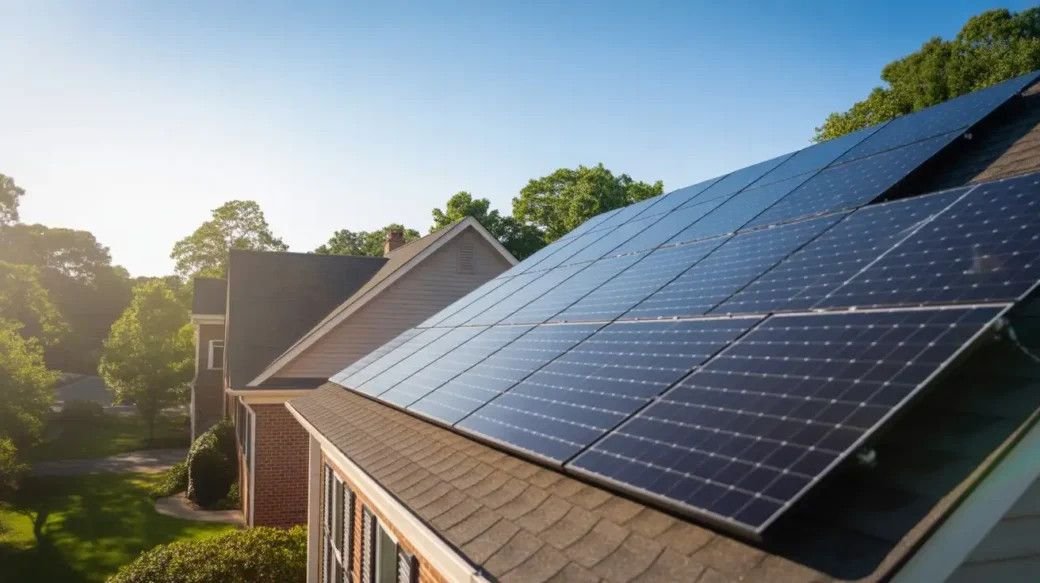
Maryland has above-average electricity rates, a strong solar renewable energy credit market, and a state tax incentive that stacks with the federal credit. That combination puts Maryland in the top tier of states where solar makes financial sense. But the answer depends on your specific roof, your electricity usage, and which utility serves your home.
For a typical Maryland homeowner with a south-facing roof and an average electricity bill, solar panels pay for themselves in seven to ten years and generate net savings of $15,000 to $25,000 over the 25-year warrantied life of the system. Here is the math behind that number and the variables that change it.
What Solar Panels Cost in Maryland
The average cost of solar in Maryland is approximately $3.00 to $3.30 per watt before incentives. A typical residential system size is 7 kilowatts, which costs $21,000 to $23,000 before any tax credits or rebates. Maryland prices are slightly below the national average of about $3.30 per watt because the state has a competitive installer market with dozens of companies operating in the Baltimore-Washington corridor.
The federal solar investment tax credit covers 30 percent of the total system cost. On a $22,000 system, the federal credit is $6,600. This is not a deduction from taxable income. It is a direct credit against taxes owed. If you cannot use the full credit in one year because your tax liability is lower than the credit amount, the remainder carries forward to future tax years.
Maryland offers a state solar tax credit of $1,000 for residential systems. It also offers a property tax exemption. The added value of a solar system does not increase your property tax assessment. This is significant in Maryland, where property taxes in counties like Montgomery and Howard are among the highest in the country. A solar system that adds $15,000 to your home value increases property taxes by zero dollars.
After the federal credit and state incentives, a $22,000 system in Maryland costs approximately $14,400 out of pocket. Some counties and utilities offer additional rebates that reduce this further. BGE customers, for example, may qualify for additional incentives through the utility’s energy efficiency programs.
Maryland SRECs: The Incentive Most People Miss
Maryland has a solar renewable energy credit program. For every megawatt-hour of electricity your solar panels generate, you earn one SREC. You sell these credits to electricity suppliers, who are required by Maryland law to purchase a certain number of SRECs each year to meet the state’s renewable portfolio standard.
Maryland SREC prices have historically traded between $50 and $70 per credit, higher than neighboring states like Pennsylvania where SRECs trade below $30. A 7-kilowatt system in Maryland generates approximately eight to nine megawatt-hours per year, which produces eight to nine SRECs annually. At $60 per SREC, that is $480 to $540 per year in additional income on top of your electricity savings.
SREC income typically lasts for 15 years from the date the system is registered. Over 15 years at the current SREC price range, a typical system generates $7,000 to $8,000 in SREC revenue. This is often the difference between a mediocre solar investment and an excellent one. Maryland’s SREC market is stronger than most states because the renewable portfolio standard requires a meaningful percentage of solar specifically, not just general renewables.
How Much You Save on Electricity
Maryland residential electricity rates average approximately 16 to 17 cents per kilowatt-hour, which is 15 to 20 percent above the national average. The higher your electricity rate, the more each kilowatt-hour your panels generate is worth. This is the core reason solar works well in Maryland despite the state not being the sunniest in the country.
A 7-kilowatt system in Maryland generates approximately 8,500 to 9,500 kilowatt-hours per year depending on roof orientation, shade, and panel efficiency. At 16.5 cents per kilowatt-hour, that is $1,400 to $1,570 in electricity you did not buy from the utility each year.
Maryland has net metering through major utilities including BGE, Pepco, Delmarva Power, and Potomac Edison. Under net metering, excess electricity your panels generate during the day is sent to the grid and your meter runs backward. You receive a credit at the full retail rate for every kilowatt-hour you export. At night and on cloudy days, you draw from the grid using those credits. This means your panels do not need to match your usage in real time. They just need to match it over the course of a year.
Annual electricity savings of $1,400 to $1,570 plus SREC income of $480 to $540 totals $1,880 to $2,110 per year in combined savings and revenue. Against a net system cost of $14,400, the simple payback period is 6.8 to 7.7 years. After payback, the system generates pure savings for the remaining 17 to 18 years of its warrantied life.
25-Year Financial Picture
Over the 25-year warrantied life of a typical solar panel system, a Maryland homeowner with a 7-kilowatt system can expect total net savings of $18,000 to $25,000 after recovering the initial investment. This assumes electricity rates increase at 2 to 3 percent per year, which is consistent with Maryland’s historical rate trajectory.
If electricity rates increase faster, solar savings increase. If rates stay flat, savings are at the lower end of the range. The panels continue producing electricity after the 25-year warranty expires, typically at 80 to 85 percent of their original output. The inverter, which converts DC power from the panels to AC power for your home, typically needs replacement at year 12 to 15 at a cost of $1,500 to $2,500. This replacement cost is factored into the net savings numbers above.
What Makes Solar Not Worth It in Maryland
Solar is not a good investment for every Maryland home. Here are the conditions that push the payback period past the point of being worthwhile.
Heavy shade. If your roof is shaded by tall trees or neighboring buildings for most of the day, solar production drops enough that the payback period extends beyond 15 years or the system never pays for itself. A site assessment with a solar pathfinder or shading analysis determines this before you commit.
North-facing roof. South-facing roofs are ideal in the northern hemisphere. East and west-facing roofs produce about 15 to 20 percent less. North-facing roofs produce 30 to 40 percent less. If your only available roof faces are north, solar is probably not worth it regardless of incentives.
Old roof. If your roof needs replacement within five years, replace it before installing solar. Removing and reinstalling panels for a roof replacement costs $3,000 to $6,000, which wipes out several years of savings. Install solar on a roof with at least 10 years of remaining life.
Low electricity usage. If your monthly electric bill is under $80, the savings from solar may not justify the upfront cost. Solar is most beneficial for homes with monthly bills of $120 or more, which is typical for Maryland homes with central air conditioning.
Moving within five years. Solar panels increase home value by an estimated 4 percent on average, according to research from Zillow and the Lawrence Berkeley National Laboratory. But you do not recover the full cost if you sell within a few years of installation. If you plan to move within five years, the payback period does not give you enough time to benefit.
Buying vs. Leasing vs. Solar Loan
Buying the system with cash produces the highest long-term return because you capture the full federal tax credit, the state credit, the SREC revenue, and the electricity savings. The payback period is shortest and the lifetime savings are highest.
A solar loan lets you install with zero money down and pay over 10 to 20 years. The monthly loan payment is typically less than your previous electric bill, so you save money from month one. The trade-off is that interest adds to the total cost, extending the effective payback period by a few years. Solar loans in Maryland typically carry interest rates of 4 to 8 percent depending on the term and your credit.
Leasing is generally the least advantageous option. The solar company owns the panels on your roof. You pay a fixed monthly rate that is lower than your previous electric bill, but the company keeps the federal tax credit, the state credit, and the SREC revenue. You save on electricity but give up the incentives. Leasing also complicates selling your home because the buyer must qualify to take over the lease. Most Maryland homeowners who qualify for a loan are better served buying than leasing.
Frequently Asked Questions
Do solar panels work in Maryland winters?
Yes. Solar panels generate electricity from light, not heat. They actually operate more efficiently in cold temperatures. A clear, cold January day in Maryland produces excellent solar output. The reduction in winter production comes from shorter daylight hours and cloud cover, not from temperature. A light dusting of snow slides off panels because they are slick and angled. A heavy snowfall blocks production until it melts or slides off, which typically happens within a day or two. Annual production estimates already account for seasonal variation, so the payback calculation above reflects winter’s lower output.
Does BGE offer any special solar incentives?
BGE participates in Maryland’s net metering program and offers interconnection for solar systems. BGE does not currently offer a standalone solar rebate beyond what the state provides, but BGE customers are eligible for all Maryland state incentives including the $1,000 tax credit and the SREC program. Check BGE’s website or contact their solar interconnection team for current program details, as utility incentive programs change periodically.
Can my HOA prevent me from installing solar panels?
Maryland law limits the ability of homeowners associations to prohibit solar panel installation. Under Maryland Code, Real Property Section 2-119, an HOA cannot unreasonably restrict the installation of solar panels. The HOA can impose reasonable restrictions on placement, such as requiring panels to be flush-mounted on the rear of the roof rather than visible from the street. They cannot ban solar panels outright. If your HOA denies your solar application, request the specific provision in the covenants they are citing and consult Maryland’s solar access law.