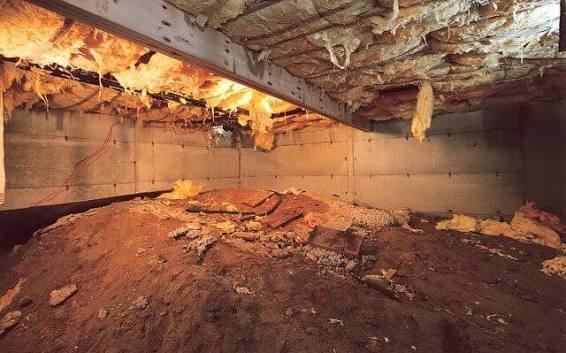
The crawl space under your house is dark, damp, and you try not to think about it. But the floor is always cold in winter, the living room smells musty after a rain, and your energy bills suggest that a lot of heat is escaping through the floor. You know the crawlspace needs insulation, but every contractor seems to have a different opinion on whether it should be vented or sealed and what material to use.
A crawl space is an unoccupied, unfinished space between the ground and the first floor of a building (Wikipedia). Crawlspace insulation best practices have changed significantly in the last 20 years. Building science research has shown that sealed, conditioned crawl spaces outperform vented crawlspaces in most climates, especially in terms of energy efficiency, moisture control, and indoor air quality.
Crawlspace insulation best practices depend on whether the space is vented or sealed. Here is the right approach for materials, moisture control, and installation.
Vented vs Sealed Crawl Spaces — Which Is Better
The first decision in crawlspace insulation best practices is whether to keep the crawlspace vented or seal it. Traditional building codes required vented crawlspaces, but modern research shows that sealed crawlspaces perform better in most climates.
Vented crawl spaces have openings in the foundation walls that allow outside air to circulate through the space. The theory was that ventilation would keep the crawlspace dry. In practice, vented crawlspaces in humid climates allow moist air to enter, which condenses on cool surfaces like ductwork and floor joists, leading to mold growth and wood rot. Vented crawl spaces are colder in winter because the insulation is in the floor joists above the vented space, and cold air circulates below the insulation.
Sealed crawl spaces — also called conditioned crawl spaces — have all vents sealed, a vapor barrier on the floor and walls, and insulation on the perimeter walls rather than the floor. The crawl space becomes a conditioned space that is neither heated nor cooled directly but is insulated from the outside. Sealed crawl spaces reduce energy loss, prevent moisture problems, and keep floors warmer in winter.
| Feature | Vented crawl space | Sealed crawl space
|
| Insulation location | Floor joists above | Perimeter walls |
| Moisture risk | High in humid climates | Low with proper vapor barrier |
| Floor temperature | Cold in winter | Warmer |
| Energy efficiency | Lower | Higher |
| Installation cost | $1u2013$2 per sq ft | $2u2013$4 per sq ft |
Best Insulation Materials for Crawl Spaces
The choice of insulation material is a key part of crawlspace insulation best practices. Not all insulation products are suitable for crawlspace conditions — the material must resist moisture, pests, and physical damage.
Rigid foam insulation is the best choice for crawlspace walls. Extruded polystyrene (XPS) or polyisocyanurate foam boards provide R-5 to R-7 per inch, resist moisture absorption, and do not promote mold growth. Rigid foam is installed against the foundation wall and held in place with mechanical fasteners or adhesive. The seams are taped to create a continuous air and vapor barrier. Rigid foam costs $0.70 to $1.50 per square foot for the material.
Closed-cell spray foam is the second best option for crawlspace walls. It provides R-6 to R-7 per inch, acts as both insulation and a vapor barrier, and seals gaps and cracks in the foundation wall. Closed-cell spray foam costs $2.50 to $5.50 per square foot installed but provides the best moisture protection of any insulation type.
Fiberglass batts are not recommended for crawlspace insulation. Fiberglass absorbs moisture, sags over time, and provides a habitat for pests. If fiberglass is already installed in a crawlspace and shows signs of moisture damage, it should be removed and replaced with rigid foam or spray foam.
Crawl Space Wall Insulation — The Recommended Approach
Insulating the perimeter walls of a sealed crawlspace is the approach recommended by the U.S. Department of Energy and building science experts. The insulation is installed on the interior side of the foundation wall, extending from the top of the foundation wall down to the floor of the crawlspace.
The first step is installing a vapor barrier on the crawlspace floor. A 6-mil to 20-mil polyethylene sheet is laid over the entire floor, extending up the walls by 12 to 24 inches. The sheets are overlapped by 12 inches and sealed with tape or seam sealant. The vapor barrier prevents ground moisture from evaporating into the crawlspace air.
The rigid foam insulation is then installed against the foundation wall. The foam boards are cut to fit between the wall and the floor, and the seams are taped. The insulation should extend at least 24 inches below the exterior grade line to prevent heat loss through the foundation wall. For crawl spaces with vent openings, the vents are sealed with rigid foam or bricked up before insulation is installed.
The insulation must be protected from physical damage in areas where people access the crawlspace. A layer of plywood or impact-resistant covering over the lower portion of the insulation prevents damage from tools and equipment being moved through the space.
A building science specialist with 20 years of experience explained: “The old way of insulating crawl spaces — putting fiberglass between the floor joists and leaving the vents open — caused more problems than it solved. Sealing the crawlspace and insulating the walls is the only approach that works long term.”
Floor Joist Insulation — When to Insulate the Floor Above
Insulating between the floor joists above a crawlspace is the traditional approach, but it is only recommended for vented crawlspaces that cannot be sealed. For sealed crawlspaces, the floor above does not need insulation because the conditioned space below keeps the floor warm.
For vented crawlspaces where sealing is not possible — due to local building codes, flooding risk, or radon concerns — floor joist insulation can be installed using rigid foam boards cut to fit between the joists. The foam is held in place with insulation supports or wire stays. Fiberglass batts with a vapor barrier facing the heated space can also be used, but the vapor barrier must face upward toward the heated floor.
The rim joist area — where the floor framing meets the foundation wall — is the most important part of the crawlspace to insulate in any configuration. The rim joist is a major source of air leakage and heat loss. Sealing and insulating this area with rigid foam or spray foam costs $100 to $300 and provides immediate energy savings.
Vapor Barriers and Moisture Control
Moisture control is more important than insulation in crawl spaces. Without proper moisture management, insulation will fail and the crawlspace structure will deteriorate. Crawlspace insulation best practices always start with moisture control.
A ground vapor barrier is critical for moisture control. A 6-mil polyethylene sheet is the minimum recommended thickness. A 12-mil to 20-mil reinforced polyethylene sheet is more durable and less likely to tear during installation or from foot traffic. The vapor barrier should cover 100 percent of the crawlspace floor with overlapping seams that are sealed with tape.
Foundation wall moisture control includes extending downspouts away from the house, grading the soil to slope away from the foundation, and sealing cracks in the foundation walls. These exterior measures prevent water from entering the crawlspace in the first place and reduce the moisture load on the vapor barrier and insulation.
Dehumidification is recommended for sealed crawlspaces in humid climates. A crawl space dehumidifier costs $300 to $800 and keeps the relative humidity below 60 percent, which prevents mold growth and protects the insulation. The dehumidifier drains into a condensate pump that discharges outside or into a plumbing drain.
Common Crawl Space Insulation Mistakes
Avoiding common mistakes is an important part of crawlspace insulation best practices. The most frequent errors reduce the effectiveness of the insulation and cause moisture problems that require expensive remediation.
Installing fiberglass batts in a crawlspace with any moisture history is the most common mistake. Fiberglass absorbs water like a sponge and holds it against the floor joists, causing wood rot. Once fiberglass in a crawlspace gets wet, it must be removed and replaced. The cost of removal and replacement is two to three times the cost of installing rigid foam correctly in the first place.
Leaving gaps in the insulation is the second most common mistake. Gaps in rigid foam seams or between insulation boards allow heat to bypass the insulation and create cold spots on the floor above. All seams must be taped with foil tape or sealed with spray foam to create a continuous insulation layer.
Failing to address grading and drainage before insulating is the third common mistake. Insulating a crawlspace that has standing water or high humidity from poor drainage is a waste of money. The moisture problems must be fixed first, then the insulation can be installed. Insulating a wet crawl space traps moisture against the structure and accelerates rot.
Frequently Asked Questions
What is the best insulation for a crawlspace?
Rigid foam boards are best for crawlspace walls. Closed-cell spray foam is also excellent but costs more. Avoid fiberglass in crawl spaces.
Should a crawlspace be vented or sealed?
Sealed crawl spaces perform better in most climates. They reduce energy loss, prevent moisture problems, and keep floors warmer. Vented crawl spaces are outdated.
How much does crawlspace insulation cost?
Crawlspace insulation costs $1 to $4 per square foot. Rigid foam on walls costs $2 to $4 per square foot installed.
Do I need a vapor barrier in my crawl space?
Yes, a vapor barrier is essential. A 6-mil to 20-mil polyethylene sheet over the entire floor prevents ground moisture from entering the crawlspace air.
Can I insulate my crawl space myself?
DIY crawlspace insulation works with rigid foam boards. Spray foam needs a professional. A vapor barrier is a straightforward DIY project.
Will crawlspace insulation cause mold?
Proper insulation with a vapor barrier will not cause mold. Insulating a wet crawl space without fixing drainage first will cause mold.
Should I insulate crawlspace walls or the floor above?
Insulate the walls of a sealed crawlspace. Insulate the floor joists only if the crawlspace must remain vented. Wall insulation is more effective and prevents pipe freezing.
What R-value is recommended for crawlspace insulation?
R-10 to R-15 is recommended for crawlspace walls. Colder climates need R-15 to R-20. Rigid foam at R-5 to R-7 per inch needs 2 to 3 inches.