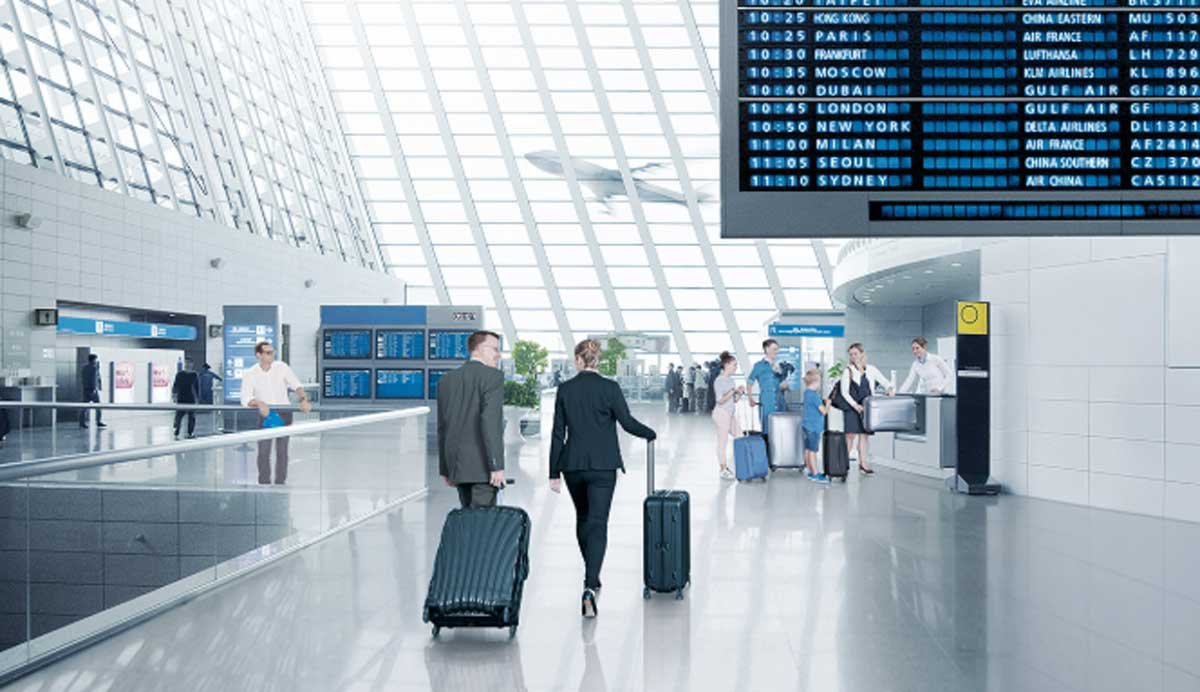
Most people treat airport days like loose improvisation. They show up, wander, trust the signs, and hope the next step appears. That approach sometimes does not work, which is the major issue.
In fact, a zero-drama airport day is not about being rigid or anxious. Rather, it is about removing the small unknowns that pile up. Also, when the brain is juggling ten micro-decisions, timing slips and transfers get really complex.
Checklist for a Zero-Drama Airport Day
If you want to remain calm on an airport day, decide earlier. You do not decide at the gate, or while a phone is on 7% and Wi-Fi is faking a connection.
In those cases, earlier means buffers are set, fewer moving parts are chosen, and normal human delays are treated as the default. That is exactly how operations work. Understand that airports are systems, and systems like predictability. The goal is not to outsmart the airport, but to stop giving it free chances to surprise anyone.
Most travelers are not stepping off private jets with someone handing over a bottle of water and a calm smile. The reality is that there are backpacks, slow lines, and loud corridors. Also, there are situations when a restroom is suddenly urgent. So the checklist has to fit real travel, not aesthetic travel.
1. Pre-Departure Setup: The Parts You Can Actually Control
Before leaving for the airport, lock down the stuff that tends to unravel later. This is not about over-planning every second or pretending uncertainty can be deleted. Rather, it is about getting essentials into a state where moving quickly does not require constant thinking.
The trick is to reduce the number of times a bag is opened, a pocket is checked, or an app is reloaded. In fact, every stop becomes a chance to drift, get distracted, or miss a small sign that mattered more than it looked.
Follow the checklist below for your pre-departure setup:
- Save boarding passes offline, plus a screenshot.
- Keep one payment method reachable without unpacking everything.
- Separate liquids and electronics so security is a smooth one-step process.
- Write the terminal and gate area in notes, not just the flight number.
- Pack one “delay snack” that won’t melt or crumble into sadness.
- Put a pen in the bag, because forms still exist, and it’s annoying.
2. Timing Buffer: A Small Rule That Prevents Big Problems
A useful way to think about time is to stop treating it as a single block. In fact, travel is a chain: you transit to the terminal, go through entry, check-in or bag drop, security, walk, and then reach the gate.
In this case, each link can stretch a little. When several links stretch at once, that is when complexity arises. This is where you need a buffer.
| Situation | What Usually Goes Wrong | Practical Move |
| Morning departure | Overconfidence, late start | Leave earlier than feels necessary |
| Midday departure | Crowds, slower services | Assume lines, keep tasks minimal |
| Evening departure | Fatigue, attention slips | Use reminders and keep gear simple |
| Tight connection | Walking time, gate changes | Know airport map options |
3. Transfers and Timing: Where Most Trips Get Loud
The common mistake in transfer is focusing only on flight time and ignoring the time in between. That in-between time is real travel time. Apart from that, the following factors matter:
- Gate distance
- Terminal layout
- Immigration and security re-checks
- Energy levels
4. Gate-to-Gate Thinking (Not Just Flight Time)
When there is a transfer, treat it like a mini project with constraints. The first constraint is distance. Meanwhile, the second is a process, because some airports re-check security, some scan passports again, and some do both.
Moreover, the third constraint is uncertainty. This is because gates can change at the last minute, and signage can be vague. In fact, a good transfer plan still works if one thing shifts.
The following are the different types of transfer choices:
| Transfer Type | Stress Level | Best For | Watch-Out |
| Same airline, same terminal | Lower | Most travelers | Gate change still happens |
| Same airport, different terminal | Medium | Long layovers | Transit time and re-screening |
| Self-transfer (separate tickets) | Higher | Budget routes | Traveler owns the risk if delayed |
| International to domestic | Medium to high | Complex itineraries | Immigration queues and bag recheck |
5. Arrival Peace of Mind: How to Land Without Feeling Spent
Arrival is not the finish line if baggage is uncertain, ground transport is confusing, or hotel check-in depends on timing. In fact, a calm arrival starts before landing, which actually still pays off.
Also, choose one reliable path from the airport to bed and keep a backup. If the first option fails, the backup should already exist. This is because nobody wants to start researching routes while in transit. In those situations, a small arrival routine helps:
- Turn on local connectivity before leaving the secure area.
- Confirm the pickup point or train platform once, then stop scrolling.
- Do a quick pocket check: passport, wallet, phone, keys.
- Drink water before the next decision, even if thirst doesn’t show up yet.
6. The Quiet Win: Reducing Decisions After Landing
The real peace of mind is not just making it on time. Rather, it is arriving with enough mental fuel left to handle the next step without spiraling into tiny mistakes.
In fact, removing even three decisions after landing changes the whole feel of the day. Moreover, pre-saving the route, knowing the terminal exit needed, and having one simple plan for food are small things.
Essentially, small things are exactly what airport days are made of, and they add up faster than people like to admit.
Stay Calm, and Plan Early!
A zero-drama airport day is not luck or personality. Rather, it is structured at the outset. For instance, buffers are built where systems tend to wobble, choices are simplified where people tend to spiral, and transfers are treated as real travel time rather than a footnote.
The payoff includes less rushing, fewer panicked checks, and more steady motion. Although delays still happen sometimes, they get handled properly instead of fraying.