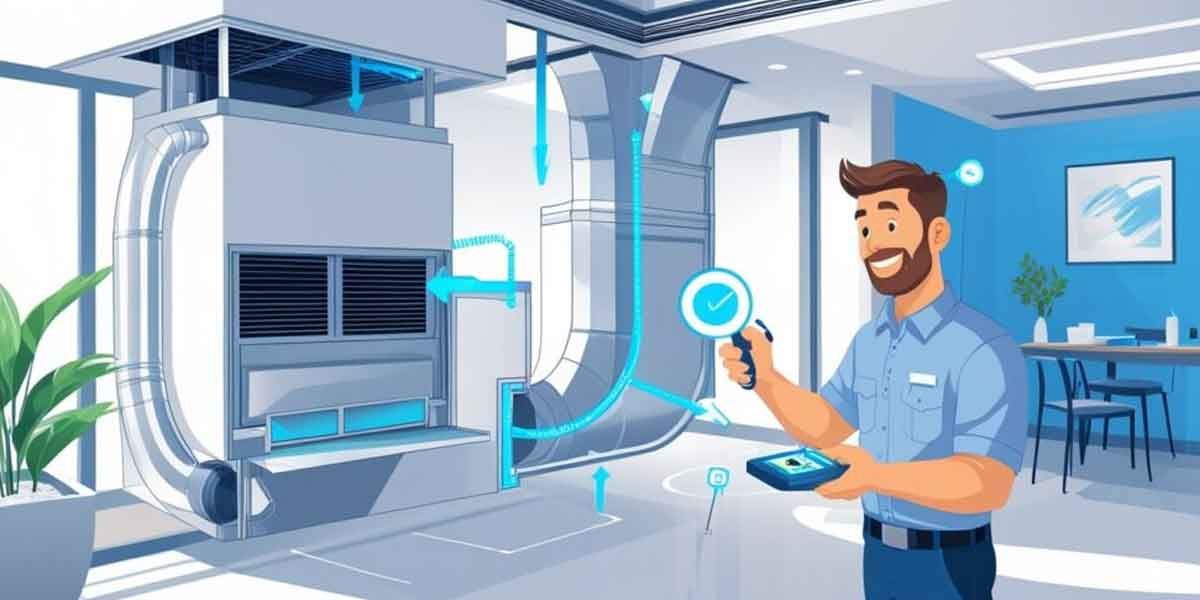
A lot of homeowners have had the same frustrating experience. The air conditioner turns on. The outdoor unit runs. Air comes through the vents. The thermostat seems to respond. Yet the house still feels uncomfortable, and it starts to feel like the AC is failing.
Sometimes the system really does have a repair problem. Other times, the cooling equipment is still working, but indoor airflow issues make it feel like the AC has stopped doing its job. That difference matters because airflow problems can create many of the same symptoms people associate with AC failure.
A room may stay warm even though cool air is coming from the vent. The hallway may feel fine while the bedroom feels stuffy. The system may run for a long time without making the whole house feel settled. The homeowner then assumes the air conditioner is weak, worn out, or close to breaking down. In reality, the unit may still be producing cooling. The bigger issue may be that the cooled air is not moving through the house the way it should.
This is why airflow deserves more attention. It affects how the house feels, how quickly rooms recover from heat, and how accurately the thermostat reflects real comfort. When indoor airflow goes wrong, it can make a working AC seem like a failing one.
Cooling Is Not Just About Making Cold Air
Many people judge their air conditioner by one simple question: is it blowing cold air? That is understandable, but cooling a home takes more than producing cold air at the equipment. The system also has to move that cooled air through the house in a balanced way.
That means comfort depends on two things working together:
- The system creating cooled air
- The home receiving that air effectively
If one of those parts breaks down, the house may still feel hot or uneven. A working AC with poor airflow can leave rooms uncomfortable even though the system itself is still operating.
This is what confuses homeowners. They see the AC running, but they do not feel the comfort they expect. That gap between equipment operation and room comfort is often where airflow issues hide.
Weak Airflow Can Make a Room Feel Like It Is Not Being Cooled
One of the most common signs of airflow trouble is a room that never seems to get enough cooling. The vent may blow some air, but the room still feels warm, heavy, or slow to settle down. Homeowners naturally assume the AC is not working well enough.
Often, the system is still cooling. The problem is that not enough of that cooling reaches the room.
This can happen because of:
- A weak duct run
- Closed or blocked vents
- Dirty filters
- Reduced blower performance
- Return air problems
- Room layout that limits circulation
The result feels the same as AC trouble. The room does not cool the way it should. That is why airflow issues so often get mistaken for equipment failure.
Hallways and Open Areas Can Hide the Real Problem
Indoor airflow issues rarely affect every space the same way. Open central areas often get better circulation than closed rooms. That can create a misleading situation where the hallway or living area feels fairly comfortable while bedrooms, offices, or back rooms stay too warm.
This often leads to thoughts like:
- “The AC must be getting weak”
- “The system can’t keep up anymore”
- “The unit runs but the house still feels hot”
The real issue may be that the central areas are getting enough air while the rooms that matter most are not. Since the thermostat often sits in a hallway or open space, the system may cycle off once that area reaches the target temperature. The rooms with weaker airflow remain uncomfortable.
From the homeowner’s perspective, that feels like AC failure. From the system’s perspective, it may simply be uneven air delivery.
Poor Return Air Can Make the Whole Home Feel Off
Airflow is not only about what comes out of the vents. It also depends on how air returns to the system. Return airflow helps pull indoor air back through the HVAC loop so it can be cooled again. If the return side is weak, restricted, or poorly placed, the house can start feeling stale and uneven.
This can create symptoms such as:
- Bedrooms that feel stuffy with the door closed
- Rooms that stay warmer than the hallway
- Air that feels dull or trapped
- A home that seems slow to recover after outdoor heat builds
The homeowner may say the AC is not working. In reality, the system may be cooling, but poor return airflow is keeping the air from circulating properly. This makes the home feel less refreshed, even while the unit still runs normally.
Airflow Problems Can Make Cooling Take Too Long
A working air conditioner should help the home cool steadily and predictably. If the house starts taking much longer to feel comfortable, most people assume the AC is losing its cooling ability.
Sometimes that is true. Many times, airflow issues are what stretch out the cooling time.
Restricted airflow means the system has a harder time delivering cooled air into rooms and removing indoor heat evenly. The unit may run longer and longer because the cooling it produces is not reaching the home effectively.
This can make homeowners feel like the AC is worn out, especially if the thermostat setting has to be lowered more than before. Yet the root issue may be airflow loss rather than a complete cooling failure.
Dirty Filters Can Create a “Broken AC” Feeling
Dirty filters are one of the easiest airflow problems to overlook because they build up slowly. A filter does not usually cause instant comfort failure. Instead, it gradually reduces how much air the system can move.
That small reduction can create several familiar complaints:
- Weak air at the vents
- Longer cooling cycles
- Uneven comfort between rooms
- More stuffiness during hot afternoons
- A house that feels like the AC is falling behind
Homeowners often describe these signs as the AC “not working right anymore.” In a practical sense, that is how it feels. The important point is that the equipment may still be functioning, while the restricted airflow is creating the sense of failure.
Duct Problems Can Make Good Cooling Hard to Feel
The duct system carries conditioned air from the equipment into the rooms. If those pathways have leaks, restrictions, loose sections, dirt buildup, or poor design, the cooling may get weakened before it reaches the spaces where people need it.
This creates one of the most frustrating types of comfort problems. The AC works, but the home does not feel cooled properly.
Duct related airflow issues can cause:
- One side of the house to feel warmer
- Back bedrooms to lag behind
- Rooms at the end of long duct runs to feel undercooled
- Airflow to feel weak even with the system running
Because the equipment is still on, the issue often gets mistaken for a weak or aging AC. In some homes, the bigger issue is that the cooled air is getting lost, restricted, or poorly distributed before it reaches the room.
Indoor Airflow Problems Often Get Worse With Closed Doors
Many airflow complaints become more obvious once bedroom or office doors are closed. A room may feel acceptable with the door open, then get stuffy and warm once it is shut. This often happens because the room loses its ability to circulate air well with the rest of the house.
Supply air may still enter through the vent, but if return movement is weak, the room starts trapping warm or stale air. That can make the space feel like it is being ignored by the AC.
The homeowner often assumes the system is failing in that room. The truth may be that the room has an airflow path problem, not a complete cooling problem.
This pattern matters because it shows how air movement inside the home can shape comfort just as much as the cooling equipment itself.
Appliance and Occupancy Heat Can Make Airflow Issues Feel Worse
Indoor heat from cooking, laundry, electronics, and people moving through the house can make airflow weaknesses feel much more severe. A room with weak circulation might feel only slightly off during quiet hours, then feel noticeably uncomfortable once indoor activity adds heat.
This can make the homeowner believe the AC cannot keep up. In some cases, the system could keep up if the airflow were balanced well enough to move cooling where it is needed.
Rooms especially affected by this include:
- Kitchens
- Home offices
- Laundry adjacent spaces
- Family rooms with electronics
- Bedrooms occupied at night
A working AC can still feel inadequate if the indoor heat load rises in rooms where airflow already struggles.
Thermostat Accuracy Depends on Airflow Too
A thermostat can only respond to the temperature where it is located. If airflow problems make that area feel different from the rest of the home, the system may cycle based on conditions that do not match what people feel in the rooms around them.
This can cause situations where:
- The thermostat says the house is cool enough
- The hallway feels fine
- The bedrooms still feel warm
- The system shuts off even though comfort has not spread evenly
That feels like an AC failure to the homeowner. They may lower the thermostat again and again, trying to force more cooling into the warmer rooms. The issue is not always the thermostat itself. It is often the case that airflow has made the thermostat’s reading less useful as a guide for the whole home.
Airflow Problems Often Build Slowly
One reason indoor airflow issues are so easy to mistake for AC failure is that they usually grow gradually. A blower may collect dirt over time. A filter may become more restrictive. A duct section may shift or begin leaking. A room may slowly lose comfort until it no longer feels right.
Because the change is slow, homeowners often do not notice a clear starting point. They simply reach a moment when the house no longer feels as comfortable as it used to. By then, the natural conclusion is often that the AC itself is wearing out.
Sometimes it is. Other times, airflow decline is doing much of the damage to comfort while the equipment still has more life left in it.
What Homeowners Often Notice First
Indoor airflow problems tend to show up through comfort patterns, not through obvious warnings. Common early signs include:
- One room always feels warmer than the others
- Air at certain vents feels weaker than before
- The home takes longer to cool in the evening
- Bedrooms feel stuffy at night
- The AC runs, but the house never feels fully settled
- The thermostat setting feels less reliable than it used to
These are practical comfort clues. They may point to equipment problems, airflow problems, or both. The important thing is that airflow deserves attention early because it changes how the entire home responds to cooling.
Why the Difference Matters
The difference between airflow trouble and full AC failure matters because the next step depends on the real cause. If the system is still producing cooling, then replacing parts without understanding airflow may not solve the actual comfort complaint. The homeowner may spend time and money, only to end up with the same warm room, weak vent, or uneven house feel.
A better diagnosis asks more complete questions:
- Is the AC producing enough cooling?
- Is the air moving through the system properly?
- Are some rooms getting much less airflow than others?
- Is return movement helping or hurting circulation?
- Is the thermostat reflecting the whole house accurately?
These questions help connect system operation to real indoor comfort.
A Working AC Still Needs Good Air Movement
A home feels comfortable when cooled air reaches the right rooms in the right way. The air conditioner may still be running exactly as it should at the equipment level, but the house can still feel disappointing if indoor airflow has lost balance.
That is why airflow issues can feel like AC failure even when the system still works. The homeowner is not imagining the discomfort. The home really does feel wrong. The key is understanding that cooling problems do not always begin with the equipment itself. Sometimes they begin with the movement of air through the home.
Once airflow gets addressed, the difference in comfort can be much clearer. Rooms feel more balanced. The thermostat feels more trustworthy. The house recovers from the heat more smoothly. And what seemed like an AC failure starts making more sense as a circulation problem that needed attention.
Maintaining a durable exterior often goes hand in hand with ensuring that the interior climate remains balanced and comfortable. Just as specialized roofing materials prevent moisture from entering a structure, a properly functioning climate control system manages humidity and temperature levels within the home. Homeowners who prioritize structural longevity might also consider how seasonal shifts impact their mechanical equipment. Consulting with a heating contractor in Melbourne can help identify subtle performance issues that may lead to higher utility costs or uneven airflow. By taking a proactive approach to both the roof and the indoor environment, you can better preserve the overall integrity and comfort of your living space throughout the year.