You woke up this morning with itchy red bites on your ankles and arms. You checked the bed but did not see anything. By the afternoon, the bites were driving you crazy. You have no idea whether bed bugs or fleas are responsible, and the internet has given you conflicting information. The treatment for each pest is completely different, so identifying the correct culprit is essential before you spend time and money on the wrong solution.
Bed bugs are insects from the genus Cimex that feed on blood, usually at night (Wikipedia). Fleas are small wingless insects that also feed on blood but are more commonly associated with pets and outdoor areas. The differences between bed bugs vs fleas include their appearance, where they live, their bite patterns, and the methods used to eliminate them.
Bed bugs vs fleas differ in appearance, bite patterns, habitat, and treatment. Here is a comprehensive comparison across every category to help you identify and eliminate the correct pest.
Bed Bugs vs Fleas — Physical Differences
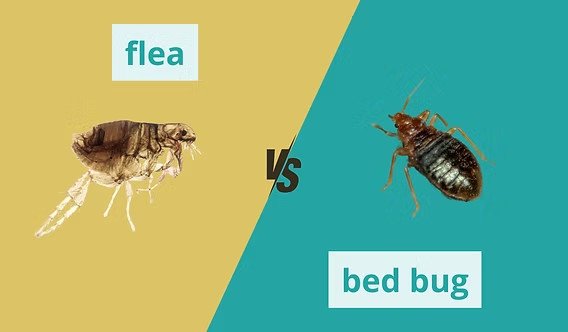
The most obvious difference between bed bugs and fleas is their appearance. Bed bugs are larger, oval-shaped, and brownish-red. Fleas are smaller, narrow, and darker in color. The table below shows the physical differences.
| Feature | Bed bugs | Fleas
|
| Size | 1 to 7 mm (apple seed size) | 1 to 4 mm (sesame seed size) |
| Shape | Flat, oval, broad | Narrow, laterally compressed |
| Color | Brownish-red after feeding | Dark reddish-brown |
| Wings | No wings, cannot fly | No wings, but can jump |
| Movement | Crawls slowly | Jumps rapidly |
| Visible to the eye | Easily visible | Visible but harder to spot |
Bed bugs are about the size and shape of an apple seed. They are flat and oval, which allows them to hide in narrow cracks and seams. After feeding, they become larger and more rounded. They crawl slowly and cannot jump or fly. Their movement is deliberate and they prefer to stay hidden during the day.
Fleas are smaller and narrower than bed bugs. Their bodies are compressed from side to side, which allows them to move easily through the fur of animals. Fleas have powerful legs that allow them to jump up to 100 times their body length. A flea can jump from the floor to your ankle in a fraction of a second. Their small size and jumping ability make them harder to catch than bed bugs.
Bite Patterns — How to Tell What Bit You
The pattern and location of bites are important clues in the bed bugs vs fleas comparison. The two pests bite in different places and leave different patterns on the skin.
Bed bug bites typically appear on areas of skin that are exposed during sleep — the face, neck, arms, hands, and legs. The bites are often arranged in a line or cluster. This pattern is sometimes called breakfast, lunch, and dinner because the bed bug bites multiple times as it moves across the skin. Bed bug bites are raised, red, and intensely itchy. Some people do not react to bed bug bites at all, making detection difficult.
Flea bites are most common on the lower legs and ankles. Fleas are more likely to bite around the feet, ankles, and lower calves because they jump up from the floor. Flea bites are smaller than bed bug bites and often appear in groups of three. They have a red halo around the bite and are extremely itchy. Flea bites may develop into small blisters in sensitive individuals.
The key difference in bite patterns is location. Bed bugs bite exposed skin above the waist. Fleas bite exposed skin below the knee. If you have bites on your ankles but not your arms, the likely culprit is fleas. If you have bites on your arms, shoulders, and neck, the likely culprit is bed bugs.
Where They Live — Habitat Differences
Bed bugs and fleas live in completely different environments. Understanding where each pest lives helps with both identification and treatment.
Bed bugs live in and around sleeping areas. Their primary habitat is the bed — mattress seams, box springs, bed frames, and headboards. They also hide in furniture, behind baseboards, in electrical outlets, and in any crack or crevice near a sleeping area. Bed bugs are transported in luggage, clothing, and used furniture. They do not live on the human body — they feed and return to their hiding place.
Fleas live on animals and in the environment around animals. Pets — dogs and cats — are the most common carriers of fleas. Fleas lay eggs on the animal, but the eggs fall off into the environment — carpets, pet bedding, upholstered furniture, and floor cracks. Flea larvae develop in these areas before becoming adults that jump onto a new host. Fleas can also live in yards and outdoor areas where pets spend time.
If you do not have pets, the pest is almost certainly not fleas. Bed bugs can affect any home regardless of pets, cleanliness, or income level. Fleas require a host animal — typically a pet — to complete their life cycle. Homes without pets that have mysterious bites are almost always dealing with bed bugs.
Signs of Infestation — What to Look For
Both bed bugs and fleas leave signs of their presence beyond the bites. Knowing what to look for helps confirm which pest you are dealing with.
Signs of bed bugs include small rust-colored spots on sheets and mattresses from their droppings. You may find shed skins from growing nymphs and tiny white eggs in mattress seams and crevices. A sweet, musty odor is associated with heavy infestations. Live bed bugs may be found in mattress seams, behind headboards, and in furniture crevices. The bugs congregate in groups called harborages.
Signs of fleas are different. Pet scratching is the most common sign — dogs and cats with flea infestations scratch excessively. You may see small black specks on pet bedding or in carpeted areas. These are flea droppings — digested blood. When brushed onto a wet paper towel, they turn red like fresh blood. Flea eggs look like tiny white specks and are found in pet resting areas.
A simple test for fleas: wear white socks and walk through carpeted areas of your home. Fleas jump onto moving targets, and the dark fleas are visible against white socks. This is a reliable way to confirm a flea infestation. Bed bugs do not jump and will not appear on socks during a walk-through test.
Treatment Differences — Bed Bugs vs Fleas
The treatment methods for bed bugs vs fleas are completely different. Using the wrong treatment wastes time and money and allows the infestation to get worse.
Bed bug treatment requires a comprehensive approach. All bedding and clothing must be washed in hot water and dried on high heat. Infested items are bagged and sealed before disposal. Mattresses and box springs are encased in bed bug-proof covers. Pesticide treatment by a professional is usually required — sprays, dusts, and steam treatments target the cracks and crevices where bed bugs hide. Heat treatment — raising the room temperature to 120 degrees Fahrenheit for several hours — kills all life stages. Bed bug treatment costs $500 to $2,000 depending on the infestation size.
Flea treatment starts with the pet. The animal must be treated with a veterinarian-recommended flea control product — topical drops, oral medication, or a flea collar. The home environment is treated by vacuuming thoroughly and washing pet bedding in hot water. Carpet sprays or foggers kill adult fleas and larvae in the carpet. Outdoor areas where pets rest are treated with yard sprays. Flea treatment typically costs $100 to $500 for a combination of pet treatment and home treatment.
The fundamental difference is that bed bugs require treating the building structure, while fleas require treating the pet and the environment around the pet. Bed bugs can survive months without feeding. Fleas need a host to survive.
A pest control specialist with 15 years of experience explained: “I get calls every week from people who think they have bed bugs but actually have fleas from a pet. Look at the bite locations — that is the quickest way to tell them apart without seeing the actual bug.”
Prevention Tips for Both Pests
Preventing bed bugs and fleas requires different strategies. A few simple habits reduce the risk of both infestations.
To prevent bed bugs, inspect hotel rooms before unpacking when traveling. Check mattress seams and behind the headboard. Keep luggage off the bed and on a luggage rack. Wash and dry all clothing on high heat after returning from a trip. Inspect second-hand furniture before bringing it into your home. Encase mattresses in bed bug-proof covers.
To prevent fleas, use veterinarian-recommended flea prevention on pets year-round. Vacuum carpets and upholstery regularly, especially in areas where pets rest. Wash pet bedding weekly in hot water. Treat the yard for fleas if your pet spends time outdoors. Keep grass cut short and remove debris where fleas breed.
For both pests, reduce clutter in the home. Clutter provides hiding places for bed bugs and makes vacuuming less effective for flea control. Sealing cracks and crevices in walls and baseboards reduces hiding places for bed bugs and prevents fleas from developing in floor cracks.
Frequently Asked Questions
How can I tell if bites are from bed bugs or fleas?
Bed bug bites appear on the upper body often in lines. Flea bites appear on the lower legs in groups of three around the feet.
Do bed bugs jump like fleas?
No, bed bugs cannot jump. They crawl slowly. Fleas have powerful legs and can jump up to 100 times their body length. The jumping ability is a key difference between bed bugs vs fleas.
Can you have fleas without having pets?
It is unlikely. Fleas require a host animal to feed on and reproduce. Homes without pets that have mysterious bites are most likely dealing with bed bugs, not fleas.
Is the treatment for bed bugs and fleas the same?
No, the treatments are completely different. Bed bugs require treating the building structure. Fleas require treating the pet and the environment around the pet. Using the wrong treatment will not solve the infestation.
Can fleas live in beds like bed bugs?
Fleas can get into beds from pets but do not live there. Bed bugs specifically live in and around beds and sleeping areas.
How do I check my home for bed bugs?
Check mattress seams and bed frames for rust spots and bugs. Look behind baseboards near beds for signs of bed bugs.
What do bed bug bites look like compared to flea bites?
Bed bug bites are raised and red in lines. Flea bites are smaller with a red halo in groups of three. Both are itchy but look different on the skin.
How much does professional pest control cost for bed bugs vs fleas?
Bed bug treatment costs $500 to $2,000. Flea treatment costs $100 to $500. The difference reflects the complexity of treating bed bugs, which can hide in walls and survive months without feeding.