You bought the house six months ago and the backyard is still a blank slate of dirt and weeds. Every time you look at gardening magazines or social media, the gardens are so elaborate that you have no idea where to start. You do not need a palace garden with fountains and topiaries. You just want a space that looks good, works for your family, and does not require a full-time gardener to maintain.
Garden design is the art and process of designing and creating plans for the layout and planting of gardens (Wikipedia). The best garden design ideas for home start with understanding your space, your climate, and how you actually want to use the garden. A garden that matches your lifestyle will be used and enjoyed. A garden that follows a magazine photo without considering your needs will become a maintenance burden.
Garden design ideas for home include layout options, plant selection, hardscaping, and features. Here are the approaches that create a garden you will love using every day.
Start with a Plan — Assess Your Space
Before looking at plants or garden features, assess the space you have. The conditions of your yard determine what will grow well and what design styles will work. A garden design that ignores sunlight, soil, and drainage will struggle from the start.
Sunlight is the most important factor. Measure how many hours of direct sunlight each area of your yard receives per day. Full sun areas get six or more hours and are suitable for vegetables, most flowers, and many shrubs. Partial shade areas get three to six hours and are ideal for shade-tolerant perennials. Full shade areas get less than three hours and require plants that thrive without direct sun, like ferns and hostas.
Soil quality matters almost as much as sunlight. A simple soil test — available at garden centers for $10 to $20 — tells you the pH level and nutrient content. Most plants prefer slightly acidic soil with a pH of 6.0 to 7.0. Adding compost or organic matter improves soil structure and fertility regardless of the starting condition. Heavy clay soil drains slowly and needs amendment. Sandy soil drains too fast and needs organic matter to retain moisture.
Drainage is the third factor to assess. After a heavy rain, note where water pools and how long it takes to drain. Plants in low-lying areas with poor drainage will develop root rot unless the area is graded or planted with moisture-tolerant species. French drains or dry creek beds can redirect water away from planting areas.
Garden Layout Ideas
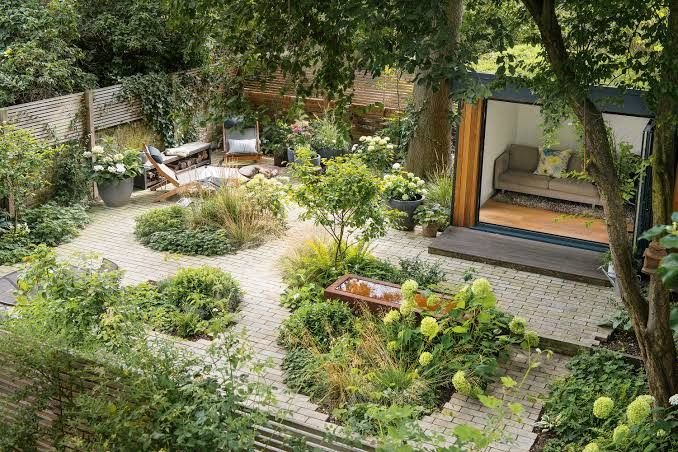
The layout determines how the garden is used and how it looks from the house. The best garden design ideas for home include layouts that create defined spaces while maintaining a cohesive overall look.
The formal garden layout uses straight lines, geometric shapes, and symmetrical plantings. It works well in front yards and in gardens attached to traditional-style homes. Formal gardens require regular maintenance to keep the lines clean and the plants within bounds. Boxwood hedges, gravel paths, and structured flower beds are characteristic features.
The informal garden layout uses curved lines, irregular shapes, and naturalistic plantings. It is easier to maintain than a formal garden because the softer lines hide minor imperfections. Curved paths, mixed borders, and irregularly spaced plants create a relaxed, cottage-garden feel. The informal layout is the most popular choice for backyard gardens.
| Layout style | Lines | Maintenance | Best for
|
| Formal | Straight, geometric | High | Front yards, traditional homes |
| Informal | Curved, natural | Moderate | Backyards, relaxed style |
| Mixed | Combination | Moderate | Most residential gardens |
| Woodland | Natural, layered | Low | Shaded areas, native plantings |
The mixed layout combines formal elements near the house with informal plantings further out. This approach creates a transition from the built environment of the home to the natural landscape beyond. A mixed layout is the most versatile and works well for most residential properties.
Plant Selection for Visual Impact
Plant selection is where the garden comes to life. The goal is a combination of plants that provide visual interest throughout the growing season while matching the growing conditions of your yard.
Choose a color scheme before buying plants. A limited palette of two to three colors creates a cohesive look. Monochromatic schemes — shades of a single color — are calming and sophisticated. Complementary colors — opposites on the color wheel like purple and yellow — create vibrant contrast. Analogous colors — neighbors on the color wheel like blue, purple, and pink — are harmonious and easy to combine.
Layer plants by height. Place tall plants at the back of borders, medium plants in the middle, and low-growing plants at the front. This creates depth and ensures every plant is visible. The tallest plants — like delphiniums, hollyhocks, or small ornamental trees — should reach eye level or higher. Ground covers and low perennials fill the front edge and soften hardscape edges.
Extend the blooming season by choosing plants with different bloom times. Spring bulbs like daffodils and tulips bloom early. Summer perennials like coneflowers and black-eyed Susans peak in mid-summer. Late-season plants like asters and sedums extend color into fall. Evergreen shrubs and ornamental grasses provide winter interest when flowers are gone.
Hardscaping — Paths, Patios, and Borders
Hardscaping provides the structure of the garden. Paths, patios, walls, and borders define the space and connect different areas. Good hardscaping makes the garden usable in all weather and reduces the amount of lawn that needs mowing and watering.
Paths should be at least three feet wide for comfortable walking. Materials include gravel, flagstone, concrete pavers, brick, and wood chips. Gravel is the most affordable at $3 to $5 per square foot but requires edging to keep it in place. Flagstone costs $10 to $20 per square foot and provides a natural, permanent surface that blends with any garden style.
Patios and seating areas create a destination in the garden. A patio near the back door extends the living space of the home. A seating area at the far end of the garden provides a private retreat. Patio materials include concrete, pavers, brick, and stone. A 12-by-12-foot patio costs $500 to $2,000 for materials depending on the type.
Garden borders and edging keep grass out of flower beds and create clean lines between lawn and planting areas. Metal or plastic edging costs $1 to $3 per linear foot and is nearly invisible. Brick or stone edging costs $5 to $15 per linear foot and adds a decorative element. A well-defined border reduces maintenance and gives the garden a finished appearance.
Garden Features — Water, Lighting, and Structures
Garden features add personality and create focal points. The best garden design ideas for home include one or two features that draw the eye and give the garden a sense of purpose.
Water features add sound and movement to the garden. A small fountain costs $100 to $500 and creates a relaxing background sound. A pond costs $1,000 to $5,000 depending on the size and whether fish or plants are included. Solar-powered fountains are available for areas without electrical access and cost $30 to $150.
Garden lighting extends the use of the garden into the evening and highlights key plants and features. Low-voltage landscape lighting costs $50 to $300 for a basic system. Solar lights cost $20 to $100 but provide less illumination. Well-placed lighting makes the garden look dramatic at night and improves safety on steps and paths.
Garden structures — arbors, pergolas, trellises, and sheds — add vertical interest and provide support for climbing plants. A wooden arbor costs $100 to $500 and creates an entrance to a garden area. A pergola costs $500 to $3,000 and provides partial shade over a patio or seating area. A garden shed provides storage and can double as a design feature.
A landscape designer with 20 years of experience explained: “The most common mistake homeowners make is buying plants first and planning the garden second. Plants should be the last thing you choose, after you have figured out the layout and the growing conditions.”
Low-Maintenance Garden Design Ideas
Not everyone has hours every week to spend on garden maintenance. Low-maintenance garden design ideas for home focus on reducing the time spent on watering, weeding, and pruning while still creating an attractive garden.
Reduce lawn area. Lawns require regular mowing, watering, fertilizing, and weeding. Replacing grass with ground covers, mulch beds, or hardscaping reduces maintenance significantly. Clover lawns are a low-maintenance alternative that stays green without fertilizer and needs mowing only two to three times per season.
Choose native plants that are adapted to your climate and soil. Native plants require less water, fertilizer, and pest control than exotic species. They also support local pollinators and wildlife. A native plant garden costs less to maintain and is more environmentally sustainable than a garden of non-native ornamentals.
Use mulch to suppress weeds and retain soil moisture. A three-inch layer of organic mulch — wood chips, bark, or shredded leaves — reduces weed growth by 80 to 90 percent and cuts watering needs by 25 to 50 percent. Mulch breaks down over time and improves soil structure as it decomposes.
Install drip irrigation to automate watering. A drip irrigation system delivers water directly to plant roots and uses 30 to 50 percent less water than sprinklers. A basic system for a flower bed costs $50 to $150 and can be controlled by a timer. Drip irrigation eliminates the need for hand watering and reduces the risk of overwatering or underwatering plants.
Frequently Asked Questions
How do I start designing my garden?
Assess your sunlight, soil, and drainage. Decide how you will use the garden. Choose plants last, after the layout is planned.
What is the easiest garden design for a beginner?
A cottage garden with mixed borders is easiest for beginners. It forgives mistakes and needs less maintenance than formal designs.
How do I design a low-maintenance garden?
Reduce lawn area, use native plants, and add mulch. These changes cut maintenance time by half compared to a traditional garden.
What are the best plants for a beginner garden?
Coneflowers, lavender, and ornamental grasses are reliable. They return each year and need minimal care.
How much does a garden design cost?
DIY garden design costs nothing beyond plants and materials. A professional landscape designer charges $500 to $3,000 for a residential garden plan, depending on the size and complexity.
What are good garden design ideas for a front yard?
Symmetrical layouts with a path work best for front yards. Keep it simple and matching the house style.
How do I design a small garden?
Use vertical space with trellises and wall planters. Choose a limited color palette to avoid visual clutter. Create a single focal point like a small water feature or specimen plant to draw the eye.
How long does it take to create a garden from scratch?
Most gardens take two to three seasons to fill in. Hardscaping can be completed in weeks. Plants need time to grow and mature.