Tuesday, June 16, 2026
Mitmunk
  • Home Improvement
  • Finance
  • Lifestyle
  • Business
  • Seo Digital
  • Auto
  • Law
  • Health
  • Other
    • Travel
    • Outdoor
    • Fashion
    • Entertainment
    • Construction
    • Education
    • Tech
    • Pet
    • Real Estate
No Result
View All Result
  • Home Improvement
  • Finance
  • Lifestyle
  • Business
  • Seo Digital
  • Auto
  • Law
  • Health
  • Other
    • Travel
    • Outdoor
    • Fashion
    • Entertainment
    • Construction
    • Education
    • Tech
    • Pet
    • Real Estate
No Result
View All Result
MitMunk
No Result
View All Result
Home Home Improvement
How Long Does An AC Compressor Last

How Long Does An AC Compressor Last?

Share on FacebookShare on Twitter

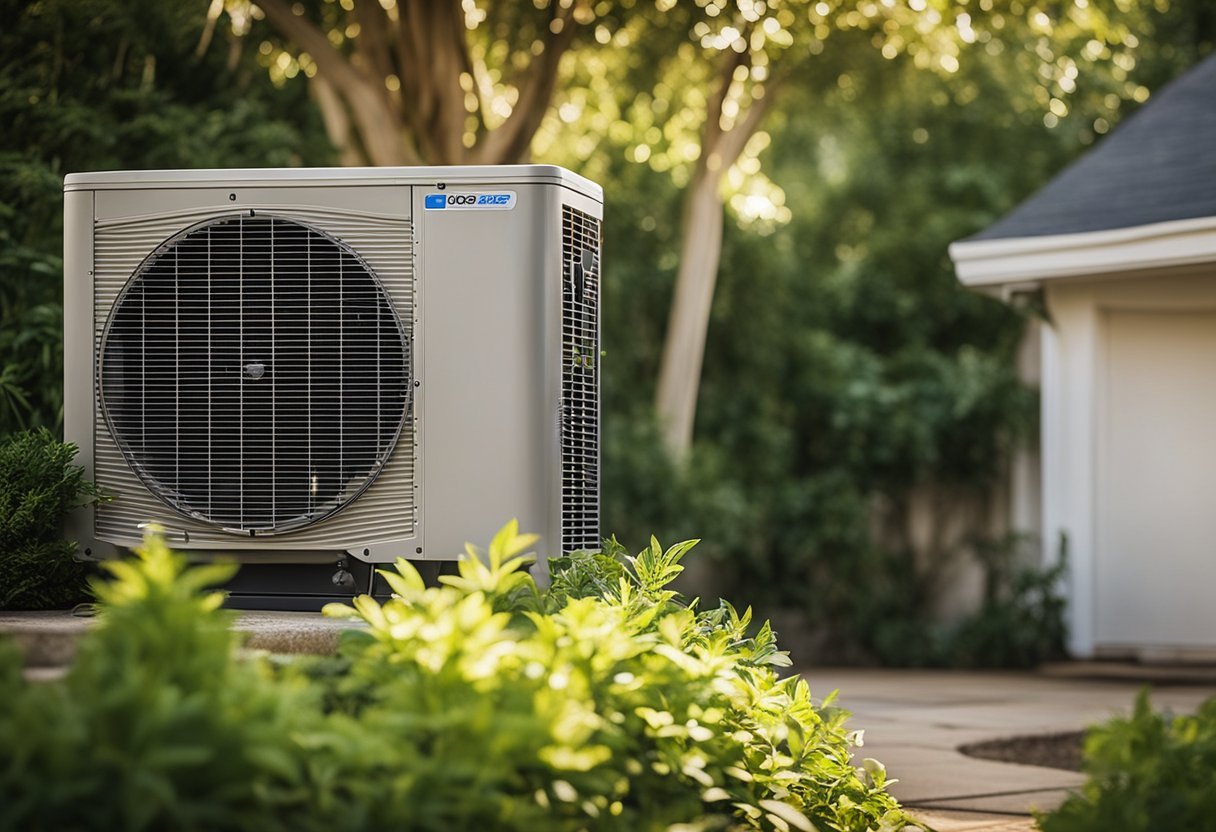
Air conditioning is a vital feature for comfort in homes and vehicles, especially during hot weather. A central component of any air conditioning system is the AC compressor, which is responsible for compressing the refrigerant and circulating it through the system. An AC compressor typically lasts between 10 to 15 years before requiring replacement or significant repair.

Table of Contents

Toggle
  • Fundamentals of AC Compressors
    • Components and Functionality
    • Types of AC Compressors
    • Expected Lifespan
  • Factors Affecting AC Compressor Longevity
    • Usage Patterns
    • Maintenance and Servicing
    • Environmental Influences
  • Identifying and Diagnosing AC Compressor Issues
    • Common Signs of Wear and Failure
  • Extending the Life of Your AC Compressor
    • Regular Maintenance Tips
    • Best Practices for Optimization

Fundamentals of AC Compressors

The AC compressor is integral to the function of an air conditioning system, affecting both performance and longevity. It is a critical component in the refrigeration cycle, enabling the cooling process by circulating refrigerant.

Components and Functionality

An air conditioning compressor consists of various parts including the electric motor, pistons, valves, and connecting rods. These components work together to compress the refrigerant, transitioning it from a low-pressure gas to a high-pressure gas, which is essential for efficient cooling.

Types of AC Compressors

AC compressors are categorized into several types, each suited for specific applications:

  1. Reciprocating Compressors: Use pistons and are commonly found in residential units.
  2. Screw Compressors: Utilize two helical rotors and are used in large commercial systems.
  3. Centrifugal Compressors: Employ a radial design and are typically found in industrial applications.
  4. Rotary Compressors: Have a cylindrical rotor and are known for their quiet operation.

Expected Lifespan

The expected lifespan of an AC compressor generally ranges between 10 to 15 years. This can vary based on factors such as maintenance frequency, usage patterns, and the quality of installation. Regular servicing, for example through providers such as downtown-air.com, can detect potential issues early, potentially extending a compressor’s operational life.

Factors Affecting AC Compressor Longevity

The lifespan of an AC compressor can be influenced by several critical factors, including how the unit is used, maintained, and the environment in which it operates.

Usage Patterns

Frequency of Use: An AC compressor’s durability is closely linked to how often it’s used. Compressors in warmer climates or in commercial settings may run more frequently, leading to a potentially shortened lifespan.

Cycling On and Off: Units that turn on and off repeatedly can experience more wear. A properly sized AC system for the space is essential to minimize this stress.

Maintenance and Servicing

Regular Maintenance: Professional maintenance, such as offered by firms specializing in ac repair in Winter Garden, can significantly extend a compressor’s operational life. Schedule biannual service checks to ensure optimal performance.

Early Repairs: Promptly addressing issues like refrigerant leaks or electrical problems can prevent stress on the compressor, thus prolonging its life, especially when handled by an air conditioning service piara waters.

Environmental Influences

Climatic Conditions: Compressors in coastal areas may corrode faster due to salt in the air, while those in areas with extreme temperatures face additional strain.

Installation Location: Where the compressor unit is installed can affect its longevity. It should be placed in a shaded, well-ventilated area to avoid overheating and exposure to the elements.

Identifying and Diagnosing AC Compressor Issues

When an AC compressor begins to fail, it typically exhibits a few common signs that may require a professional’s attention to accurately diagnose and address the issue.

Common Signs of Wear and Failure

  • Strange Noises: When compressors are on the edge of failure, they often make unusual noises. Rattling, clicking, or squealing sounds can indicate internal wear or damage.
  • Decreased Cooling: If the air conditioning system is no longer producing the same level of cool air, this may point towards a failing compressor.
  • Electrical Issues: Compressors in distress may also cause circuit breakers to trip or fuses to blow as they struggle to start and operate.
  • Visible Wear: Signs such as oil leaks or excessive vibration can be observed during a visual inspection.

Extending the Life of Your AC Compressor

To maintain an air conditioning compressor’s efficiency and longevity, homeowners should focus on regular maintenance and optimization practices. These strategies help prevent common issues that can lead to premature failures.

Regular Maintenance Tips

  • Inspect and Replace Air Filters Regularly: Dirty filters can cause excessive strain on the AC compressor. It is advisable to replace or clean air filters every 30-60 days.
  • Ensure Adequate Refrigerant Levels: Too much or too little refrigerant can cause the compressor to work harder. It’s important to have a professional from AC repair in Winter Garden check and adjust refrigerant levels.
  • Schedule Professional Maintenance: Yearly inspections by a certified technician can help catch potential problems early on, avoiding major repairs.

Best Practices for Optimization

  • Avoid Overworking the System: During extremely hot days, setting the thermostat to a reasonable temperature can reduce the workload on the AC compressor.
  • Keep the Condensing Unit Clean: Ensuring the outdoor unit is free from debris can improve airflow and efficiency.
  • Insulate and Seal Cooling Areas: Proper insulation helps maintain desired temperatures, thus reducing the demand on the AC compressor.

Related Posts

Why Commercial Solar in Illinois Is Growing in Popularity

Why Commercial Solar in Illinois Is Growing in Popularity

by Emily Stevens
June 12, 2026
0

Commercial solar is becoming more popular in Illinois because business owners are looking at energy in a different way than...

image-1

The Top 7 Fence Companies in Denver for 2026: Who Leads the Pack?

by Munk
June 7, 2026
0

Finding a fencing contractor you can trust is more important than ever, especially in a competitive market like Denver. Whether...

Red Flags to Watch For When Hiring a Painter

Red Flags to Watch For When Hiring a Painter

by Emily Stevens
June 4, 2026
0

Anybody can hold a brush. That is the problem. Painting is one of the easiest trades to fake your way...

POPULAR NEWS

Delores Miller Clark

Delores Miller Clark: Learn More about John List’s Ex-Wife

September 27, 2022
Deserai Anderson Utley Personal Life, Career, & More

Deserai Anderson Utley Personal Life, Career, & More

September 30, 2022
Lisa Seal Frigon

Lisa Seal Frigon: All about Drug Lord Barry Seal’s Daughter

September 18, 2022
Linnell S. Nobori

Linnell S. Nobori: All there is to Know about Ted Bessell’s Wife

September 5, 2022
Gweneth Gonzales Thomas

What You May Not Know About Gweneth Gonzales Thomas, Richard Thomas’ Daughter

August 2, 2022

EDITOR'S PICK

Assets worth billions of dollars disappear every year. Since asset tracking systems rely on antiquated paper-based systems prone to human error, they can be misplaced, stolen, or just forgotten entirely. According to research conducted, foreign businesses are allegedly "losing" AU$4.3 billion ($2.92 billion) in assets annually as a whole. If you extrapolate the figures worldwide, it becomes clear that there is an issue with tracking physical assets in the workplace or across several organizations. Asset monitoring systems Reports show that despite the availability of low-cost, dependable wireless asset tracking solutions, half of all businesses still manually log their assets, and for thirty-five percent of businesses, having an employee walk around the premises to locate assets is their primary method of tracking assets. Every organization loses several staff hours annually on average while looking for misplaced tangible assets. Even worse, the study shows that only 22% of the time are the assets retrieved. However, things don't have to be this way. How Does GPS Asset Tracking Operate and What Is It? Most people are familiar with GPS technology from its use in mobile devices and smartwatches for location-based functions like mapping. However, GPS may be utilized for many more purposes, such as asset tracking. We’re sure you're wondering what exactly asset tracking means. Using GPS to track assets by corresponding with satellites is known as GPS asset tracking. An asset's location and movement can be tracked as long as it is equipped with a GPS tracker. As a result, assets can be found using their actual location, thus increasing asset visibility and lowering the possibility of missing assets. How to Track Your Lost Assets 1. Global Positioning System (GPS) What It Is: GPS asset tracking is a satellite-based navigation system that gives location and timing information in all-weather situations, anywhere, with an unobstructed line of sight to four or more GPS satellites. How It Works: GPS operates by a network of satellites that deliver signals to GPS receivers. The receiver determines its position by monitoring how long signals from numerous satellites take to reach it. By triangulating these signals, the receiver can pinpoint its precise location. This data is subsequently forwarded to a central system for monitoring and analysis. GPS devices are attached to assets like automobiles, machinery, and high-value equipment to track them accurately. Moreover, these gadgets continuously transmit position data to a central tracking system, allowing organizations to follow their assets in real-time. Also, you can employ a RAM tracking system to track assets that travel frequently or over long distances, ensuring they are always where they should be. 2. Passive RFID tags Passive RFID tags are made up of three components: a chip, an antenna, and a substrate. • The chip holds data and, depending on its design, can be read-only (RO), write-once, read-many (WORM), or read-write. Memory spans from 2 to 1000 bits. • The antenna picks up radio-frequency (RF) waves from the reader's signal and transmits and receives information. The size of its antenna determines the capacity of a passive RFID tag. 3. Active RFID tags Active RFID tags also have a microprocessor and an antenna. However, the chips are often larger and more capable than passive tags. Long-range RFID tagging is accomplished with active tags using Bluetooth, low-energy, high-frequency, or ultra-high frequency. They have two additional features that set them apart from passive tags: an inbuilt power supply and electronics. The power source is often a battery, although it can also be solar. Unlike passive tags, the tag's built-in power supply allows it to transmit data to a reader without relying on the reader's power. Active tags can be read from distances of 100 feet or more, while passive tags can only be read up to 20 feet away. Onboard electronics sensors, microprocessors, and input/output ports are all possible components of the tag's onboard electronics. Speaking of, active RFID tags can be used in more applications than passive tags due to their electronics. 4. Cellular IoT technology. Not all asset monitoring involves identifying misplaced or stolen equipment in offices, warehouses, and factories, and some tracking difficulties necessitate a low-power solution that exceeds the capabilities of Wi-Fi access points, RFID readers, and Bluetooth LE-powered gateways. This explains, at least in part, why cellular-based low power wide area network (LPWAN) technologies are expected to increase significantly in the future years. According to telecoms giant Ericsson, cellular IoT connections will increase from 700 million in 2017 to 3.5 billion by 2023, while analyst ABI Research predicts that nearly half of LPWAN connections by 2023 will be for asset tracking applications. What are the advantages of asset tracking and management? IT asset managers can use RF Code's CenterScape platform to track what's most important, such as location, temperature, and much more. 1. Improves efficiency Regular maintenance on data center assets such as hard disks and servers requires physically removing them from a rack server. When these assets are presented to the service department, people have a tendency to misplace or mislabel them. IT administrators can significantly shorten the time it takes to locate lost hard drives or servers by digitally tracking them. 2. Enables proactive monitoring of essential assets In addition to detecting lost or misplaced assets, data center asset tracking enables IT professionals to proactively manage essential equipment states such as cooling and power. 3. Significantly enhances work-in-process tracking IT managers must oversee all stages of data center operations, from installation to maintenance. IT administrators may eliminate guesswork with data center asset tracking since RFID tagging offers real-time work status information from the floor or the field. 4. Simplifies auditing Asset tracking entails taking an accurate inventory of data center assets, right down to location details. This is just difficult to do with manual inventory techniques. Digital asset tracking minimizes costly and time-consuming human errors while significantly simplifying auditing processes. 5. Encouraging Adherence to Regulations Depending on your sector and jurisdiction, having an efficient asset management system can assist in achieving several types of regulatory compliance. For example, the IRS mandates that all companies keep accurate records of their assets. These contain information about discounts, depreciation rates, equipment or inventory acquisition prices, etc. In addition, the FASB has recently updated its asset leasing policies. Upgrading from manual records to smart asset management software is the most reliable option to achieve complete compliance in the dynamic asset management landscape. In the end! Ultimately, asset tracking can assist businesses in tracking and managing asset utilization in addition to protecting them. That said, GPS asset tracking is a significant tool for companies to optimize asset management and ensure safety. By implementing asset management technology, your business can be equipped with real-time monitoring and tracking, proactive maintenance, and geofencing.

How To Find Lost Assets Using Tracking Devices

October 23, 2024
Why is it Necessary to Hire an Uber Accident Lawyer to File a Claim

Why is it Necessary to Hire an Uber Accident Lawyer to File a Claim?

April 16, 2023
10 Reasons to Visit Your Local Pawn Shop Today

10 Reasons to Visit Your Local Pawn Shop Today

October 14, 2024
Tips for Preventing Range Hood Breakdowns

Tips for Preventing Range Hood Breakdowns: Regular Maintenance Practices

March 19, 2024
Contact Us: Info@mitmunk.com

© 2022 Mitmunk Theme Copyright

No Result
View All Result
  • Homepages
    • Home Page 1
  • Business
  • Entertainment
  • Fashion
  • Health
  • Lifestyle
  • Tech
  • Travel

© 2022 Mitmunk Theme Copyright