When it is time to replace your heating system, every HVAC contractor will try to sell you a high-efficiency furnace. They will promise that the higher upfront price tag will easily pay for itself through drastically lower winter gas bills. But does the math actually support that sales pitch?
A new high-efficiency gas furnace typically costs between $4,000 and $12,000 fully installed. That is a massive price range, and the exact amount you pay depends heavily on the brand you choose, the size of your home, and the specific efficiency rating of the unit.
More importantly, upgrading to a high-efficiency system often triggers several “hidden” installation costs that contractors rarely mention until they are sitting at your kitchen table writing up the final estimate.
In this comprehensive guide, we are going to cut through the marketing fluff. We will break down exactly how much a high-efficiency furnace costs by brand and efficiency tier. We will expose the hidden installation costs you must budget for, and we will do the honest mathematical calculations to show you exactly how many years it will take for that expensive new furnace to actually pay for itself.
The long-term value of a condensing system often outweighs the initial investment when considering monthly utility reductions. Beyond the basic equipment price, installation complexity plays a significant role in determining the final tally, as modern venting requirements may necessitate specific ductwork adjustments. Homeowners interested in local pricing trends can Click here to see how regional labor rates and municipal permits influence the total expenditure. While premium units carry a higher sticker price, their ability to convert nearly all fuel into usable heat provides a buffer against rising energy costs. Ultimately, the decision rests on balancing immediate budget constraints with the desire for consistent, year-round comfort and environmental responsibility.
What Counts as a “High-Efficiency” Furnace?
Before we talk about pricing, we need to define what “high efficiency” actually means in the HVAC industry.
Furnace efficiency is measured by a metric called AFUE, which stands for Annual Fuel Utilization Efficiency. It is expressed as a percentage. If a furnace has an AFUE rating of 80%, it means that 80% of the natural gas or propane it consumes is converted directly into usable heat for your home. The remaining 20% is lost as exhaust gas that vents out of your chimney.
In the United States, the Department of Energy mandates that all new furnaces must have a minimum AFUE rating of 80%. These are considered “standard efficiency” furnaces.
A high-efficiency furnace is generally defined as any unit with an AFUE rating of 90% or higher. Today, the most advanced high-efficiency furnaces can reach up to 98.5% AFUE. These units achieve this remarkable efficiency by utilizing a secondary heat exchanger. Instead of letting hot exhaust gases escape up the chimney, a high-efficiency furnace captures those gases, condenses them into a liquid, and extracts the remaining heat before venting a cool exhaust out of a PVC pipe.
High-Efficiency Furnace Costs by AFUE Tier
The price of a high-efficiency furnace scales directly with its AFUE rating. As you push the boundaries of energy efficiency from 90% up to 98%, the internal components become significantly more complex, which drives up both the equipment cost and the labor required to install it.
Here is a breakdown of what you can expect to pay for a full installation (including equipment, labor, and basic materials) based on the efficiency tier.
| Efficiency Tier (AFUE) | Technology Type | Average Total Installed Cost |
|---|---|---|
| 90% to 92% AFUE | Single-Stage, Condensing | $4,000 – $6,000 |
| 93% to 96% AFUE | Two-Stage, Variable Blower | $5,500 – $8,500 |
| 97% to 98.5% AFUE | Fully Modulating | $8,000 – $12,000+ |
If you are looking for the absolute best value, the HVAC industry consensus is that the 95% to 96% AFUE tier represents the “sweet spot.” These units are highly efficient, relatively reliable, and do not carry the extreme premium price tag of a 98% modulating furnace.
A highly rated HVAC technician on a popular community forum confirmed this advice when advising a homeowner on their purchase:
“A basic 95/96% furnace is worth it in almost every situation. A modulating 97%+ furnaces usually are not worth it. If you need a new system, Upgrading from an 80% to a 95% is worth it. Otherwise upgrading to anything higher isn’t worth the extra cost in most cases.”
— u/TigerTank10, r/hvacadvice, January 2026
High-Efficiency Furnace Costs by Brand
Just like buying a car, the brand name on the front of the furnace heavily influences the final price. Premium brands invest heavily in research, development, and proprietary technology, while budget brands use standardized parts to keep costs low.
Here is an estimate of equipment-only costs (excluding installation labor) for high-efficiency furnaces from major manufacturers.
| Furnace Brand | Market Position | Estimated Equipment Cost (Unit Only) |
|---|---|---|
| Goodman | Budget / Value | $2,300 – $5,400 |
| Rheem / Ruud | Value / Mid-Range | $2,300 – $6,500 |
| Bryant | Mid-Range | $2,500 – $5,500 |
| Carrier | Premium | $2,500 – $5,700 |
| Lennox | Premium | $2,600 – $8,000 |
| Trane | Premium | $2,500 – $8,500 |
Note: Professional installation labor typically adds $1,500 to $3,500 to the equipment costs listed above.
The Hidden Installation Costs Nobody Warns You About
If you are upgrading from an older 80% standard-efficiency furnace to a new 90%+ high-efficiency model, you cannot simply swap the metal boxes. The technology is fundamentally different, which means your home’s infrastructure must be upgraded. These mandatory upgrades can add hundreds or thousands of dollars to your final quote.
1. New PVC Venting ($300 – $800)
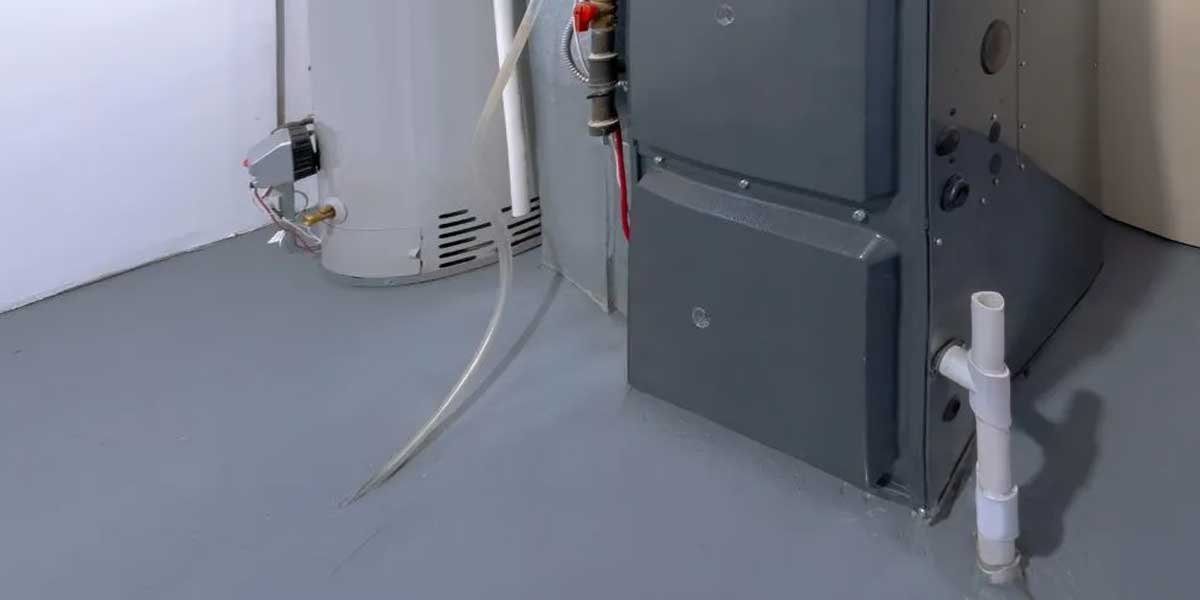
Standard 80% furnaces vent hot exhaust gases up through a metal chimney flue. High-efficiency furnaces extract so much heat that the exhaust is cool, and it forms a highly acidic liquid condensation. If you vent this through a metal chimney, the acid will destroy the metal. Therefore, a high-efficiency furnace requires the installation of new PVC pipes that vent directly out the side or roof of your house. If your furnace is in the middle of a finished basement, routing these PVC pipes to an exterior wall can be expensive and highly disruptive.
2. Condensate Drain Lines ($100 – $300)
Because high-efficiency furnaces produce gallons of acidic water during operation, that water must be drained away safely. The contractor must install a dedicated PVC drain line and, depending on local building codes, an acid neutralizer cartridge before the water enters your home’s plumbing system. If there is no floor drain nearby, they must also install a mechanical condensate pump.
3. Thermostat Upgrades ($150 – $400)
Most high-efficiency furnaces utilize two-stage or variable-speed technology. If you want the furnace to operate properly, you must have a thermostat capable of controlling multiple stages of heating. If your current thermostat is an older, basic model, you will be forced to upgrade to a modern smart thermostat.
The Honest ROI Calculation: Does It Actually Pay for Itself?
Salespeople love to tell you that a high-efficiency furnace will “pay for itself” through lower gas bills. But is that actually true? To find out, we have to do the math.
Let us assume you currently have an 80% AFUE furnace, and you are considering upgrading to a 96% AFUE furnace. The difference in efficiency is 16%. This means for every dollar you spend on natural gas, the new furnace will save you exactly 16 cents compared to your old furnace.
If your total winter heating bill is $1,200 per year, a 16% reduction means you will save $192 per year on your gas bill.
Now, let us look at the payback period based on how much extra the contractor is charging you for the high-efficiency upgrade.
Scenario A (A Fair Deal): The contractor charges you $1,500 extra to upgrade from an 80% to a 96% furnace.
$1,500 ÷ $192 annual savings = 7.8 years to break even.
Because a furnace lasts 15 to 20 years, this is an excellent investment. The furnace will pay for itself and then generate pure savings for the second half of its life.
Scenario B (A Bad Deal): The contractor charges you $4,000 extra to upgrade to a 98% modulating furnace.
$4,000 ÷ $216 annual savings (18% difference) = 18.5 years to break even.
In this scenario, the furnace will likely die before it ever pays for itself. You are making a terrible financial investment.
This harsh reality was perfectly summarized by a frustrated homeowner who ran the numbers after purchasing a premium system:
“I just got a new high efficiency HVAC system, 2 years ago. It cost me about $10,000. Averaging what I save in the summer and winter together, it saves me roughly about $30 a month. If my math is right, that’s going to take about 27 or 28 years to pay for itself. It’s really not going to pay for itself anytime soon, but the other HVAC I had was almost 30 years old, so it wasn’t going to last too much longer.”
— u/Ill_Half_860, r/hvacadvice, January 2026
The Reliability Trade-Off
When calculating the cost of a high-efficiency furnace, you must also factor in long-term maintenance.
A standard 80% efficiency furnace is a remarkably simple machine. It has a single heat exchanger, a standard gas valve, and a metal exhaust pipe. Because it is simple, there is very little that can break. It is not uncommon for an 80% furnace to run for 25 or 30 years with only minor repairs.
A 96% high-efficiency furnace is a highly complex piece of technology. It has two heat exchangers, variable-speed motors, condensate traps, drain tubes, and an array of sensitive pressure switches. Because it produces water as a byproduct, it is highly susceptible to rust, freezing drain lines, and water damage to the internal circuit boards.
If you buy a high-efficiency furnace, you will save money on your monthly gas bill, but you must be prepared to spend more money on repairs over the lifespan of the unit. You absolutely must schedule annual professional maintenance to keep the condensate system clean and functioning properly.
When a High-Efficiency Furnace Is Worth It (And When It Isn’t)
Ultimately, deciding whether to pay the premium for a high-efficiency furnace comes down to your specific living situation. Use this framework to make your decision.
A high-efficiency furnace is WORTH IT if:
- You live in a harsh winter climate. If you live in the Midwest, Northeast, or Canada, your furnace runs constantly. The massive amount of gas you consume means you will recoup the upgrade cost much faster.
- You plan to stay in the home for 10+ years. You need time to let the monthly savings add up. If this is your “forever home,” the investment makes sense.
- You value ultimate comfort. High-efficiency furnaces almost always include two-stage or variable-speed blowers. These features eliminate cold spots and operate at a whisper-quiet volume. As one homeowner noted, “It’s not about ROI… You will be more comfortable.”
A high-efficiency furnace is NOT WORTH IT if:
- You live in a mild climate. If you live in the South and only turn your furnace on for a few weeks in January, you simply do not burn enough gas to ever recoup the extra $2,000 you paid for the unit.
- You are moving soon. If you plan to sell the house in three years, buy a standard 80% furnace. You will never see the return on a high-efficiency investment, and home buyers rarely pay a premium for a used furnace.
- You have a dual-fuel system. If your primary heating source is an electric heat pump, and the gas furnace only turns on during extreme cold snaps, a high-efficiency gas furnace is a waste of money because it will rarely run.
The Final Verdict
A high-efficiency furnace is a marvel of modern engineering that provides incredibly even, quiet, and comfortable heat. However, it is not a magical money-printing machine.
Before you sign a contract, demand that your HVAC contractor gives you a quote for both an 80% standard furnace and a 96% high-efficiency furnace. Calculate the exact price difference between the two quotes. Then, look at your winter gas bills and calculate how much a 16% reduction will save you annually. Divide the upgrade cost by your annual savings to find your true payback period.
If the payback period is under 10 years, sign the contract for the high-efficiency model. If the payback period is 20 years, save your money, buy the standard 80% furnace, and use the thousands of dollars you saved to add better insulation to your attic.
Sources:
HomeGuide — How much does a high-efficiency furnace cost?
Bob’s Heating — How Much Does a New High-Efficiency Furnace Cost?
Trane — Is a High-Efficiency Furnace Worth the Cost?
Haller Enterprises — What Can I Expect To Pay for a New Furnace in Pennsylvania?