A furnace making a loud buzzing noise usually points to one of three culprits: a failing transformer or capacitor, a struggling blower or inducer motor, or loose metal panels vibrating against the cabinet. A brief startup hum is harmless. A loud, continuous buzz is not.
If the noise comes with a burning smell, refuses to stop, or appears alongside a furnace that won’t ignite, shut the unit off at the breaker first. The diagnosis can wait. Cutting power to a struggling electrical component cannot.
The 7 Most Common Causes of a Buzzing Furnace
Transformer or capacitor failure accounts for roughly half of “loud constant buzz” complaints on r/hvacadvice. Loose panels and dirty filters cause maybe a third. Motor problems and duct resonance handle the rest. The seven causes below are ordered from “most likely behind a loud, persistent buzz” to “probably nothing.”
1. Failing Transformer (Loud, Constant 60-Hertz Hum)
The transformer steps line voltage down to 24V for your control board. When the windings start to fail, it draws current it cannot handle and produces a low electrical buzz that does not change with the blower. Replacement runs $150 to $300 with labor. A fried transformer often takes the control board with it if you keep running the unit.
2. Bad Run Capacitor (Buzz on Startup, Blower Won’t Spin)
Run capacitors store the kick of power that gets the blower motor turning. A weak one makes the motor hum without rotating. Capacitors are cheap in parts at $15 to $50, but they hold high voltage even when the furnace is off, so leave the swap to a tech.
3. Worn Blower Motor or Dry Bearings
Bearings dry out and rough up after 10 to 15 years. The motor hums louder, the blower wheel may scrape its housing, and airflow drops at every vent. A new ECM blower motor runs $400 to $800 installed.
4. Loose Access Panel or Sheet-Metal Vibration
The cheapest cause and the first one to check. Press a hand firmly against the front cabinet panel while the buzz is happening. If it softens or stops, you found it. Tighten the panel screws and check for missing rubber gaskets.
5. Inducer Motor Failing (Buzz Right Before Ignition)
This small motor pulls combustion air through the heat exchanger before the burners light. It buzzes when bearings or windings start to die. The furnace often attempts three start cycles, fails, and locks out. A new inducer assembly lands at $300 to $500 plus labor.
6. Clogged Air Filter Forcing the Blower to Strain
A filter you haven’t changed in six months can make every motor work harder. Pull it. If the buzz drops when the unit runs filter-free for 30 seconds, swap in a clean MERV 8 or MERV 11. Higher MERV ratings choke airflow in older systems.
7. Ductwork Vibrating Against Framing
If the sound seems to come from the walls or ceiling rather than the furnace cabinet, it is the sheet-metal trunk line resonating. A bead of duct mastic at the joist contact point, or a foam isolator strip, usually kills it.
Quick Diagnostic Table: Match the Symptom to the Cause
Use this table to narrow down the cause in 30 seconds before you call anyone. Match what you actually hear and see, not what you think is wrong.
| What you hear or see | Most likely cause | DIY? | First action |
|---|---|---|---|
| Loud constant 60Hz hum, blower never starts | Failing transformer | No | Cut power at breaker, call a tech |
| Hum on startup, blower tries but won’t spin | Bad capacitor | No | Cut power, schedule service |
| Buzz right before burners light | Inducer motor | No | Cut power, schedule service |
| Buzz with weak airflow at vents | Dirty filter | Yes | Replace filter, retest |
| Buzz softens when you press the cabinet | Loose panel | Yes | Tighten panel screws |
| Grinding mixed with the buzz | Blower bearings | No | Schedule service this week |
| Sound coming from walls or ceiling | Duct resonance | Yes | Add mastic or foam isolator |
How to Safely Power-Cycle a Buzzing Furnace
A clean power cycle clears stuck relays, resets the control board after a brownout, and tells you whether the buzz is software or hardware. Run this sequence before scheduling any service call.
- Set the thermostat to OFF and wait 30 seconds for the system to wind down.
- Locate the furnace breaker in your main electrical panel. It is usually a single-pole 15A breaker labeled FURNACE or HEAT.
- Flip it OFF. Wait a full 60 seconds. The control board needs time to fully discharge.
- Flip the breaker back ON. Wait two minutes for the inducer to spin up and self-check.
- Set the thermostat to HEAT, 5°F above current room temperature.
If the buzz returns at the same point in the startup sequence, the failure is on that side: inducer, ignitor, or blower. If it only appears after the burners light, the issue is downstream. Note which one happens before the tech arrives. It cuts diagnostic time roughly in half.
DIY Fix vs. Call a Tech: When the Buzz Crosses the Safety Line
Three specific patterns warrant a service call within 24 hours, not whenever you get around to it. Everything else, you can usually handle yourself with a screwdriver, a fresh filter, and a careful look at where the noise is actually coming from.
- The buzz is paired with a burning, electrical, or chemical smell. That is insulation cooking off a winding.
- The furnace runs but never reaches the set temperature, and the buzz tracks with the blower turning on.
- You reset the breaker and it trips again within minutes.
If the noise stops after you change a filter, tighten a panel, or strap down a loose duct, you are fine. Anything inside the cabinet that involves wiring, the gas valve, or the heat exchanger is a licensed-tech job. Carbon monoxide risk from a cracked heat exchanger is the reason every annual HVAC inspection includes a flame and exchanger check.
What Reddit’s HVAC Pros Say About Constant Buzzing
The r/hvacadvice community sees the same conversation every winter: a homeowner records a loud buzz on their phone, debates whether to file a home warranty claim, and techs in the comments push for immediate diagnosis before the failing part fries the control board.
“Furnace making a loud buzzing noise constantly. Easy fix or worth calling American home shield?” The post drew 17 comments. The top-voted reply identified a failing transformer as the most likely culprit and warned that running the unit further could cascade the fault into the control board.
— r/hvacadvice, March 2022 (5 upvotes, 17 comments)
The pattern across five separate threads on the same subreddit since 2022 is consistent. Every constant-buzz post with a video traced back to either an electrical part on the edge of failure or a motor with worn bearings. None of them resolved as “harmless background hum.”
Frequently Asked Questions
Is a buzzing furnace dangerous?
A loud, constant buzz can be dangerous. Electrical components on the edge of failure can overheat or start a fire, and a buzz paired with a burning smell or gas odor means cut power to the furnace immediately. A brief startup hum lasting under 10 seconds is harmless and normal.
How much does it cost to fix a buzzing furnace?
Most repairs land between $150 and $800 with labor. A capacitor swap is usually under $250. A transformer or inducer motor replacement falls in the $300 to $500 range. A full blower motor replacement can push past $800 on larger systems, plus an additional service-call fee in most regions.
Why does my furnace buzz only when it starts up?
A brief five to ten second hum at startup is normal. That is electrical components engaging in sequence. A loud buzz lasting longer than 15 seconds before the blower kicks in usually points to the inducer motor or run capacitor starting to fail, and the failure typically progresses fast once it begins.
Can I keep running my furnace if it’s buzzing?
No, not safely. A constant buzz draws extra current, stresses connected components, and can cascade a $200 capacitor replacement into a $1,500 control-board job. Worse, electrical buzzing near a gas valve is one of the documented patterns behind residential furnace fires.
Will resetting the breaker fix a buzzing furnace?
Sometimes, briefly. A power cycle can clear a stuck relay or reset the control board after a brownout, and the noise may disappear for a heating cycle or two. If the buzz returns within 24 hours, the underlying part is degraded and a reset will not save it. That component needs replacement.
The Bottom Line on a Buzzing Furnace
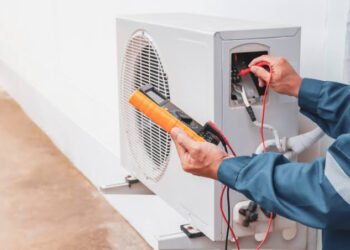
A buzzing furnace follows a predictable diagnostic order. Check the filter. Press the cabinet panels. If neither changes the noise, the next stop is a licensed HVAC tech with a multimeter. Constant buzzing rarely fixes itself, and the cost gap between catching a failing transformer early and replacing a fried control board later is usually a factor of five. Do not wait for the buzz to go quiet on its own. It usually means a part already did.